
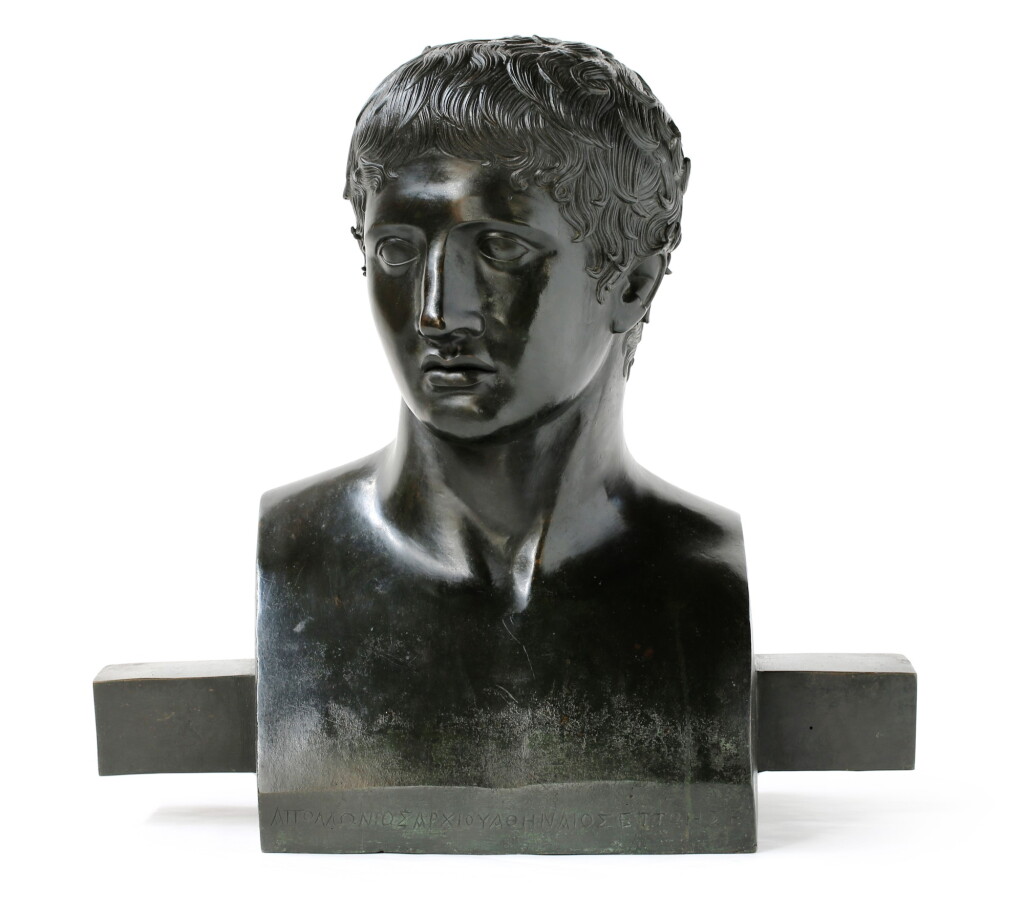
PROBABLY, NEAPOLITAN, 19TH CENTURY AFTER APOLLONIOS (ACTIVE LATE FIRST CENTURY BC), DORYPHOROS | PROBABLEMENT, NAPLES, XIXE SIÈCLE D'APRÈS APOLLONIOS (ACTIF AU IER SIÈCLE AV. J.-C.), DORYPHORE
Lot Closed
July 23, 02:05 PM GMT
Estimate
8,000 - 12,000 EUR
Lot Details
Description
PROBABLY, NEAPOLITAN, 19TH CENTURY
AFTER APOLLONIOS (ACTIVE LATE FIRST CENTURY BC)
DORYPHOROS
brown and green patina herm bronze bust
inscribed in greek Apollonios, son of Archias, of Athens, made [this]
---------------------------------------------------------------------------
PROBABLEMENT, NAPLES, XIXE SIÈCLE
D'APRÈS APOLLONIOS (ACTIF AU IER SIÈCLE AV. J.-C.)
DORYPHORE
buste en hermès en bronze à patine brun verte
inscrit en grec Apollonios, fils d'Archias, a fait [ceci]
51 x 54 cm ; 20 x 21¼ in.
Due to the various measures taken to deal with the Covid-19 epidemic, property collection and shipment of this lot will be delayed until the offices where it is located are able to reopen. Please refer to the “auction details” tab. Thank you for your understanding
Please contact FRpostsaleservices@sothebys.com for any shipping inquiries.
[En raison des circonstances actuelles liées au COVID-19, la livraison de ce lot ne pourra intervenir qu’après la réouverture des locaux de Sotheby’s dans lesquels il se trouve. Nous vous remercions de votre compréhension et nous vous invitons à consulter l’onglet « auction details ».
Pour toute demande concernant le transport, veuillez contacter FRpostsaleservices@sothebys.com.]
Related Literature
Fonderie artitiche Riunite, J. Chiurazzi & Fils – De Angelis & Fils, Bronzes, Marbles and Silver catalogue, Naples, 1910, pp. 6, cat. 4885.
Référence bibliographique
Fonderie artitihe Riunite, J. Chiurazzi & Fils – De Angelis & Fils, Catalogue des bronzes, marbres et argenterie, Naples, 1910, pp. 6, cat. 4885.
This Neapolitan hermes bust dating from the second half of the 19th century is a copy of an ancient bronze discovered in the ruins of the Villa of the Papyrus at Herculaneum in 1753 (today at the National Archaeological Museum of Naples, inv. no. 4885). This antique bronze attributed to the Greek sculptor Apollonios (1st century BC) representing a beautiful athlete with his head slightly turned, is reputed to be one of the best copies of the famous Doryphoros of Polykleitos (literally the "spear bearer", lost original from the 5th century BC). The Greek inscription to the front of the bust reads: "Apollonios, son of Archias from Athens made this".
Our bronze stands out by the quality of its cast with precise finishing and chiseling, in particular his hair, characteristic of Neapolitan bronze cast. The catalogue of the Neapolitan Chiurazzi foundry, specialized in editions after the Antique, in particular sculptures of the National archeological museum in Naples, offers bronze editions in its 1911's catalogue of the model of the Doryphoros in several sizes (n° 4885), identical to our bronze.
Ce buste napolitain en hermès datant de la seconde moitié du XIXe siècle est la copie d’un bronze antique découvert en 1753 dans les ruines de la Villa des Papyrus à Herculanum (aujourd’hui au Musée archéologique de Naples, inv. n° 4885). Ce bronze antique attribué au sculpteur grec Apollonios (Ier siècle avant J.-C.) représentant un athlète à la beauté idéale, la tête légèrement tournée, est réputé pour être une des meilleures copies du célèbre Doryphore de Polyclète (littéralement le « porteur de lance », original perdu datant du Ve siècle avant notre ère). L’inscription grecque sur le devant indique : ‘Apollonios d'Athènes, fils d'Archias a fait ceci’
Notre bronze se distingue par sa belle finition et sa ciselure, dont la qualité est tout à fait caractéristique des fontes napolitaines. La fonderie napolitaine Chiurazzi spécialisée dans les éditions d’après l’Antique, et plus particulièrement les œuvres conservées au Musée archéologique de Naples, propose dans son catalogue de 1911 des bustes en bronze d’après le Doryphore de différentes dimensions (n°4898) identiques à notre œuvre.