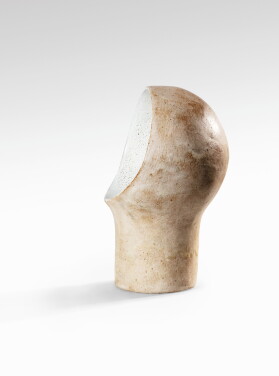
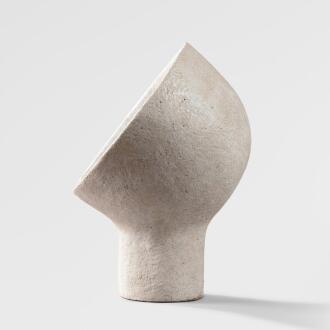
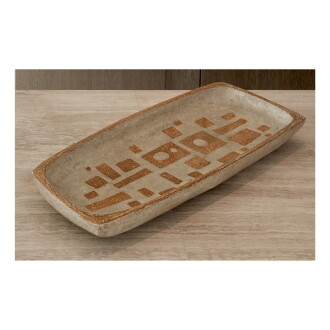
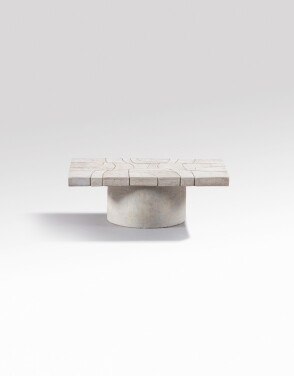
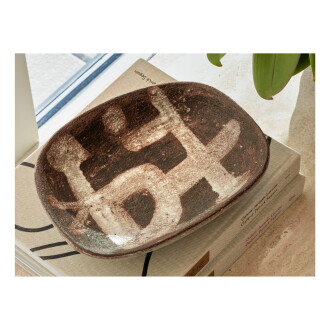
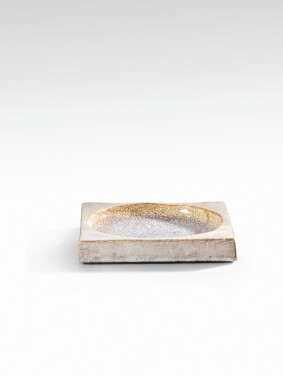
A ndré Borderie, a pivotal figure in postwar French decorative arts, created abstract ceramic reliefs, tapestries, and architectural installations that fused material experimentation with a sculptural approach to surface and form. His collaborations with architects and the Atelier Plasse Le Caisne helped redefine modern interiors, securing his legacy within mid‑century abstraction, modern tapestry, and integrated architectural design.
André Borderie Biography
André Borderie developed a multidisciplinary practice that moved fluidly between painting, tapestry, ceramics, and architectural decoration. Active in postwar France, he participated in broader efforts to integrate art into everyday environments and to expand the possibilities of decorative expression. Borderie’s works are distinguished by textured surfaces, abstract compositions, and an emphasis on material experimentation. His approach introduced a sculptural dimension to decorative arts and contributed to renewed interest in handcrafted, site-responsive forms during the mid-twentieth century.
Working closely with architects and manufacturers, Borderie created murals, woven panels, and ceramic installations that transformed walls into richly tactile surfaces. His compositions often drew inspiration from geological formations, ancient markings, and the rhythms of nature, resulting in works that balanced abstraction with a strong sense of material presence. Borderie was particularly significant in the revival of modern tapestry, collaborating with the renowned Atelier Plasse Le Caisne to translate his designs into monumental textiles. By dissolving distinctions between fine art and decoration, he helped establish a more integrated and expressive vision of modern interiors, one that emphasized craftsmanship, experimentation, and the poetic potential of surface.
Read Less