S otheby’s is honored to present the collection of Robert “Bob” Monk as the highlight of our Contemporary Discoveries season. Over the course of his four-decade-long career, Monk moved through nearly every corner of the art market, making his way from his first position as an assistant at Castelli Gallery to his last as a senior director at Gagosian, and working as a gallerist, specialist, auctioneer, and curator in between. Yet to describe Monk by his professional titles alone is to miss what made his presence in the art world so distinctive—deeply passionate, personable, and generous with his time and knowledge, Bob Monk bridged a gap that at times separates artists from the people who work with and collect their art. His profound engagement with both art and artists established him as a pillar of the New York art world and, above all, as a trusted friend and advocate to many of the most important artists of his generation. Monk’s collection, which features works by Ed Ruscha, Richard Artschwager, Andy Warhol, Bruce Nauman, Jasper Johns, and Cecily Brown, reflects the breadth and depth of his personal and professional relationship with art.
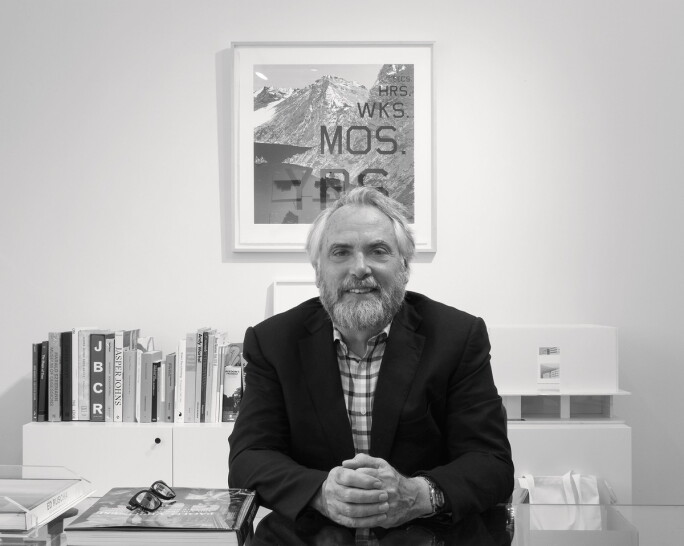



Born in 1950 and raised in New York, Monk studied photography at Pratt Institute before beginning his career in the commercial art world at Leo Castelli Gallery in the 1970s. In 1978, he became director of prints at Castelli Graphics, where he worked with and befriended a number of leading artists of the era, Robert Rauschenberg among them. Monk’s years at Castelli placed him at the gravitational center of the New York art world during a particularly formative period in postwar American art, laying the foundation for a long career spent working with modern and contemporary art and artists.

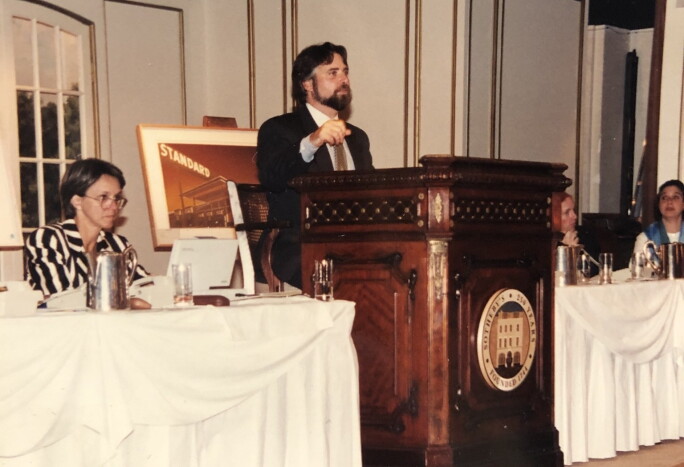
In 1985, Monk struck out on his own, founding Lorence-Monk Gallery alongside Susan Lorence. For the better part of a decade, the pair presented exhibitions by a remarkable roster of artists that included Jasper Johns, Bruce Nauman, and David Hockney. When the gallery closed in 1992, Monk brought his accumulated knowledge to Sotheby’s, joining as head of the Contemporary Prints department before becoming head of the Contemporary Art department in 1995. At Sotheby’s, he helped set records for contemporary artists—including such titans as Arshile Gorky and Gerhard Richter—throughout a famously difficult period of time for the art market.

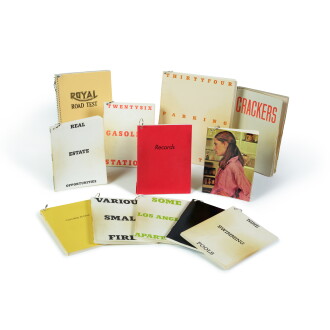
Monk’s career subsequently carried him from the auction house back to the gallery floor. By the late 1990s, he had joined Gagosian, where he would work for more than two decades, eventually rising to the position of senior director. Monk’s longstanding artist relationships became an essential part of his role at Gagosian, and he served as a trusted advocate for a number of the gallery’s most important artists, key among them Richard Artschwager and Monk’s longtime friend Ed Ruscha. Monk curated numerous exhibitions at Gagosian, including the multivenue Ed Ruscha: Books & Co., and worked closely with Ruscha on projects throughout the artist’s later career, including the 2024 Museum of Modern Art retrospective ED RUSCHA / NOW THEN. His relationship with Artschwager was similarly expansive: Monk notably worked with the Whitney Museum of American Art on the production of Artschwager’s celebrated elevator installation (2012-2015), a project that brought the artist’s singular visual language into the architecture of the museum itself.
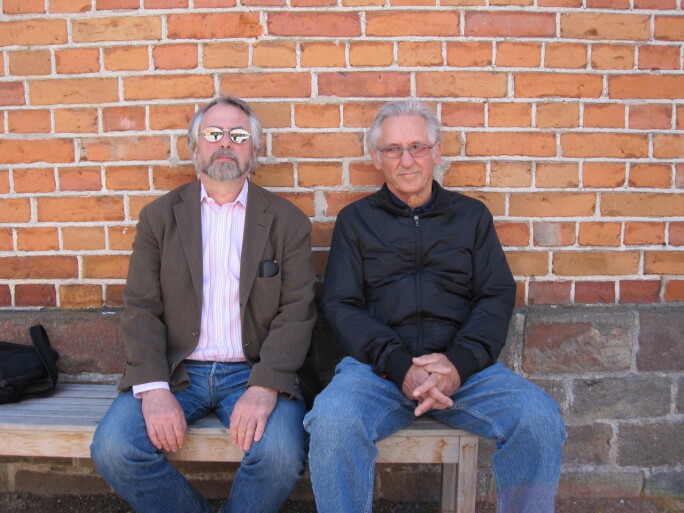
The works assembled here bear the imprint of these relationships. Monk and Ruscha remained close interlocutors and friends throughout the remainder of Monk’s life, a relationship reflected in the remarkable group of unique works gifted to him by Ruscha over the course of their decades-long friendship. Among the highlights of the collection is Red Sky (2001), which stands out as a striking example of the airbrushed silhouette paintings Ruscha began in the 1980s. Here, the form of a brigantine ship emerges against a colorful oceanic sunset—its atmospheric palette recalling the seascapes of J. M. W. Turner. Along the lower edge of the canvas, two of Ruscha’s signature reverse-stenciled ‘censor strips’ interrupt the scene, introducing the suggestion of an obscured message and heightening the ship’s mystery and allure.

The works Artschwager gifted to Monk similarly illuminate both the breadth of the artist’s practice and the closeness of their friendship. Untitled (1996), a plywood and pine crate, draws upon Artschwager’s abiding interest in form, material, and the ephemera of everyday life. The work mimics a real shipping container, but here, what appears to be packaging becomes the content itself, and its purposeful emptiness becomes the object’s defining feature. Untitled exemplifies Artschwager’s play with the instability of appearances, transforming familiar materials and forms into an object that resists immediate understanding.

Monk began his career in prints and returned to them throughout his professional life, from his years at Castelli Graphics to the many print-focused exhibitions he organized at Lorence-Monk Gallery and, later, his tenure as head of Sotheby’s Contemporary Prints Department. It is fitting, then, that a number of the sale’s highlights come from Monk’s own print collection. Among them is Andy Warhol’s Electric Chair (Feldman & Schellmann II.78), part of the artist’s seminal Death and Disaster series. The stark image of an empty execution chamber and electric chair is part of Warhol’s most sustained artistic exploration of mortality, in which scenes of violence and death are rendered with an almost unnerving visual sobriety. Here, Warhol confers the unrelenting specificity and inevitability of death onto paper, the screenprinted reproduction of which further amplifies its echo.

A number of Ruscha prints accompany Warhol’s striking image in Monk’s collection. All Manner of Things (2012) and Any Thing But (2014) carry Ruscha’s career-long typographic practice well into the twenty-first century. As Ruscha breaks apart and puts the phrase central to Any Thing But back together anew upon watercolored paper, the structure of language itself is exposed. The smudging and streaking of its inky letters across the page further reinforce the formal malleability of language, which emerges as both subject and material.
Together, these works offer a glimpse into the breadth of Monk’s eye and the relationships that shaped it. They are the product of a career spent moving fluidly between artists and the institutions, galleries, auction houses, and collectors through which their work was encountered and understood. In presenting this collection, Sotheby’s celebrates not only the remarkable works Monk brought together, but the singular place he occupied within the contemporary art world: as gallerist, specialist, curator, advocate, and, ultimately, as a friend to the artists whose work mattered most to him.