Going, Going, Gone: The Real Objects of Magritte’s Imaginary World
Going, Going, Gone: The Real Objects of Magritte’s Imaginary World
By
James Haldane| Oct 30, 2026
Recalling the July 1987 sale of the contents of René Magritte’s studio, including the bowler hat, model trains and sculptural fruit that crossed from everyday life into the artist’s enigmatic imagery.
Recalling the July 1987 sale of the contents of René Magritte’s studio, including the bowler hat, model trains and sculptural fruit that crossed from everyday life into the artist’s enigmatic imagery.
O
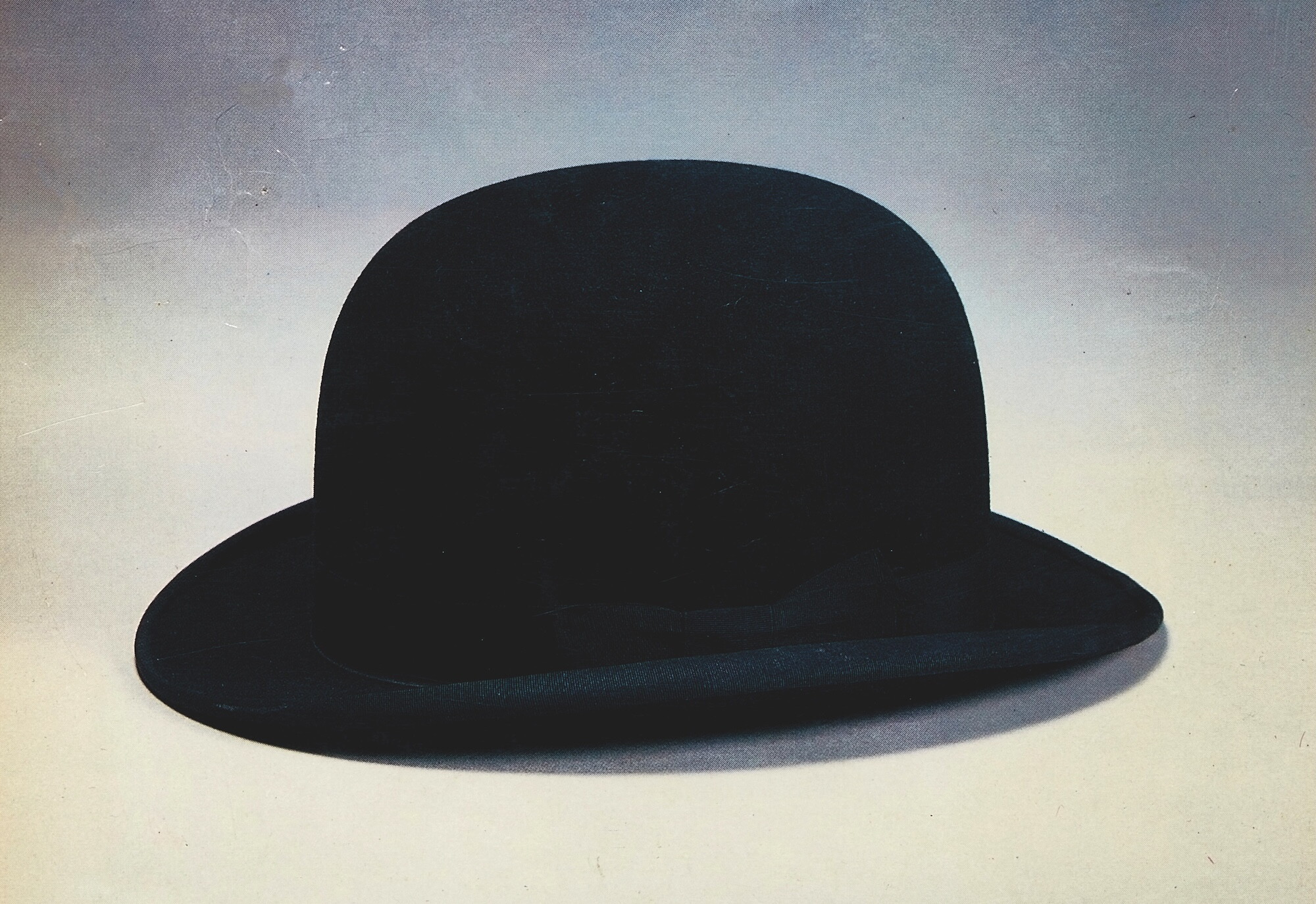
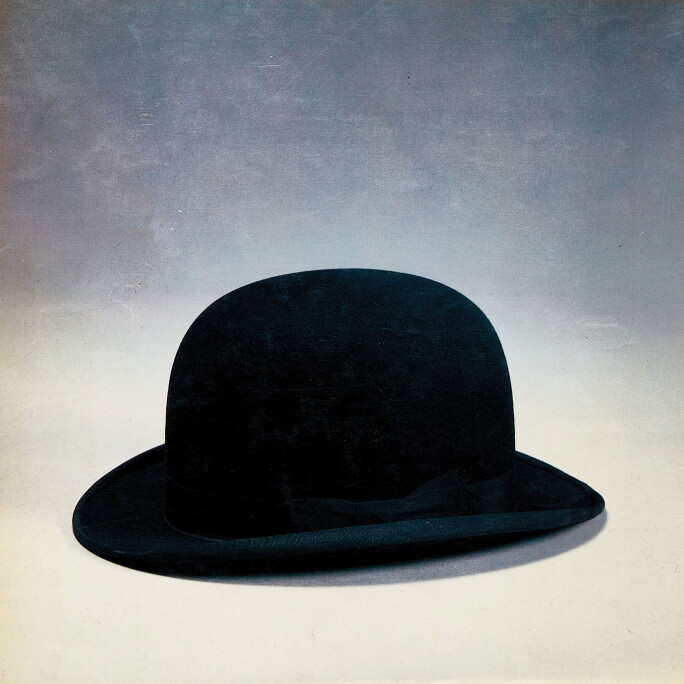
n July 2, 1987, a classic bowler hat came up for auction at Sotheby’s London. Initialed “RM” inside and trimmed with a simple black ribbon, its distinction lay in having belonged to René Magritte. Estimated at £1,000 to £1,500, it was one of 276 lots in “The Remaining Contents of the Studio of René Magritte,” a sale mounted the year after the death of the artist’s widow, Georgette Berger, dispersing the contents of the couple’s final Brussels home. Long before the recent surge in the surrealist market, the hammer came down at £16,500 to the art-collecting brothers Georges and Stéphan Uhoda, who kept the hat in their offices in Liège.
The catalog cover, featuring three bottles painted by the artist, including the first he is known to have painted, in 1941. Photo: Courtesy of Sotheby’s.
The Belgian artist had seldom worn a bowler hat in daily life, although he frequently donned one for photographs. In his paintings, however, its sober silhouette became ubiquitous, crowning faceless figures that multiplied and floated across cloud-filled skies. Alongside it in the catalog were two model locomotives, one possibly used while painting the 1938 oil “La durée poignardée” (“Time Transfixed”); a pair of miniature cannons; and a plaster pear and apple covered in brass drawing pins. Together, the lots made the auction read less like the inventory of an estate than a list of objects extracted from Magritte’s imagination, returned from image to object.
A spread from Sotheby’s 1987 sale catalog showing Magritte’s cowboy hat, painted golf balls, German military helmet used as a prop in his films, model trains, miniature cannons and pin-studded fruit, which the catalog linked to his 1963 painting “Souvenir de voyage.” Photo: Courtesy of Sotheby’s.
Magritte’s famous bowler, cataloged simply as “A Black Bowler Hat.” Photo: Courtesy of Sotheby’s.
Aptly, the sale’s code for advance bids was “bilboquet”—French for the cup-and-ball toy that assumes human form in many of Magritte’s paintings. While these objects found new homes with collectors, the Magrittes’ former apartment in Jette was about to find a new purpose. In 1992, collector André Garitte discovered that the apartment, where many of the artist’s most celebrated works were conceived, still stood. He purchased the property the following year and reconssotructed its interiors using photographs, testimony and much of the original furniture. Opened in 1999 as the René Magritte Museum, it offers visitors a glimpse of the ordinary rooms where the artist imagined the impossible.