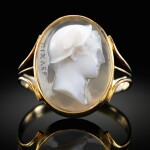

Giovanni Pichler (1734-1791) or Luigi Pichler (1773-1854) | Italian, Rome, circa 1780 | Cameo of Hermes
Lot Closed
July 15, 12:09 PM GMT
Estimate
4,000 - 5,000 GBP
Lot Details
Description
Giovanni Pichler (1734-1791) or Luigi Pichler (1773-1854)
Italian, Rome, circa 1780
Cameo of Hermes
signed in greek letters Pichler
agate, in a ring mount
cameo: 20mm, 3/4 in.
UK ring size: T
This sublimely beautiful cameo of Hermes is signed Pichler and is almost certainly the work of Giovanni Pichler whose Cameo of Alexander the Great is in the Hermitage, St Petersburg (inv. no. K-1811). The superb surface polish of the present gem is similar to other cameos by Giovanni such as the Seated female figure in the Metropolitan Museum of Art, New York (inv. no. 39.22.44). However, an attribution to Giovanni's younger brother Luigi cannot be discounted, since he inherited the family workshop in 1791 and was himself a celebrated neoclassical gem engraver.
Giovanni Pichler was born in Naples and trained by his father Antonio Pichler in the art of gem engraving in Rome. In 1769 he was appointed gem engraver to Emperor Joseph II in Vienna. Pichler's fame rapidly increased and he became a favourite of Grand Tourists. He also trained a number of the most famous engravers of the next generation including Filippo Rega and Antonio Berini. Upon his death in 1791 his workshop was inherited by his half brother Luigi Pichler. He went on to work for the Habsburg Imperial family in Vienna and so impressed the French court jeweller François-Régnault Nitot that the latter tried to persuade him to move to Paris. Luigi received many distinctions later in life including a diploma from the Academy of St Luke and membership of the Academy in Venice, as well as, in 1839, Knight's Cross of the Order of St Gregory the Great and, in 1842, of the Order of St Sylvester.
Giovanni Pichler was born in Naples and trained by his father Antonio Pichler in the art of gem engraving in Rome. In 1769 he was appointed gem engraver to Emperor Joseph II in Vienna. Pichler's fame rapidly increased and he became a favourite of Grand Tourists. He also trained a number of the most famous engravers of the next generation including Filippo Rega and Antonio Berini. Upon his death in 1791 his workshop was inherited by his half brother Luigi Pichler. He went on to work for the Habsburg Imperial family in Vienna and so impressed the French court jeweller François-Régnault Nitot that the latter tried to persuade him to move to Paris. Luigi received many distinctions later in life including a diploma from the Academy of St Luke and membership of the Academy in Venice, as well as, in 1839, Knight's Cross of the Order of St Gregory the Great and, in 1842, of the Order of St Sylvester.
You May Also Like


