
Cartier
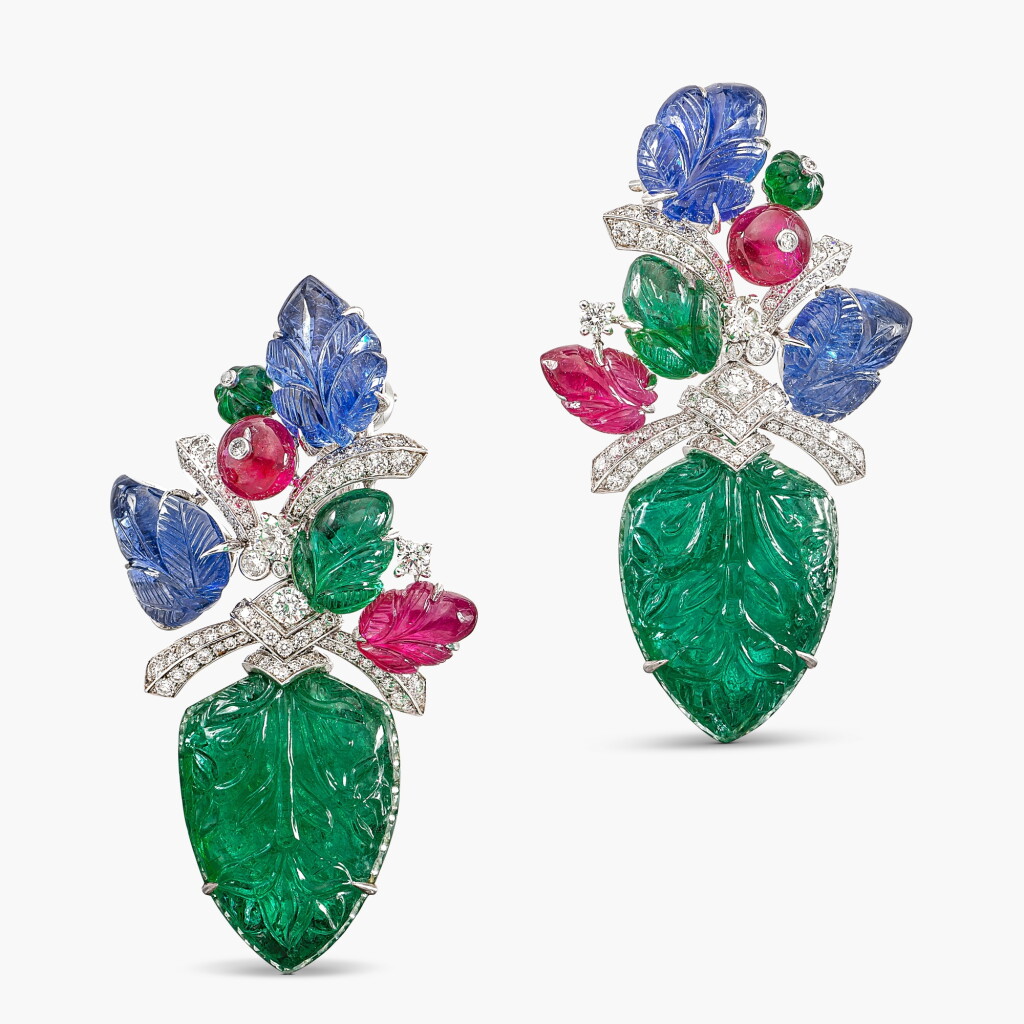
Pair of Coloured Stone and Diamond 'Tutti Frutti' Pendent Earrings | 卡地亞 | 寶石 配 鑽石「水果錦囊」耳墜一對
Auction Closed
September 17, 11:55 AM GMT
Estimate
650,000 - 850,000 HKD
Lot Details
Description
Set with carved rubies, sapphires and emeralds, and brilliant-cut diamonds, platinum, post and clip fittings, signed Cartier, numbered, French assay and maker's marks.
Approximate Gross Weight: 28 grams
Approximate Measurements: 44 x 27mm each
"Never copy, only create."
This guiding principle yielded jewels of extraordinary originality and beauty that propelled Cartier to never-before-seen levels of global success in the early twentieth century. During this period, the firm was well-known for taking inspiration from the "exotic," but nowhere was this more masterfully expressed than with their tutti frutti jewels.
Cartier’s first foray into the style was a necklace created for Queen Alexandra who, as the wife of King Edward VII and Empress Consort of India, required a jewel to complement three Indian-style gowns. Ten years later, in 1911, Jacques Cartier ventured to India with two primary goals: to purchase gemstones for their Paris and London workshops and to win the immensely wealthy Maharajas as clients. What transpired over the next quarter of a century was a fertile exchange of cultures that produced an abundance of spectacular jewelry. The Indian princes who, at that time, gravitated toward all things European proffered their own gemstones to be reworked into platinum mountings, while fashionable Europeans hungrily acquired jewels emblazoned with carved colored stones and polychrome enamel.
After being exhibited at the 1925 Exposition Internationale des Arts Décoratifs et Industriels Modernes in Paris, Cartier’s tutti frutti jewelry rapidly gained popularity among the most discerning collectors of the day, including Mrs. Cole Porter and Daisy Fellowes. During the Art Deco period Cartier produced a variety of tutti frutti jewels and objects, both for stock and special order. All pieces share the hallmark of carved colored stones, but each piece is unique, a variation on a captivating theme.
The style fell in popularity during the mid-20th century and fewer pieces were produced. The original Art Deco examples, tucked away and forgotten, were discovered by children and grandchildren who saw their family heirlooms achieve staggering prices at auction. In 2016, Cartier relaunched their line of tutti frutti jewels, drawing upon their rich heritage to produce a limited number of jewels, some as ambitious in scale and design as the most significant works created a century ago.
「絕不抄襲,唯有創造」
這項指導原則孕育出具備非凡創意與絕美風華的珠寶佳作,推動卡地亞在二十世紀初期達到了前所未有的全球巔峰與成就。
在此時期,該品牌因善於從「異國情調」中汲取靈感而聞名遐邇,但這一點無疑在他們的 Tutti Frutti(水果錦囊風格)珠寶作品中得到了最為精湛絕倫的詮釋。
卡地亞對此風格的首次嘗試,是為亞歷山德拉王后(Queen Alexandra)量身打造的一條項鍊。作為愛德華七世之妻暨印度帝國皇后,她需要一件能與其三套印式禮服完美搭配的珠寶。
十年後的 1911 年,雅克·卡地亞(Jacques Cartier)遠赴印度,抱持著兩大核心目標:一是為巴黎與倫敦的工作室採購寶石,二是爭取極其富有的邦王(Maharajas)成為客戶。在接下來的四分之一世紀裡所展開的,是一場孕育出無數璀璨珠寶的豐碩文化交流。
當時推崇歐洲一切風尚的印度王子們,紛紛獻出自家寶石,重新打造成鉑金底座鑲嵌的時尚佳作;與此同時,追求時髦的歐洲貴族則以極大的熱情,爭相購藏鑲嵌著雕花彩色寶石與多色琺瑯的珠寶傑作。
在 1925 年巴黎「現代工業與裝飾藝術國際博覽會」(Exposition Internationale des Arts Décoratifs et Industriels Modernes)展出後,卡地亞的 Tutti Frutti(水果錦囊風格)珠寶迅速在當時最獨具慧眼的收藏家之間風靡開來,其中包括美國社交名媛暨時尚指標柯爾·波特夫人(Mrs. Cole Porter),以及法籍巴黎社交名媛、勝家缝紉機(Singer)財團繼承人、作家兼《Harper’s Bazaar》巴黎版編輯黛西·法洛斯(Daisy Fellowes)。
在裝飾藝術(Art Deco)時期,卡地亞無論是作為現貨展示還是特別訂製,皆創作了各式各樣的 Tutti Frutti 珠寶與精品器物。所有作品均具備雕花彩色寶石這一標誌性特徵,然而每件作品又皆獨一無二,宛如對這一迷人主題所展開的千變萬化演譯。
到了 20 世紀中葉,這種風格的受歡迎程度有所下滑,製作的作品數量也隨之減少。那些被妥善收起並逐漸被遺忘的裝飾藝術(Art Deco)時期原作,後來被後代子孫重新發現,並目睹這些家族傳家寶在拍場上締造出驚人的成交高價。
2016 年,卡地亞重新推出了 Tutti Frutti(水果錦囊風格)系列珠寶,汲取其深厚的歷史底蘊,打造出數量極為有限的頂級珠寶作品,其中部分作品無論在規模還是設計格局上,皆足以與一世紀前最重磅的代表作媲美。
You May Also Like


