
Property from The Miller Family Collection
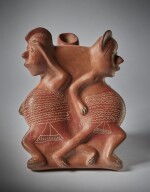
Colima Reclinatorio
Comala Style, Protoclassic, circa 100 BC - AD 250
Lot Closed
May 21, 05:43 PM GMT
Estimate
6,000 - 8,000 USD
Lot Details
Description
Property from The Miller Family Collection
Colima Reclinatorio
Comala Style, Protoclassic, circa 100 BC - AD 250
Height: 9 ⅛ in (23.2 cm)
The Miller Family Collection, Chicago, acquired by 1973 (listed in the May 8, 1973 appraisal of the collection)
Thence by descent to the present owner
The University of Wisconsin-Milwaukee, Face and Heart: The Figure in Mesoamerican Sculpture, March 30 - May 11, 1986
The Art Institute of Chicago, Ancient West Mexico, Art and Archeology of the Unknown Past, September 5 - November 22, 1998, additional venue: Los Angeles County Museum of Art, December 20, 1998 - March 29, 1999
Andrea Stone, Face and Heart: The Figure in Mesoamerican Sculpture, Milwaukee, 1986, fig 16, p. 25, cat. no. 38
Richard Townsend, ed., Ancient West Mexico: Art and Archaeology of the Unknown Past, Chicago, 1998, p. 171, fig. 9, cat. no. 85
The reclinatorio form is one of the more playful and ‘non-ordinary’ of the ceramic types which Peter Furst considered one expression of the spiritual, magical and symbolic elements of ancient West Mexico. Some versions combine human, bird and mammal forms. The subject sculpture is composed of nearly twin figures striding outward with back legs overlapping, each with extended bellies covered by decorated bands and flaring cloths below. Their crested headdresses are insignia of ceremonial status; both have small puckered mouths and incised eyes, and one figure clasps his head and belly as if experiencing a ritual ceremony.
You May Also Like


