Gio Ponti
A Rare Low Table for the First Class Ballroom of the Giulio Cesare Ocean Liner
Estimate
30,000 - 50,000 USD
Lot Details
Description
Gio Ponti
1891–1979
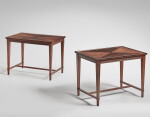
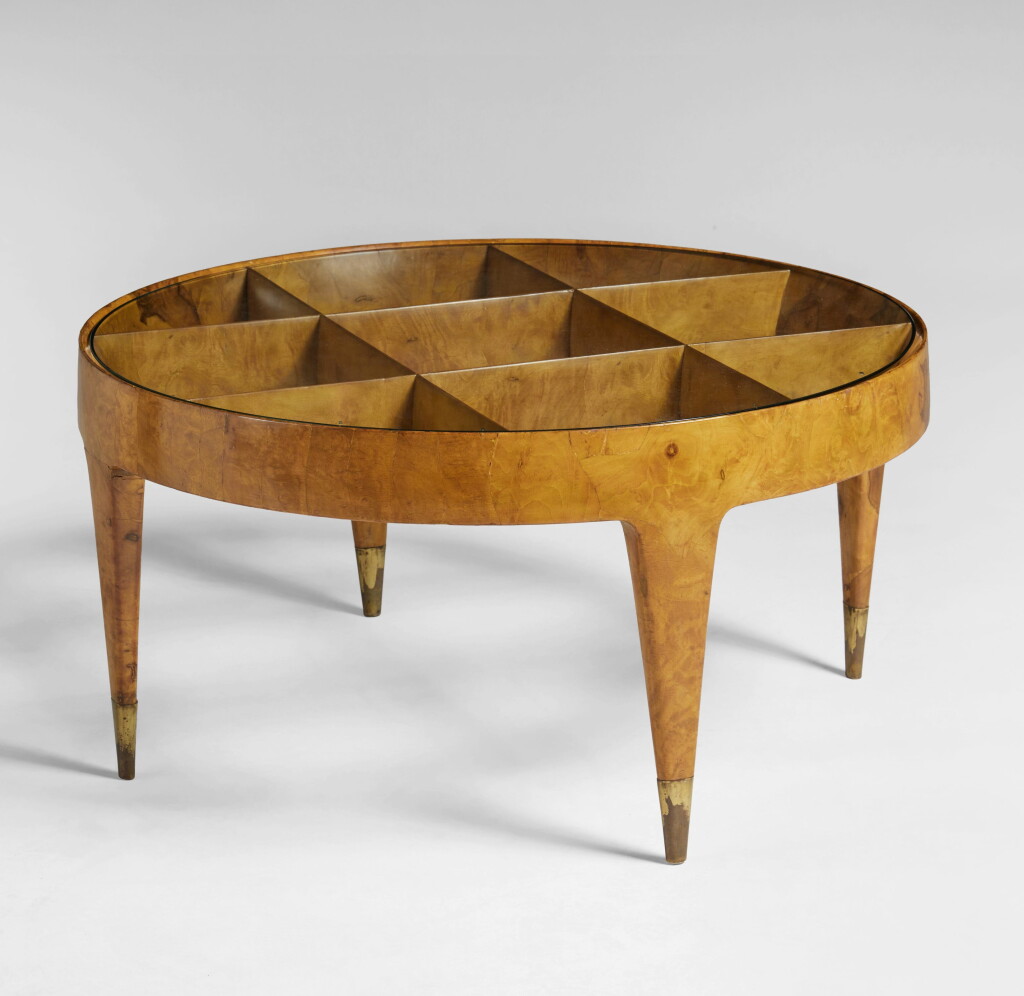
A Rare Low Table for the First Class Ballroom of the Giulio Cesare Ocean Liner
circa 1951
glass with acid etched manufacturer's mark TEMPERATO/RAGAZZI
burled walnut, brass, original glass
height 15 ¾ in.; diameter 31 ½ in.
40 cm; 80 cm
Giulio Cesare Ocean Liner, circa 1951;
Private Collection, Milan, Italy;
Philips London, October 18, 2018, lot 24;
Where acquired by the present collector.
"Interni di una nuova nave," Domus, no. 267, February, 1952, p. 15
Paolo Piccione, Gio Ponti: Le Navi, Il progetto degli interni navali, 1948-1953, Viareggio, 2007, pp. 98-101
Ugo La Pietra, Gio Ponti: L'arte si innamora dell'industria, New York, 2009, p. 214
This lot is accompanied by a letter of expertise from the Gio Ponti Archives.
Gio Ponti recognized the symbolic power of ocean-liner interiors well before he was ever commissioned to design one. In a 1931 essay for Domus, the influential architecture and design magazine he founded, Ponti argued that a ship's interiors should stand as a measure of a nation's cultural progress, and that Italy's ocean-liners were an opportunity to present that progress to the world. Two decades later, this belief would help shape Italy's postwar reconstruction and contribute to the global recognition of Italian design.
By the early 1950s, as Italy rebuilt its transatlantic fleet in the aftermath of World War II, Ponti was given the chance to put this philosophy into practice. Working alongside naval architect Nino Zoncada, he was commissioned to design the various social spaces aboard the Guilio Cesare ship, including the ballroom, living rooms, bar, and gaming room, among others. Each space was constructed around its own color palette, then tied together with the other rooms through coordinated materials and finishes. The ballroom centered on a golden yellow as its theme, accented with anodized aluminum that reinforced Ponti’s emerging modernist design style. The present rare coffee table belongs to that ballroom scheme, but it also features a form Ponti had been refining throughout his career.
Since the early 1930s, he repeatedly returned to the design of the coffee table, which features an intricate lattice base, a structure that took on a commanding presence while appearing remarkably light through its open voids. As Ponti perfected the design over more than two decades, it moved further from the neoclassical influences of his early work and closer to the modern style for which he would become known. By the time of the Giulio Cesare commission, the form had been simplified into a streamlined, more geometric shape. Crafted from burled walnut veneer, glass, and brass, the present table embodies that evolution, bringing a form Ponti had refined for decades into one of his most ambitious projects. In doing so, it demonstrates how thoroughly he integrated furniture into his larger vision for the Giulio Cesare and stands as a realization of the ideas he had articulated in Domus more than twenty years earlier.
You May Also Like