
Property from a Private American Collection
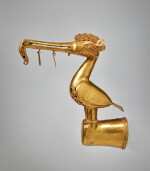
Sinú Gold Toucan Finial
Circa AD 500 - 1000
Lot Closed
October 22, 03:32 PM GMT
Estimate
30,000 - 50,000 USD
We may charge or debit your saved payment method subject to the terms set out in our Conditions of Business for Buyers.
Read more.Lot Details
Description
Property from a Private American Collection
Sinú Gold Toucan Finial
Circa AD 500 - 1000
Height: 5 ⅞ in (15 cm)
Eustorgio Padilla, Bogotá
American Private Collection, acquired from the above in 1973
Thence by descent to the present owner
The Walters Art Museum, Baltimore, 2001-2011 (on loan)
Large finials of avians and animals were dramatic examples of Sinú lost-wax goldwork. The densely-cast effigies were perched on cylindrical bases that were mounted on a scepter or staff, proudly displaying the powerful and acute traits of the diverse regional fauna. Such exuberant, large finials were prominent prestige objects of authority.
The exceptionally long-beaked avian here is cast with rows of openwork filigree on the chest, with ample feathers folded on the back and a short flaring tail. With long, strong neck, large rimmed oval eyes and rounded pupils, the head emphasizes a regal form. The bird is further adorned with a triple row of spirals along the head, and slender dangles attach to the lower beak. Each leg has ankle ornaments and fine braidwork trims the end of the shaft.
The Sinú area is now referred to as part of the greater Zenú region, which includes the northwestern Coastal plains and the lower Cauca and Magdalena river valleys. The long tradition of goldwork in Colombia was an act of extreme skill and was deeply tied to ceremonial significance. Indeed, “[the] goldsmiths were anonymous transformers who converted profane metals into sacred forms of high cultural and artistic significance” (Santiago Londoño Vélez, “Symbolism and aesthetics in the ancient metalwork of Colombia” in The Art of Gold, The Legacy of Pre-Hispanic Colombia, Milano, 2007, p. 26).
You May Also Like


