A Guide to Collecting Presentation Copies
See how inscriptions, recipients, association, edition and publisher presentation marks can shape the significance and value of presentation copies.

A presentation copy can record a relationship that an ordinary first edition can't. A book given by an author to a friend, collaborator or cultural figure carries evidence of that exchange within the object itself. In some cases, the inscription reveals a connection closely tied to the work. In others, a publisher’s stamp identifies a copy set aside for presentation before or around publication.
The term “presentation copy” can describe several different types of books, and those distinctions matter. Some are inscribed by the author directly to a named recipient. Others were distributed by the publisher and may carry a presentation stamp or other identifying mark without an authorial inscription. An association copy goes further, describing a book whose ownership or presentation connects people with a meaningful relationship to the author, subject or history of the work.
Presentation status alone does not determine value. The edition of the book still matters, as do condition and the nature of the presentation. For an inscribed copy, the recipient and wording can change how the book is understood. Establishing who gave the book, who received it and why that connection matters is central to evaluating a presentation copy.
| What to Know | Why It Matters |
|---|---|
| Presentation Copy | A copy given by an author, publisher or another party for a specific presentation rather than ordinary distribution. The evidence may be an inscription, stamp or other documentation. |
| Inscribed Copy | An author’s inscription identifies a specific recipient. The wording, date and recipient can influence the significance of the copy. |
| Association Copy | The recipient has a meaningful connection to the author or work. That relationship can make the inscription an important part of the book’s history. |
| Publisher’s Presentation Copy | Some publishers marked copies for presentation with a stamp or other designation. These do not require an authorial inscription. |
| Edition Matters | A presentation copy may be a first edition or a later edition. Bibliographic importance and presentation history should be assessed separately. |
| Value Varies | Presentation status does not guarantee a premium. The recipient, association, edition, condition and evidence supporting the presentation all influence the market. |
A presentation copy is a book given to a specific person rather than distributed through the usual commercial channels. The presentation may come directly from the author, but it can also originate with the publisher. Evidence might appear as a handwritten inscription, a presentation stamp or documentation connecting the copy to its recipient.
The circumstances matter. An author presenting a book to someone closely connected to the work carries a different significance from a publisher sending out copies for review or promotion. Establishing how the book was presented—and to whom—is therefore an important part of understanding the copy.
An inscribed presentation copy typically records the exchange directly. Stephen King’s Misery is a first edition, first printing from 1987, inscribed by King to Eastwood in 1996: “For Clint / Best wishes from your #1 fan.” The recipient gives the inscription added weight. Eastwood’s “Man with No Name” persona was an influence on Roland Deschain, the gunslinger at the center of King’s The Dark Tower series. The copy links King with a figure who influenced his own fiction.
A publisher’s presentation copy can look quite different. A first edition, first printing of Kenneth Grahame’s The Wind in the Willows bears a circular blue “Presentation Copy” stamp on the title page. Published by Methuen in 1908, the book retains its original pictorial blue-green cloth. There is no authorial inscription, yet the stamp identifies the book as an early copy designated for presentation by the publisher. This is why the exact nature of a presentation copy should be established before assessing its significance.
The recipient can transform the significance of an inscribed book. Robert Frank’s The Americans is a revised and enlarged 1969 edition inscribed the following year to his friend and publisher Motomura Kazuhiko. While it is not the first edition of The Americans, the inscription documents a personal relationship within Frank’s publishing circle. That association gives the copy an importance distinct from its edition status.
Lewis Carroll’s Alice’s Adventures in Wonderland offers another example. The 1868 copy, a thirteenth thousand, was inscribed by Carroll—Charles Lutwidge Dodgson—to political cartoonist John Proctor: “John Proctor, Esq / from the Author / Oct. 1868.” Proctor was later approached by Dodgson about illustrating Through the Looking-Glass after John Tenniel initially declined. The presentation connects the copy to a documented relationship in the publication history of Carroll’s work, even though the book itself is not a first edition.
A presentation copy doesn't need to be a first edition. A.A. Milne’s Winnie-the-Pooh is a ninth edition, published by Methuen in 1929 and inscribed the following year, “Joyce Redfern’s book A.A. Milne Nov 12th 1930.” Redfern was connected to the Seligman family; Vincent Seligman and Milne were lifelong friends, and Milne also became close to Seligman’s wife, Barbara. The copy’s interest lies in that personal context rather than its place in the book’s printing history.
First-edition status can add another dimension. Ian Fleming’s You Only Live Twice is a first edition, first printing presented to Aubrey Forshaw, Managing Director of Pan Books. Fleming addressed him as “Forshaw-san,” echoing the Japanese honorific used throughout the novel. Forshaw had a direct professional connection to the Bond books through Pan, making the edition, recipient and wording of the inscription relevant to the copy’s significance.
Not all presentation inscriptions carry the same information. A simple name and signature can establish that a book was presented, while a longer inscription may reveal the nature of the relationship, an occasion or a private reference between author and recipient. Dates can also place the presentation within the author’s life and the publication history of the book.
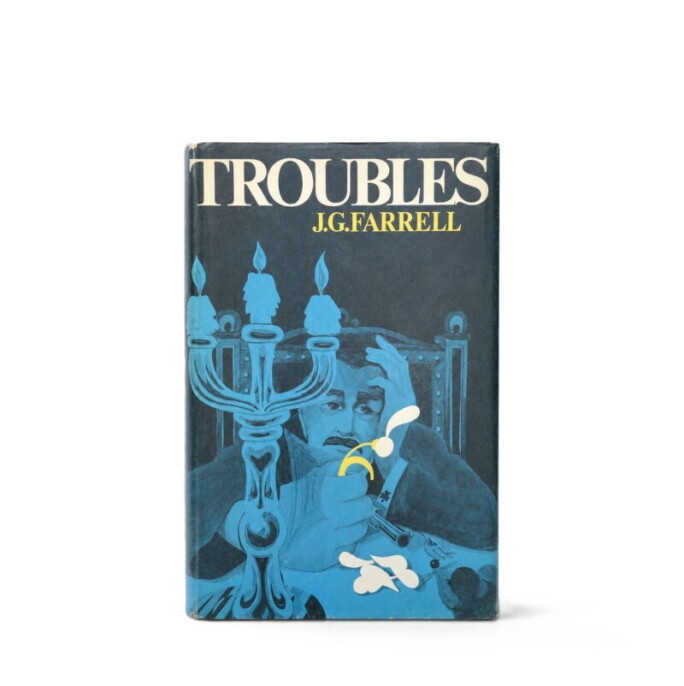
J.G. Farrell’s Troubles shows how much can be contained in a short inscription. The 1970 first edition is inscribed, “Norma supplied the money / I supplied the ink / Happy birthday, David / Jim Farrell / 12 July 1971.” Norma di Marco was Farrell’s landlady in London, giving the playful reference to money a personal context. Farrell also signed his full name on the title page. The inscription does more than record ownership: its wording preserves a specific relationship and moment in the book’s early history.
A presentation inscription can increase a book’s value, but the nature of the presentation matters. Start with who gave the book and who received it. For an inscribed copy, the wording and date can reveal the strength of that relationship or connect the presentation to the history of the work. Publisher’s presentation copies should be considered differently, since a stamp or designation records how the book was distributed rather than a personal exchange.
Edition and condition still matter. A first edition can add bibliographic importance, while original bindings or dust jackets may further distinguish a copy. The strongest presentation copies combine clear evidence of presentation with an association that can be documented and explained. These factors also help account for why two presentation copies of the same book can differ substantially in significance and value.
A presentation copy is a book given to a specific recipient by an author, publisher or another party connected with its publication. Evidence may include an inscription, presentation stamp or supporting documentation.
Not always. An inscribed presentation copy records the presentation in writing, while publisher’s presentation copies may be identified by a stamp or other designation without an authorial inscription.
An association copy has a meaningful connection between the book and a previous owner or recipient. An author presenting a book to a friend, collaborator or someone connected to the work can create an important association.
They can be. The recipient, relationship to the author or work, wording of the inscription, edition and condition can all affect value. Presentation status alone does not guarantee a premium.
No. Later editions can have significant presentation histories, especially when the recipient or inscription documents an important relationship. First-edition status adds a separate bibliographic consideration.
Whether you’re a seasoned bibliophile or new to the world of collecting, Sotheby’s offers a trusted, seamless way to buy and sell rare books and manuscripts on the secondary market.
Trust our worldwide network of leading book specialists from a globally renowned auction house established in 1744.