






The Bill Evans Archive, 1959–1982
Price upon request
Taxes not included
VAT and other taxes are not reflected in the listed pricing. Read more
Details

Description
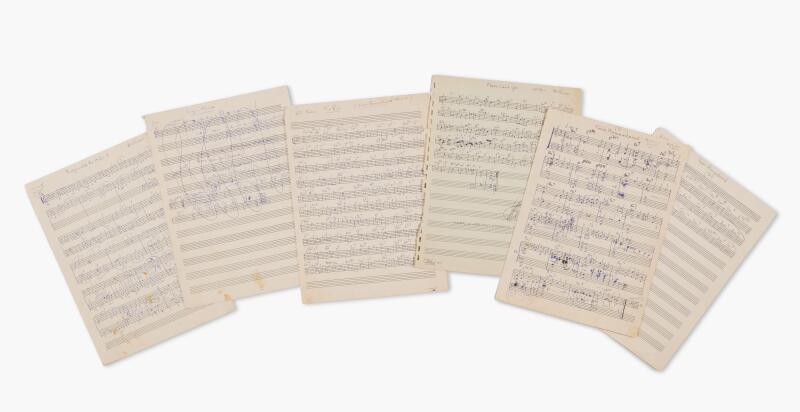
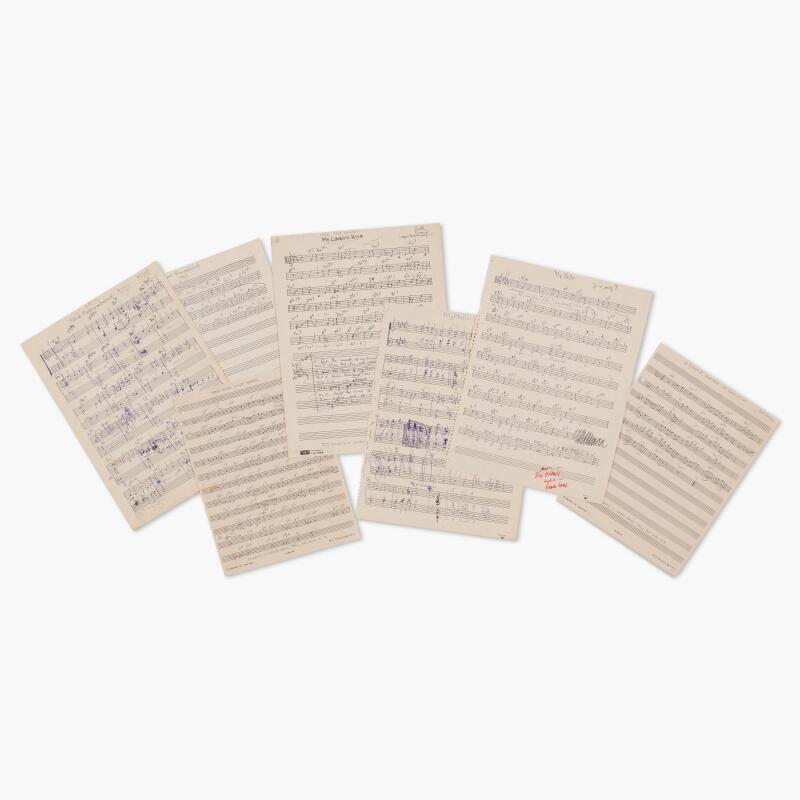
The Bill Evans Archive, 1959–1982
A collection of twenty-one original manuscript compositions for several of the jazz icon’s hits, spanning seven albums from 1959 to 1982
21 pages (approximately 8 x 11.5 in). Condition upon request.
Jazz is a quintessentially American art form—a diverse creation born out of a diverse environment. Pulling in the musical traditions of African rhythms and syncopation, European harmonic structure, it was further strengthened by the lessons and doctrines of ragtime and blues. Jazz moved with people nearly as much as it moved them, with iterations and sub-genres populating across the nation from the Gulf Coast to the West Coast. This national sound birthed a cultural phenomenon, underscored literary and historical movements, and saw the creation of some of the best American musicians of all time.
As one of the most important jazz pianists of his generation, Bill Evans cultivated and expanded the music tradition, moving beyond the hard bop tradition that defined the 1950s. Offering up a moodier sound enhanced by the ballad-driven and lyrical choices within his compositions, Evans' artistry would go on to inspire other jazz pianists such as Brad Mehldau, Chick Corea, and Herbie Hancock.
The famed pianist began his long and storied relationship with the piano at age six, later adding the violin, piccolo, and flute. Much like Jazz’s early origins in New Orleans and later cultivation in New York City, it was only sixty miles north of the birthplace of Jazz and within the various iconic clubs of Manhattan that Evans would come to artistic maturity. It was under a flute scholarship rather than piano, that Evans studied at Southeastern Louisiana College, receiving a degree in music education in 1946. The late 40’s marked Evans’ first period of musical creation with his first known tune “Very Early”. After backing Billie Holiday in a brief tour making appearances across the nation, Evans received the draft and joined the U.S. Army where he played in the U.S. Fifth Army Band.
Moving to New York in 1955, Evans met jazz composer George Russell, Lucy Reed, and Scott LeFaro—all formative figures within his life and collaborators within various stages of his career. Though struggling to make a name for himself amongst the roaring and reigning subgenres of Hard bop, murmurings of Evan’s innovative style began to make waves within the jazz scene and began to incite attraction from some of the genre’s top names.
"Bill had this quiet fire that I loved on piano. The way he approached it, the sound he got was like crystal notes or sparkling water cascading down from some clear waterfall." — Miles Davis
In early 1958, Miles Davis would call upon Russell to bring Evans for a performance with his band at the Colony Club. More than just a one-night feature, this performance was essentially an audition with Evans formally joining the Miles Davis Sextet soon after. With Evans on the piano, Coltrane and Cannonball Adderley as featured saxophonists Davis’ critically acclaimed album Kind of Blue was born. Despite its success, Evans would break off and begin to organize his own trio. It’s upon this departure and step into his own, that Evan’s original work begins to take shape.
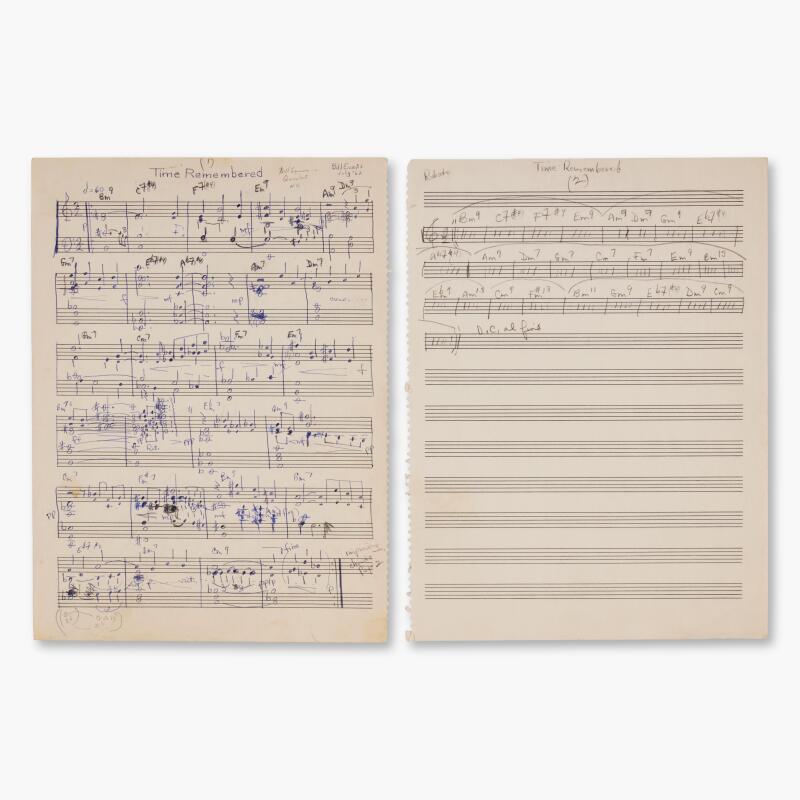
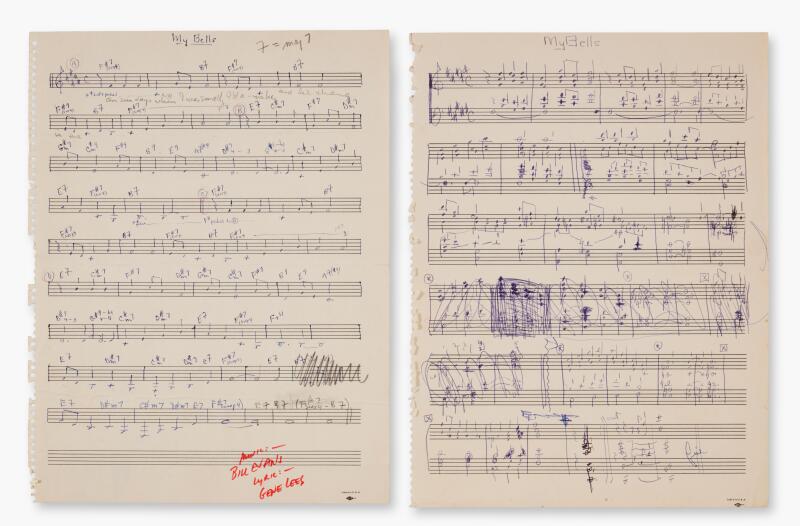
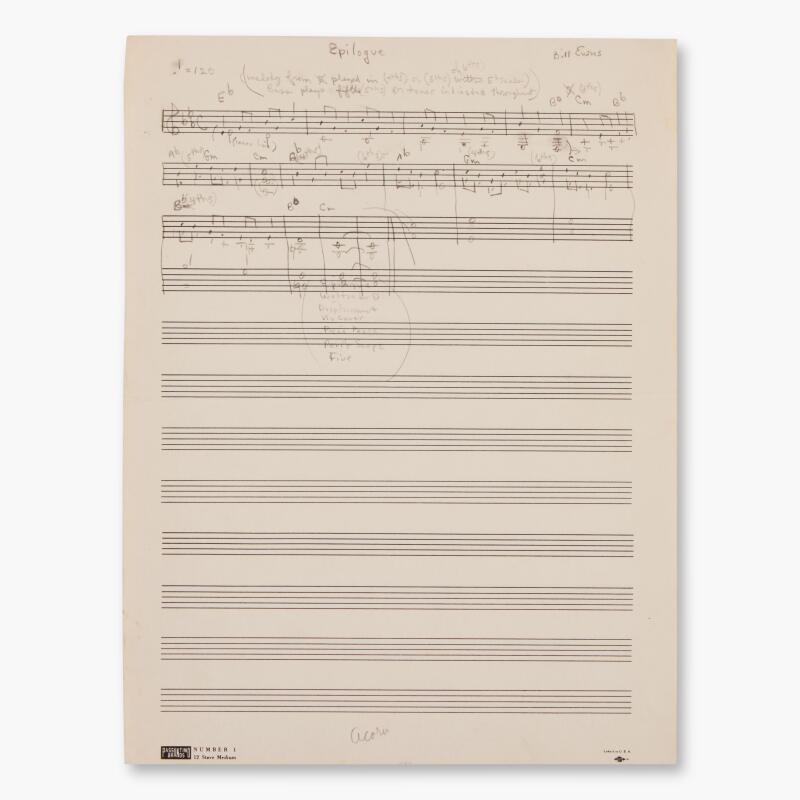
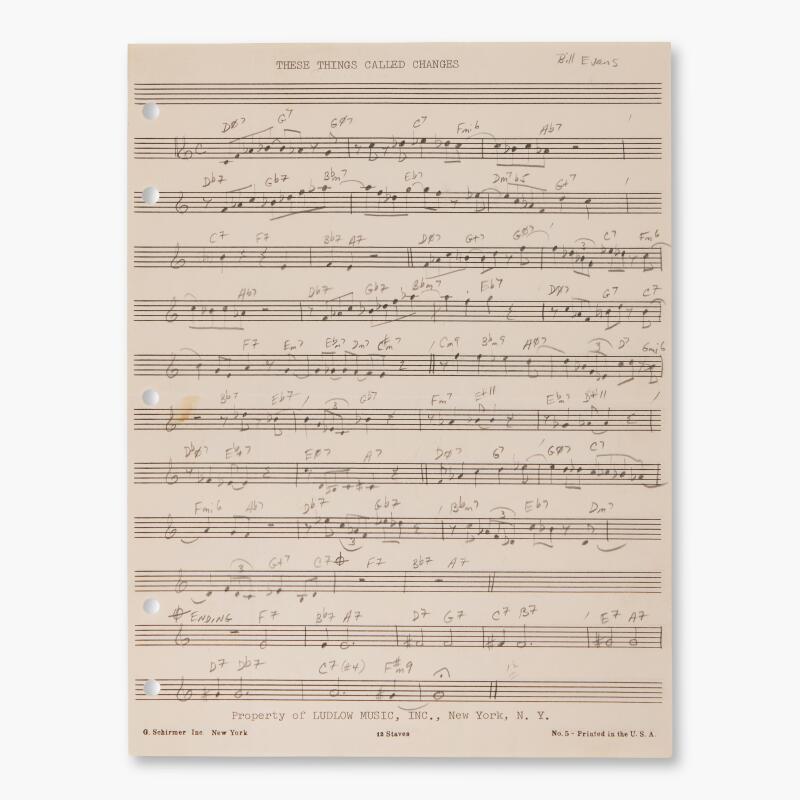
The present archive of original manuscript compositions offers a glance into highlights of Bill Evans's career in its formative moments—as a maturing bandleader, introspective composer, and Grammy-winning pianist. The archive includes compositions for:
- "Blues in F"
- "34 Skidoo"
- "Walking Up"
- "Fudgsicle Built For Four"
- "Loose Bloose"
- "Fun Ride"
- "There Came You"
- "Funny Man"
- "Time Remembered"
- "A Simple Matter of Conviction"
- "These Things Called Changes"
- "Orbit (Unless It's You)"
- "Prologue"
- "One for Helen"
- "Story Line"
- "My Bells"
- "Epilogue"
Representing over seven albums released from 1959 to 1982, this archive reflects the pianist's detailed creative process in crafting his iconic original compositions. In its drafts, notes, and revisions, we see a composer innovating in his genre, refining a legacy that continues to influence jazz to this day.
"Jazz is not a what, it is a how. If it were a what, it would be static, never growing. The how is that the music comes from the moment, it is spontaneous, it exists at the time it is created." — Bill Evans
Detailed inventory upon request.