
Captain E.A. Crenshaw Jr.
Smooth Log | World War II Ship's Log
1943 - 1945
Complimentary Shipping
Price:
International shipping available
Customs duties and taxes may apply.
Ships from: Kent, United Kingdom
Taxes not included
VAT and other taxes are not reflected in the listed pricing. Read more
Authenticity guaranteed
We guarantee the authenticity of this item.
Details

Description
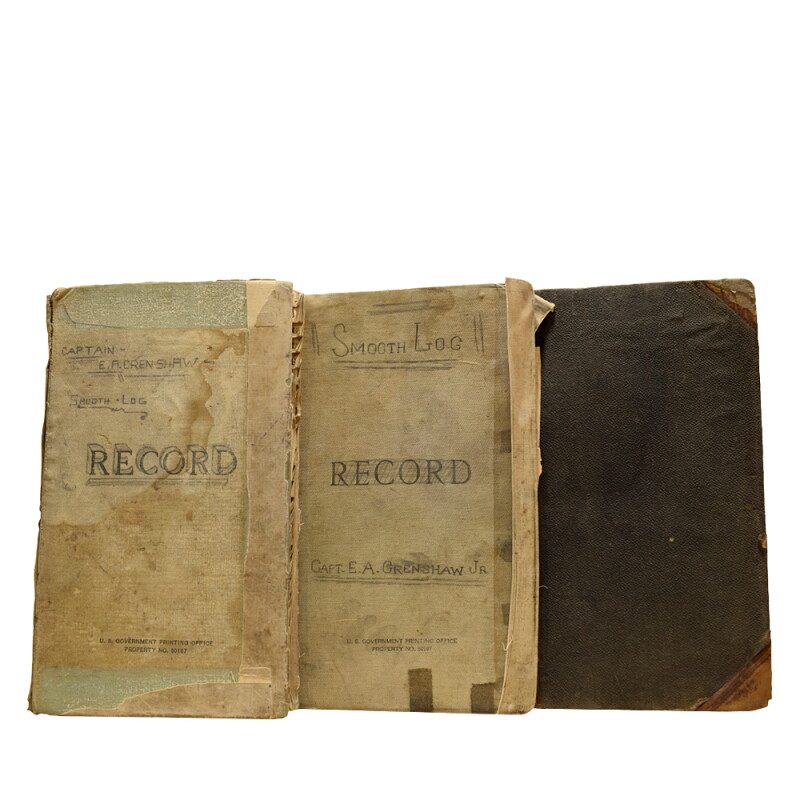
The original ship's log of Captain Crenshaw's convoy during World War II.
- Sold as a set of 3 volumes.
- Captain E.A. Crenshaw Jr.
- "Smooth Log" kept for Actions at Sea between 1943 and 1945 for Convoy UGS-43.
- May 1943 to February 1945.
- Folio.
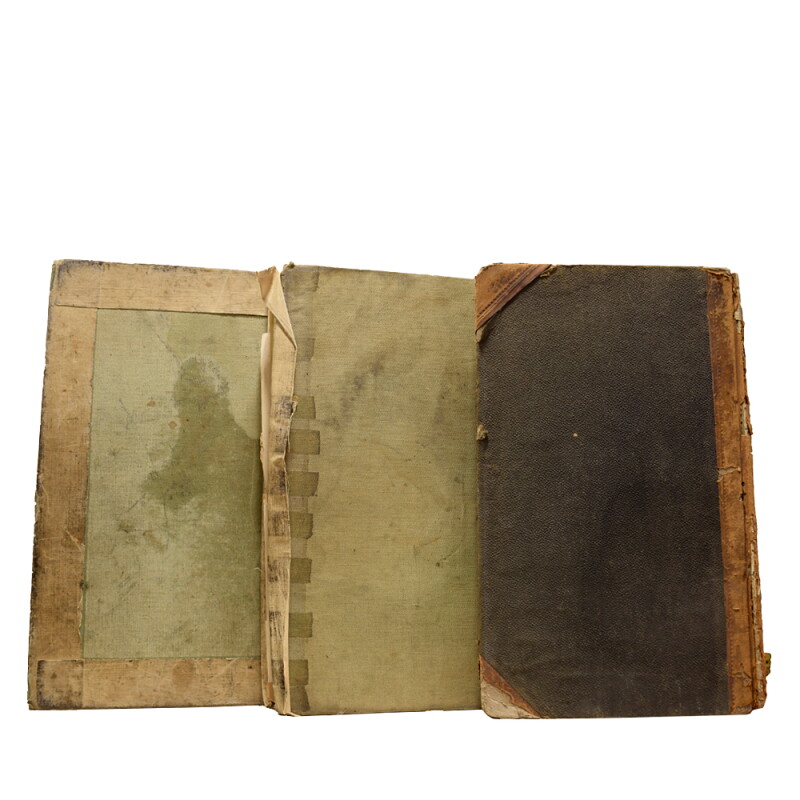
- Two oblong cloth-bound ledger volumes with alphabetic tabs to fore-edge, accompanied by a calf spined volume with annotated tabs to fore-edge (Strategy, Gunnery, Seamanship etc.) which is a manuscript reference book of how to deal with storms, formulation of orders, procedure for getting underway and a number of other points of naval strategy and etiquette.
- Within the text of this volume are a number of meticulous ink illustrations and diagrams of engine parts, oil flow systems, filters, pumps and pistons.
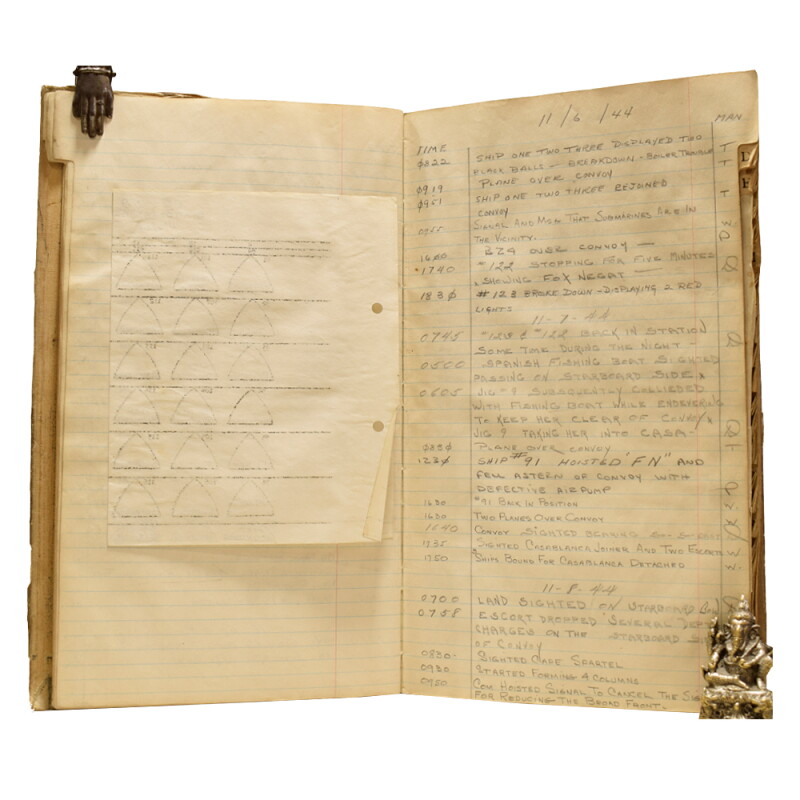
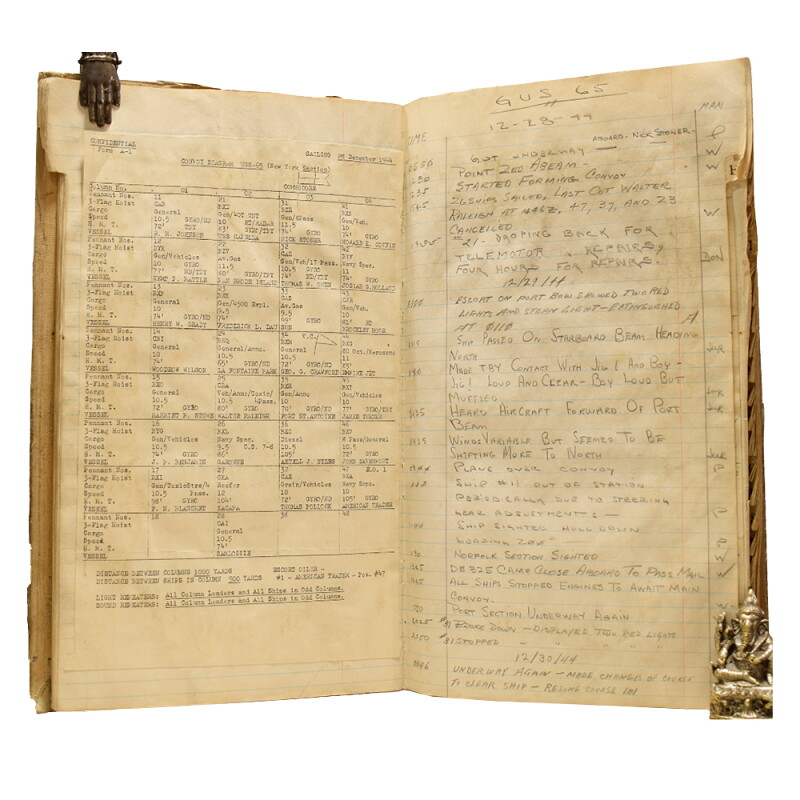
The two volumes titled "Smooth Log", are internally clean and filled out in pencil (in a number of hands) with meticulous timed and dated records of what happened to Captain Crenshaw's convoy on any given day.
On April 16th 1944, for example, we can see that ship #42, The Canfield "is a straggler, 18,000 yards astern" at 06:50 am; but by 1400 hours it has rejoined the convoy. On the 18th The Canfield has broken somewhere around the Cape Fear Outer Buoy, and that at 10:20 the next morning the Canfield "Accidentally fired 3 inch gun..." In addition to this kind of detail are numerous reports of fighters and bombers over the convoy, blimps regularly sighted, numerous reports of armed escorts casually chucking depth charges about, floating mines, ships joining and rejoining the convoy, changes of command (at one point a convoy falls under the command of a British Commodore, somewhere around Gibraltar, apparently an obstacle course of subs and floating mines) et cetera.
In addition are detailed, tipped in convoy charts showing the positions, names and roles of all ships. One volume has color signal and lighting diagrams tipped in at the rear showing signals for submarines, aircraft and the rather obscure flag signals for "I have cut a mine adrift with my paravanes"... these are conspicuously stamped "Confidential and Secret." Each volume is maybe half full of daily reports, perhaps 70-80 pages of manuscript log in all, not counting laid in convoy plans, lists of ships and other bits and pieces. Despite their somewhat salt-stained and dilapidated outward appearance they are inwardly fascinating and provide a wealth of detail regarding Pacific and Atlantic shipping convoys out of the US in time of war.
The UGS convoys were a supply and material convoy group from the US to Gibraltar and Casablanca instituted as a result of Operation Torch, the Allied invasion of French North Africa "and was the responsibility of the USN. The convoys usually formed in Hampton Roads, though some ships departed from New York City and joined them directly after they had already sailed, in which case Hampton Roads would not appear in their voyage records. Escorts in the Atlantic were the USN's responsibility, with British escorts provided from the Mediterranean."
"The UG convoys were a series of east-bound trans-Atlantic convoys from the United States to Gibraltar carrying food, ammunition, and military hardware to the United States Army in North Africa and southern Europe during World War II. These convoys assembled in Hampton Roads near the mouth of Chesapeake Bay and terminated in various North African locations as Axis forces retreated from 1942 through 1945." Arnold Hague: "The Allied Convoy System."
UGS-43 was escorted by a number of warships at various points, including the USS Sellstrom, USS Tomich and USS Wiseman, both of whom were distinguished destroyers.
Condition Report
 Fair
FairScuffed, worn and stained.
Internally clean and legible with occasional staining or soiling to margins.
The spines of both volumes are torn and repaired.
Signs of use and age.
Product is used.
Dimensions
Language
Subject
Conditions of Business
Please note that the cancellation right for EU/UK purchasers applies to this item. Please read Condition 19 of the Buy Now Marketplace Conditions of Business for buyers for more information. Read more here.