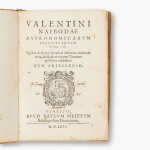
Gilbert, William | De magnete, magneticisque corporibus, et de magno magnete tellure …, London, 1600, first edition, old German pigskin over green-stained vellum
Live auction begins on:
October 20, 02:00 PM GMT
Estimate
30,000 - 50,000 USD
Bid
25,000 USD
Lot Details
Description
Gilbert, William
De magnete, magneticisque corporibus, et de magno magnete tellure; physiologia nova, plurimis & argumentis, & experimentis demonstrata. London: Peter Short, 1600
First edition, early state, with manuscript correction on page 47, of the "first major English scientific treatise based on experimental methods of research" (Printing and the Mind of Man).
Such fundamental terms as "electric force," "electric attraction," and "magnetic pole" were used for the first time in De magnete. Kepler, Bacon, Boyle, Newton, and Galileo all relied on Gilbert's findings in their own work.
Gilbert was chiefly concerned with the history of magnetism—including the nature, properties, and behavior of the lodestone—and the five magnetic movements of coition, direction, variation, declination, and revolution. He contended that the earth was one great magnet and distinguished magnetic mass from weight. His theories influenced Kepler, Bacon, Boyle, and Newton, and particularly Galileo, who used De magnete “to support his own proof of the correctness of the findings of Copernicus in cosmology” (Printing and the Mind of Man).
In the second portion of this work, Gilbert discusses the attractive effect of amber (electrum) and thus may be regarded as the founder of electrical science. Such fundamental terms as “electric force,” “electric attraction,” and “magnetic pole” were first used here. His insistence upon empiric evidence rather than the “unproved authority and superstitions of his time" (Dibner) greatly influenced the field of electricity.
Surprisingly little is known about the man who gave us the term "electricus" (later adapted to "electricity" by Sir Thomas Browne) as much was lost in the Great Fire of London, including Gilbert's home. We know that he practiced as a doctor in London and was appointed physician to Queen Elizabeth's court, likely shortly after he completed the present work.
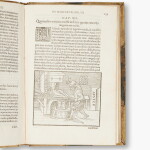
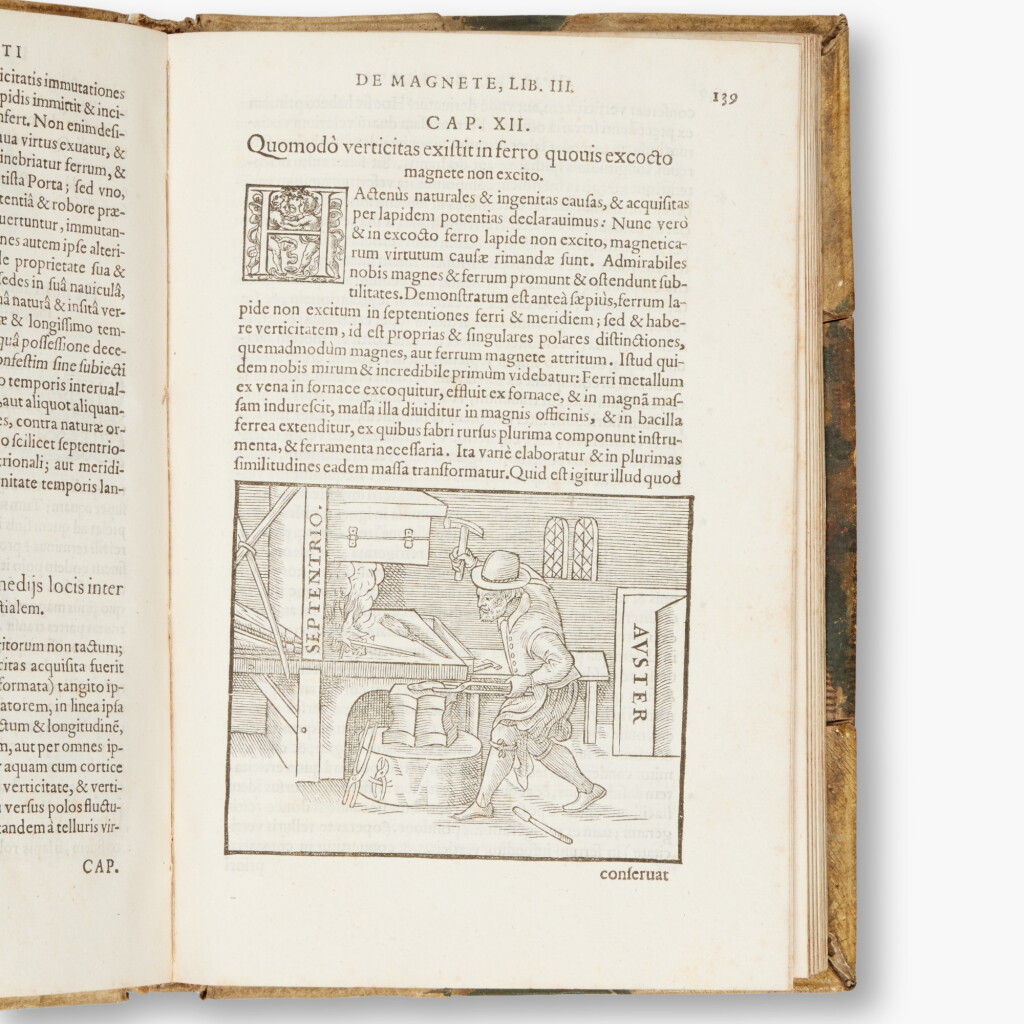
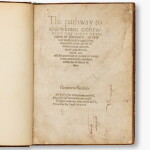
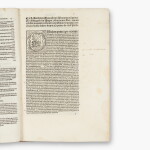
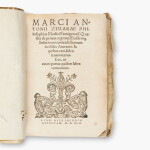
Folio in sixes (273 x 178 mm). Woodcut printer's device on title-page, woodcut of Gilbert's arms on title verso, one woodcut folding plate, 88 woodcut illustrations and diagrams in text, 4 of which full-page, ornamental woodcut headpieces and initials; some very minor foxing, crisp copy. Contemporary German half pigskin over green-stained, manuscript vellum binder's waster over boards; hinges a little stressed, very small joint tear to spine foot.
REFERENCES
Buffalo/Sparrow 85; Dibner, Heralds 54; ESTC S121112; Garden sale 77; Grolier/Horblit 41; Honeyman sale 4:1498; Horblit sale 2:461; Houzeau & Lancaster 2870; Martin sale 9:3466; Printing and the Mind of Man 107; Wheeler gift 72
PROVENANCE
Robert S. Dunham (acquired from Schwab in March 1949; Sotheby's New York, 11 December 1993, lot 691)



![Pliny, the Elder | Historia naturalis [Italian], Venice, 12 September 1489](https://sothebys-md.brightspotcdn.com/dims4/default/9db2168/2147483647/strip/true/crop/2000x2000+0+0/resize/150x150!/quality/90/?url=http%3A%2F%2Fsothebys-brightspot.s3.amazonaws.com%2Fmedia-desk%2Fwebnative%2Fimages%2F7e%2F0c%2Fa8f2c8eb4fe384efbf7f5fb1128c%2Fn12451-b8s5d-t2-02.jpg)
![Brahe, Tycho | De mundi aetherei recentioribus phaenomenis; [Progymnasmatum] liber secundus, Frankfurt, 1610](https://sothebys-md.brightspotcdn.com/dims4/default/3c089cb/2147483647/strip/true/crop/2000x2000+0+0/resize/150x150!/quality/90/?url=http%3A%2F%2Fsothebys-brightspot.s3.amazonaws.com%2Fmedia-desk%2Fwebnative%2Fimages%2F11%2Fe5%2Fb0cb56f443bbb4ab609fdb1b29b2%2Fn12451-bkf99-t1-03.jpg)