Bernard Boutet de Monvel
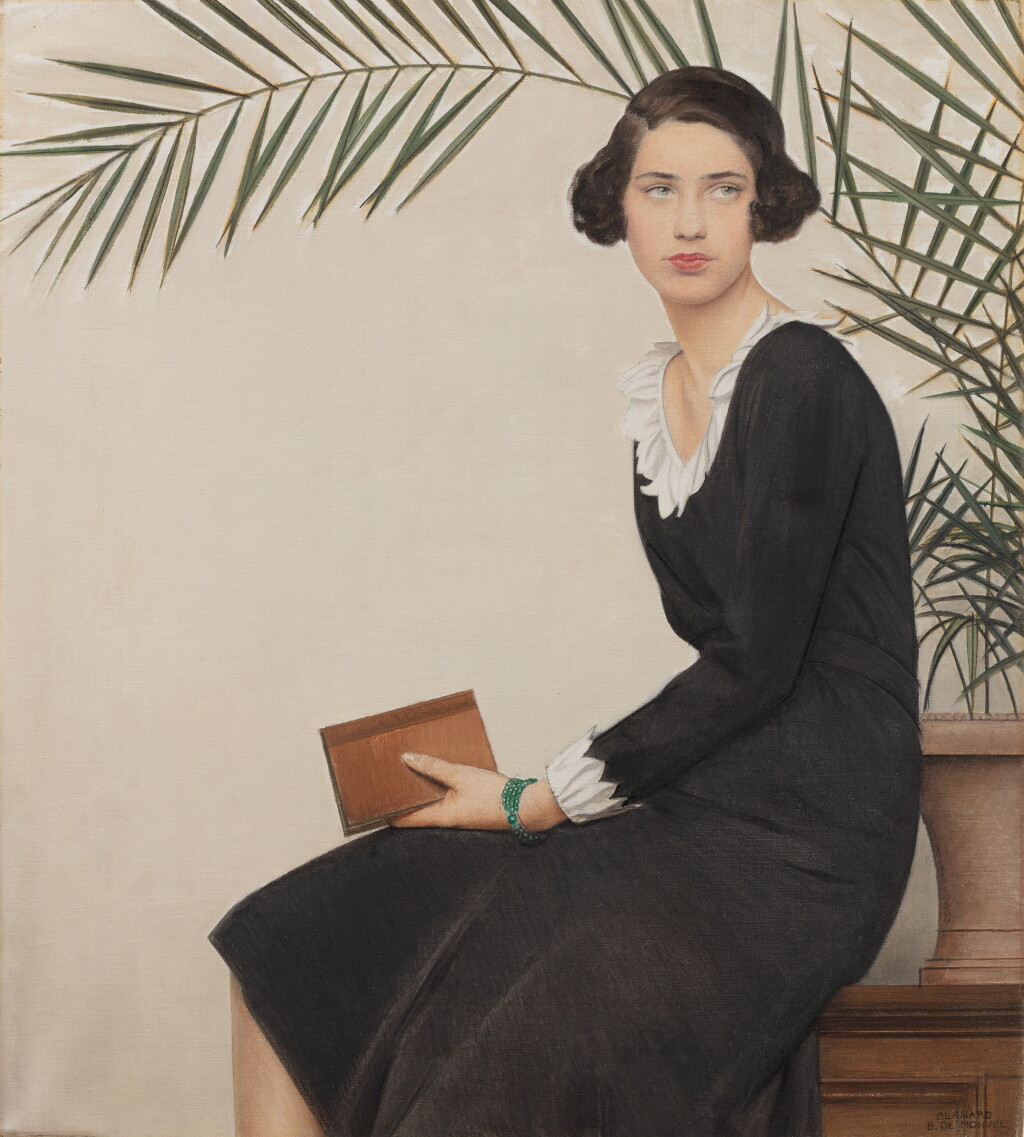
Portrait of Virginia Thaw
Auction Closed
November 5, 09:38 PM GMT
Estimate
80,000 - 120,000 EUR
Lot Details
Description
Bernard Boutet de Monvel
Paris 1881 - 1949 Açores
Portrait of Virginia Thaw
Oil and pencil on canvas
Signed lower right BERNARD / B. DE MONVEL
71 x 64 cm ; 28 by 25¼ in.
Collection of Mrs Rodman Wanamaker;
Anonymous sale, Christie's, New York, 10 December 1998, lot 184;
With Saint-Honoré Art Consulting, Paris, November 2013.
New York, Reinhardt Galleries, Bernard Boutet de Monvel, 21 November – 10 December 1932, no. 31;
New York, Barry Friedman Ltd, Boutet de Monvel, 1 November 1994 – 7 January 1995, no. 28, repr., listed under no. 40.
Town and Country, October 1930;
S.-J. Addade, Bernard Boutet de Monvel, Paris 2016, p. 277, repr.;
A. Bony, Alberto Pinto Signature, Paris 2016, p. 50, repr.
Virginia Thaw (1911–1997), aged under twenty, wears a very simple black afternoon dress by Chanel. Brightened only by the white collar and cuffs, the dress is fluid and modern, revealing the leg to just below the knee. Her still youthful face, with blue-grey eyes and a fair complexion delicately touched with pale pink, stands out against the canvas, which is barely tinted with a light wash. The delicate foliage of a potted plant animates this portrait of a demure young woman, framing her with a supple and decorative curve. Traces of the underlying preparatory drawing and the whiteness of the canvas show through in places beneath the colours, applied with lightness and delicacy, lending the work a sense of freshness and spontaneity.
The portrait was certainly executed shortly after that of Virginia’s father, William Thaw III, painted in Paris in 1928. Both rank among his earliest portraits of American personalities. It was in 1926, with the exhibition The Art of Boutet de Monvel, Paintings and Bas-reliefs (New York, Anderson Galleries), that New Yorkers were able to discover his work. His pursuit of perfection, “the meticulousness, detached delicacy and freshness of tone… characteristic of the Precisionist avant-garde” (Addade, 2016, op. cit., pp. 266, 272), aroused the enthusiasm of Café Society, which remained undiminished until his death in 1949. The influx of commissions and the friendships and professional relationships he established would lead the artist to spend several months each year in New York and to have a wooden house built in Florida between November 1936 and January 1937, “La Folie Monvel”.
A small reproduction of the painting can be seen in a photograph of a Hanging of New York Landscapes in the Studio at 134 East 74th Street, January 1932 (see Addade, 2016, op. cit., pp. 258–259). A preparatory drawing was sold by the Marty de Cambiaire gallery, Paris.
Virginia Thaw was a prominent American society figure who moved within New York’s high society and, in Southampton, mingled with the celebrities, artists, writers and others who gathered there. She made her debut in December 1929 at a grand ball held at the Ritz-Carlton in New York. In December 1954, she married Rodman Wanamaker II, heir to the department-store fortune of the same name.