
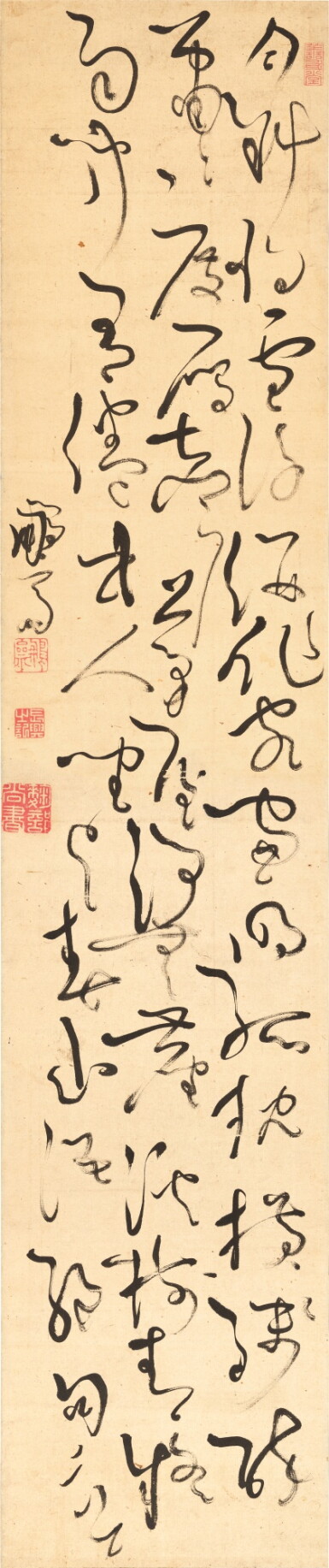
Kameda Bōsai (1752-1826) 龜田鵬齋 |Poems in Cursive Script 草書絕句兩首
Auction Closed
March 29, 12:19 PM GMT
Estimate
200,000 - 400,000 HKD
Lot Details
Description
Kameda Bōsai 1752-1826
Poems in Cursive Script
ink on paper, hanging scroll
signed Pengzhai and with four seals of the artist.
132.5 x 27.1 cm. 52 ⅛ × 10 ⅝ in.
This work presents cursive calligraphy of two poems that evokes the solitude of a traveler’s lodging: the slanting moonlight after a snowfall illuminating a window, the sound of geese passing on a cold night, and the quiet communion of a weary scholar with the spring mountains. Kameida Bōsai was a renowned late Edo period literati and Confucius scholar. Known for his dynamic "Flying Dance" calligraphic style, his calligraphy was strongly influenced by Huaisu (737-799).
龜田鵬齋 草書絕句兩首
水墨紙本 立軸
釋文:
月斜將雪後,併作客窗明。孤枕橫殘醉,蕭蕭度雁聲。
茅屋淨無塵,溪樹青疑雨。聞有倦書人,坐與春山語。
絕句二首。鵬齋。鈐印:「鵬齋」、「長興之記」、「麴部尚書」、「善身堂」
作者簡介:
龜田鵬齋,本名翼,後改名長興,別名文左衛門,是江戶時代後期著名文人、儒學家。師從三井親和,鵬齋書法風格獨樹一幟,筆勢如在空中飛翔迴旋,故被現代西方藏者譽為『飛翔之舞』(Flying Dance)。其書法受懷素影響深遠,曾有川柳云「鵬齋越州歸後,字勢多彎繞。」
You May Also Like


