
Simon Hantaï
Manteau de la Vierge
Lot Closed
July 7, 12:22 PM GMT
Estimate
60,000 - 80,000 EUR
We may charge or debit your saved payment method subject to the terms set out in our Conditions of Business for Buyers.
Read more.Lot Details
Description
Simon Hantaï
1922 - 2008
Manteau de la Vierge
signed and dated 63 - 64 (on the reverse)
oil on canvas
46 x 28.2 cm; 18 ⅛ x 11 ⅛ in.
Executed in 1963-1964.
This work is accompanied by a certificate of authenticity and will be included in the forthcoming Catalogue Raisonné of the artist currently being prepared by the Archives Simon Hantaï, Paris.
Galerie Maillard, Saint Paul de Vence
Private Collection, Belgium (acquired in 1976)
Acquired from the above by the present owner
Galerie Maillard, Saint Paul de Vence, Hantaï, 20 June - 16 July 1976
"It is possible that the history of painting is nothing but the question of the fold."
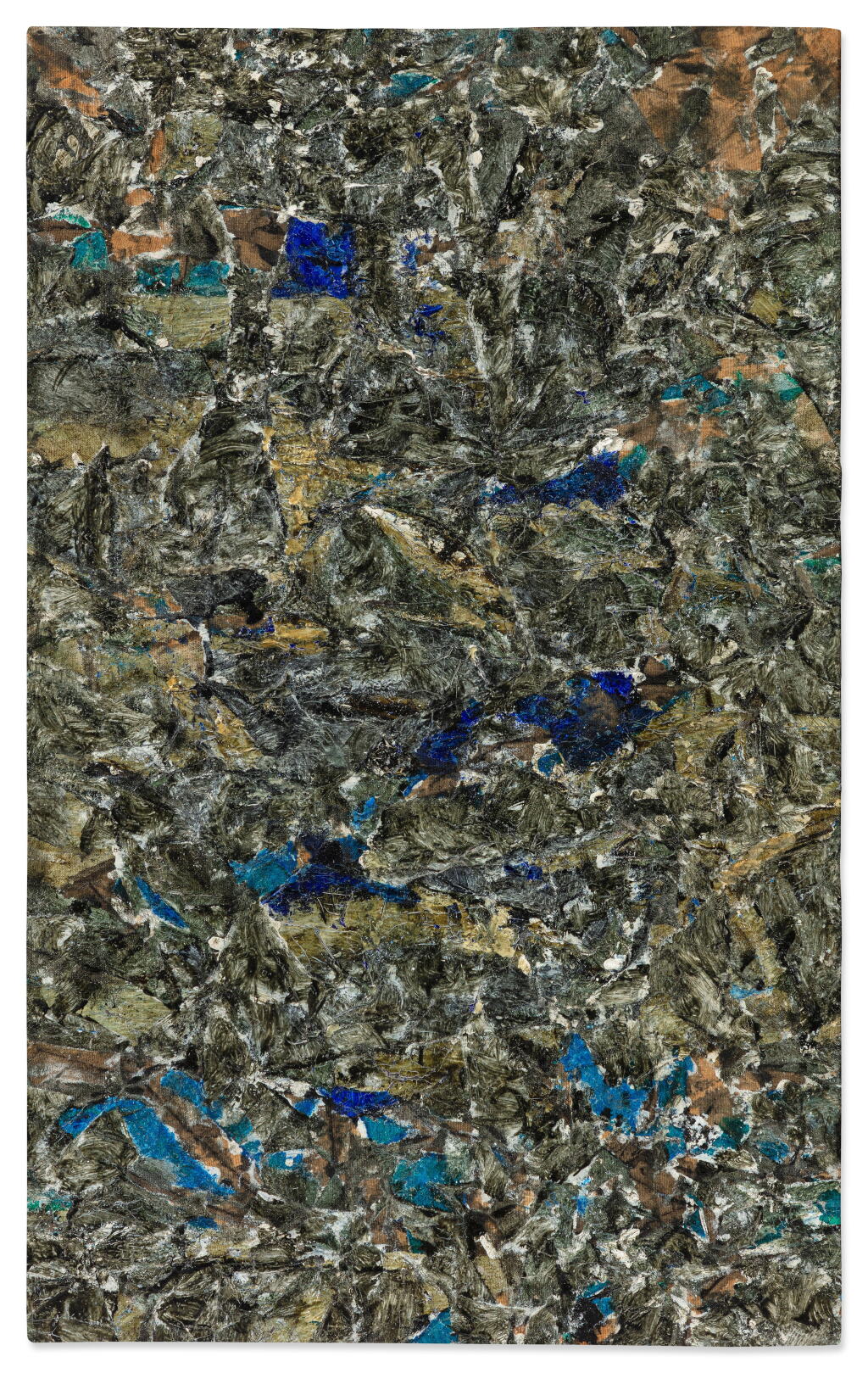
It was at the turn of the 1960s that Simon Hantaï invented the “pliage”, a gesture that radically transformed his practice: knotted and crumpled directly on the studio floor, the canvas was painted blind before being unfolded, revealing a surface in which areas of color stood opposed to unpainted lines. From this method emerged the series of the Mariales, which the artist also titled Manteaux de la Vierge [Mantles of the Virgin], in direct reference to the Marian drapery of early Christian painting, from Quarton to Tintoretto. Blue, the time-honored color of the Virgin's mantle, here becomes the chromatic pivot of an enquiry that is purely formal, one in which religious iconography is tuned into pictorial research.
Executed in 1963–1964, the present Manteau de la Vierge belongs to this group of intimately scaled canvases that Hantaï continued to produce after the large-format Mariales of the early decade. Against a dense ground of dark greens, blacks and ochres woven together by the folding process; shards of deep blue and turquoise surface like fragments of the original mantle, ringed by white reserves that reveal the weave of the canvas beneath. The paint, thick and compact, preserves the very relief of the gesture that shaped it: canvas becomes fabric, and fabric, paint. Like the mantle of Mary, which veils a presence without ever showing it, the fold here has no body to conceal, and yet, it invents one for itself, made entirely of matter, of hollows and of relief.