De Beers
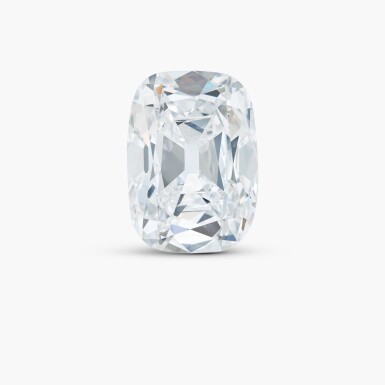
Unmounted Diamond 11.33克拉 枕形 D色 Type lla 鑽石
Auction Closed
June 16, 05:03 PM GMT
Estimate
600,000 - 800,000 USD
Lot Details
Description
The old mine brilliant-cut diamond weighing 11.33 carats.
Accompanied by GIA report no. 5232837957 dated January 27, 2026 stating that the diamond is D color, VVS2 clarity. Together with the original working diagram stating that the diamond may be potentially Internally Flawless and with a letter from the GIA stating that the diamond has been determined to be Type lla.
Every old mine cut diamond carries not only the memory of the earth, but the imprint of the human hand. To examine one closely is to hold a decision: the cutter's pause, the angle chosen by eye rather than instrument.
The old mine brilliant-cut represents one of the most significant chapters in the history of diamond fashioning. The present stone, at 11.33 carats, and shaped by Botswana, is a substantial example. Diamonds of this cut at this weight are not common; those that also carry D colour and VVS2 clarity are rarer still. The combination places it among a very limited category of old mine brilliants in which historical form and top-grade gemological quality coincide.
This lot reflects a broader shift in how the market values Old Mine Cuts, not as curiosities or alternatives to modern stones, but as objects with their own history, their own material logic and, increasingly, their own distinct demand. The individuality of this stone, the slight variations in outline, the facet geometry that follows the character of the original rough, is evidence of a process in which every decision was made by hand and was permanent: no two old mine diamonds are alike. It is precisely this quality that distinguishes it from anything produced after the introduction of mechanics and mathematical standards. This stone cannot be replicated, its attributes exceptional.
DE BEERS
Diamonds are miracles of nature. Their creation requires a complex chain of geological conditions, yet the result is exquisitely simple: a dazzling crystal of pure carbon. A diamond’s rarity, unmatched hardness and brilliance have made it an enduring symbol of purity, strength and prestige across civilizations for thousands of years.
Long before their origins were fully understood, diamonds were revered for what were perceived to be their mystical and divine properties. In India, the oldest known source for diamonds, warriors and spiritual leaders prized them as indestructible amulets, protecting against evil spirits and harm. In the Diamond Sutra, one of the most influential Buddhist texts, the stone represents supreme wisdom and clarity, cutting through illusion to achieve a full awakening of mind and spirit. The Ancient Greeks and Romans believed diamonds to be fragments of fallen stars or the tears of the gods, and Cupid’s bow was said to be diamond-tipped, able to pierce the most hardened of hearts. Centuries later, the Silk Road and Venetian trade routes brought diamonds to Europe where they became symbols of wealth and power. While no longer thought to fall from the heavens, diamonds’ rarity and beauty continue to inspire.
A diamond jewel is a collaboration between nature and craftsman. Each diamond rough is transformed through thoughtful cutting and polishing to tease out its full potential. The cutter analyzes the rough and determines what it shall become: a round brilliant to maximize light return and fire? A step cut to showcase the purity of the material? Or, perhaps, an old mine cut, a style developed centuries ago and most often found in antique jewels, from tiaras to rivières. The cut is distinguished by its cushion-shaped outline, broad facets and open culet, all of which lend the stone a distinct character and charm. Famous old mine-cut diamonds include the Hope, the Tiffany Yellow and the Grand Mazarin. The scarcity of diamonds has led many of these stones, particularly larger specimens, to be recut in order to align with modern specifications. Recently, there has been a renewed appreciation for old mine cuts, both for their beauty and their association with the grandeur of yesteryear.
The exquisite elongated old mine-cut diamond offered as lot 34 represents the continuation of a partnership between De Beers and Sotheby’s that celebrates diamonds as cultural icons and works of art. In addition to its cut, the diamond’s Type IIa classification brings to mind the legendary diamonds of Golconda, admired for their exceptional optical transparency. In April, Sotheby’s Hong Kong offered the Jwaneng 28.88, a spectacular modern round brilliant with excellent polish and symmetry. This was followed by a pair of perfectly matched 18.38-carat round diamonds at Sotheby’s Geneva this May, also with excellent polish and symmetry. All three diamonds were cut with extraordinary precision in accordance with Marcel Tolkowsky’s ground-breaking prescription for the modern round brilliant cut developed in 1919. Lot 34, however, was carefully faceted in an intentionally non-formulaic manner to reflect the human touch and to lend the stone its unique, captivating character.
You May Also Like