
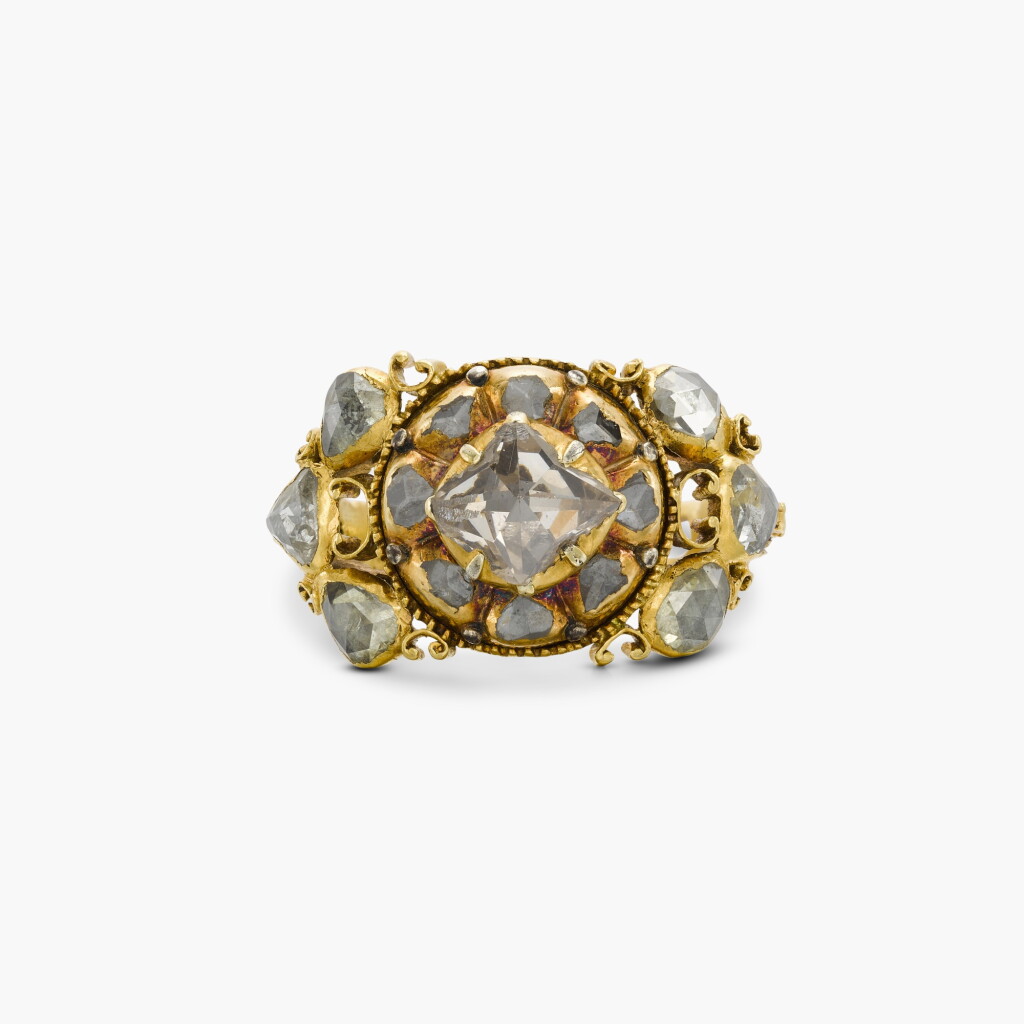
Diamond and Gold Ring
拍品已结束竞投
June 3, 02:15 PM GMT
估价
15,000 - 20,000 GBP
我们会按买家业务规则所列条款,透过您选择的付款方式收取或扣除款项。
展开文字拍品信息
描述
The central tetrahedral diamond surrounded by vari-shaped rose-cut diamonds, the gallery and mount with pie-crust, beaded, scrollwork and carved decoration, closed-back settings throughout.
- Ring size approximately J-K
- Mounted in gold
- Mid 17th Century- early 18th Century
- Gross weight approximately 10.0 grams
For rings in similar taste:
Exhibition Catalogue "A Sparkling Age, 17th century Diamond Jewellery", Antwerp, 1993, several examples throughout
Paris, Musee du Louvre, ECL 15553, a 17th century gold ring with similarly complex faceted central diamond
A decisive turning point in European jewellery was marked by the 17th century with the widespread adoption of the faceted gemstone. Advances in cutting techniques, building on earlier Renaissance experimentation and the discovery of the laws of refraction, allowed diamonds to sparkle with far greater brilliance. Diamond jewels became visible markers of wealth due to trade in gems from India and the opening of the rich diamond fields of Brazil. Precious metal mounts were increasingly crafted to be discreet, using techniques that minimised visible metal so that stones appeared to float or sit prominently. Foiling techniques were used behind stones to intensify brilliance, particularly in candlelit interiors where court life and religious ceremonies unfolded. The use of an all-gold setting in this ring may point to a 17th-century date of manufacture - from the 18th century, diamonds were usually set in silver - however, all-gold settings did survive longer in the Iberian Peninsula.