
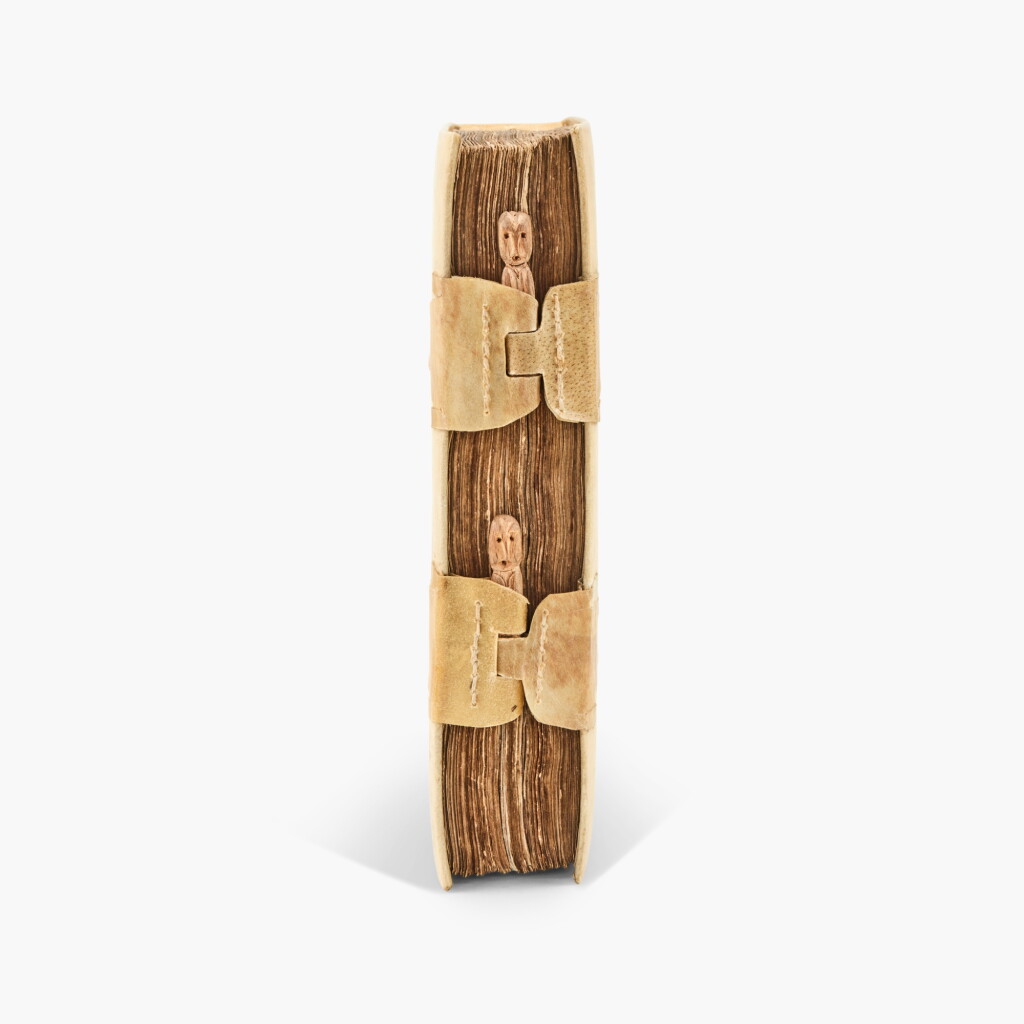
Reginald Scot | The discoverie of witchcraft, 1584, modern vellum with clasps, first edition of the first extensive treatment of witchcraft in English
Lot Closed
July 9, 12:39 PM GMT
Estimate
20,000 - 30,000 GBP
We may charge or debit your saved payment method subject to the terms set out in our Conditions of Business for Buyers.
Read more.Lot Details
Description
Reginald Scot
The discoverie of witchcraft, wherein the lewde dealing of witches and witchmongers is notablie detected, the knaverie of coniurors, the impietie of inchantors, the follie of soothsayers... and all the conveiances of legierdemaine and iuggling are deciphered... (London: [Henry Denham for] William Brome), 1584
FIRST EDITION, 4to (193 x 142 mm), COLLATION: A8 B6 C-V8 2A-2D8 *2 2E-2S8. Gothic and Roman type, woodcut initials, head- and tailpieces, woodcut illustrations, early modern ownership inscription to 2G6, modern vellum with decorative vellum clasps and wooden anthropomorphised pegs, title page remargined with some loss of text (possibly from another copy), marginal repairs to A2-C2, S, 2C1, and 2C5; 2M4-5 lacking, some pages lightly thumbed
FIRST EDITION OF THE FIRST EXTENSIVE TREATMENT OF WITCHCRAFT IN ENGLISH. However, Scot's viewpoint was that of a complete sceptic, and he uses this work to express his disbelief in all kinds of witchcraft and instead to attribute it to ignorance; that it would only be believed by "children, fooles, melancholike persons and papists" (p.472).
Contemporary writers sought to discredit Scot and brand him an atheist; he was subsequently attacked by James I, a strong believer in witches, as well as by Henry Holland in his Treatise against witchcraft (1590). Scot's work also acted as a rich source for authors and playwrights, such as Ben Jonson and Thomas Middleton. The descriptions of conjuring tricks display Scot's research and are considered to be the earliest systematic explanations.
PROVENANCE:
John Cheswis (potentially Captain John Cheswis [1607–1644], seventeenth-century military officer): ownership inscription; Henry Hurst: ownership inscription dated Dec 25 1773;
LITERATURE:
STC 19166; USTC 510111