
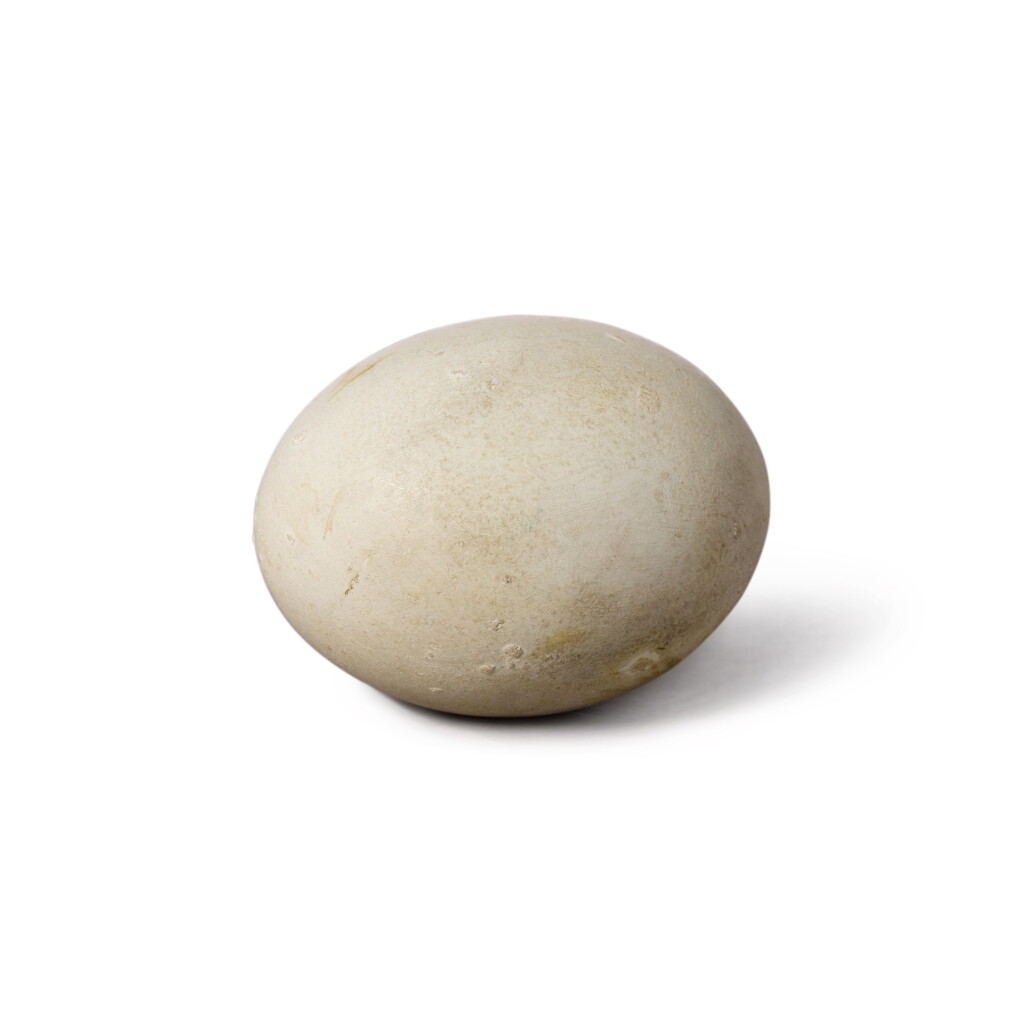
British Antarctic "Terra Nova" Expedition, 1910-1913 | An Adelie penguin egg, with typewritten note signed by Herbert Ponting
Lot Closed
July 9, 12:49 PM GMT
Estimate
10,000 - 15,000 GBP
We may charge or debit your saved payment method subject to the terms set out in our Conditions of Business for Buyers.
Read more.Lot Details
Description
British Antarctic "Terra Nova" Expedition, 1910-1913
Adelie penguin egg, circa 75 x 55mm diameter
Housed in a black carboard presentation box with a glass lid (117 x 117 x 65 mm), including a typewritten note signed by Herbert Ponting ("H.G. Ponting"), reading:
"This box contains the egg of an Adelie Penguin,—the most grotesque bird in all the world,—which was brought back by me from the Antarctic regions, where I was a member of Captain Scott's Expedition on which he and four comrades—Captain Oates, Dr Wilson, Lieut Bowers and Petty Officer Evans—perished on their return journey from the South Pole. The Adelie Penguin breeds farther South than any other known creature. This egg was found by me, in November 1911, seven miles from Captain Scott's Winter Quarters, Lat:77.30 S., 750 miles from the South Pole."
A SPECIMEN FROM SCOTT'S NOTORIOUS EXPEDITION TO THE SOUTH POLE, COLLECTED BY THE MAN WHO CAPTURED MANY OF THE MOST POWERFUL AND ENDURING IMAGES OF THE HEROIC AGE OF ANTARCTIC EXPLORATION.
Herbert Ponting (1870-1935) is famed for his role as the expedition photographer and cinematographer for the British Antarctic Expedition, also known as the Terra Nova Expedition, led by Captain Robert Falcon Scott. Ponting took some of the first known colour photographs of Antarctica, and was also among the first men to use a portable movie camera in the region. Having helped set up the winter camp at Cape Evans in 1911, Ponting took many photographs of Scott and his men, as well as over one hundred photographs of Adelie and Emperor penguins.
Whilst the tragic deaths of Scott and his men are central to the legend of the Terra Nova expedition, one of the expedition's major objectives was scientific, as this object reminds us. The Terra Nova returned laden with specimens of plants, animals, and fossils, of which more than four hundred were new to science. Penguin eggs were prized for their alleged importance in revealing evolutionary links between reptiles and birds. The perilous lengths that Scott's men went to in order to collect such specimens are vividly recounted in the memoirs of Apsley Cherry-Garrard.
The box and accompanying typewritten note signed by Ponting suggest that this item was presented as a gift. Intriguingly, the Scott Polar Research Institute holds another Adelie Penguin egg housed in a box of apparently identical construction, with a near-identical typed note signed, stating that the specimen was found at the same location as the present egg ("Lat:77.30 S., 750 miles from the South Pole"). The two specimens may well have been removed by an expedition member from the same clutch of eggs.
REFERENCES:
For a similar specimen, see catalogue of Scott Polar Research Institute, Accession no. Y: 71/1; Ian Christie, "Ponting, Herbert George (1870-1935)", ODNB, Web, Accessed 18 June 2026