PROPERTY FROM A DUTCH PRIVATE COLLECTION
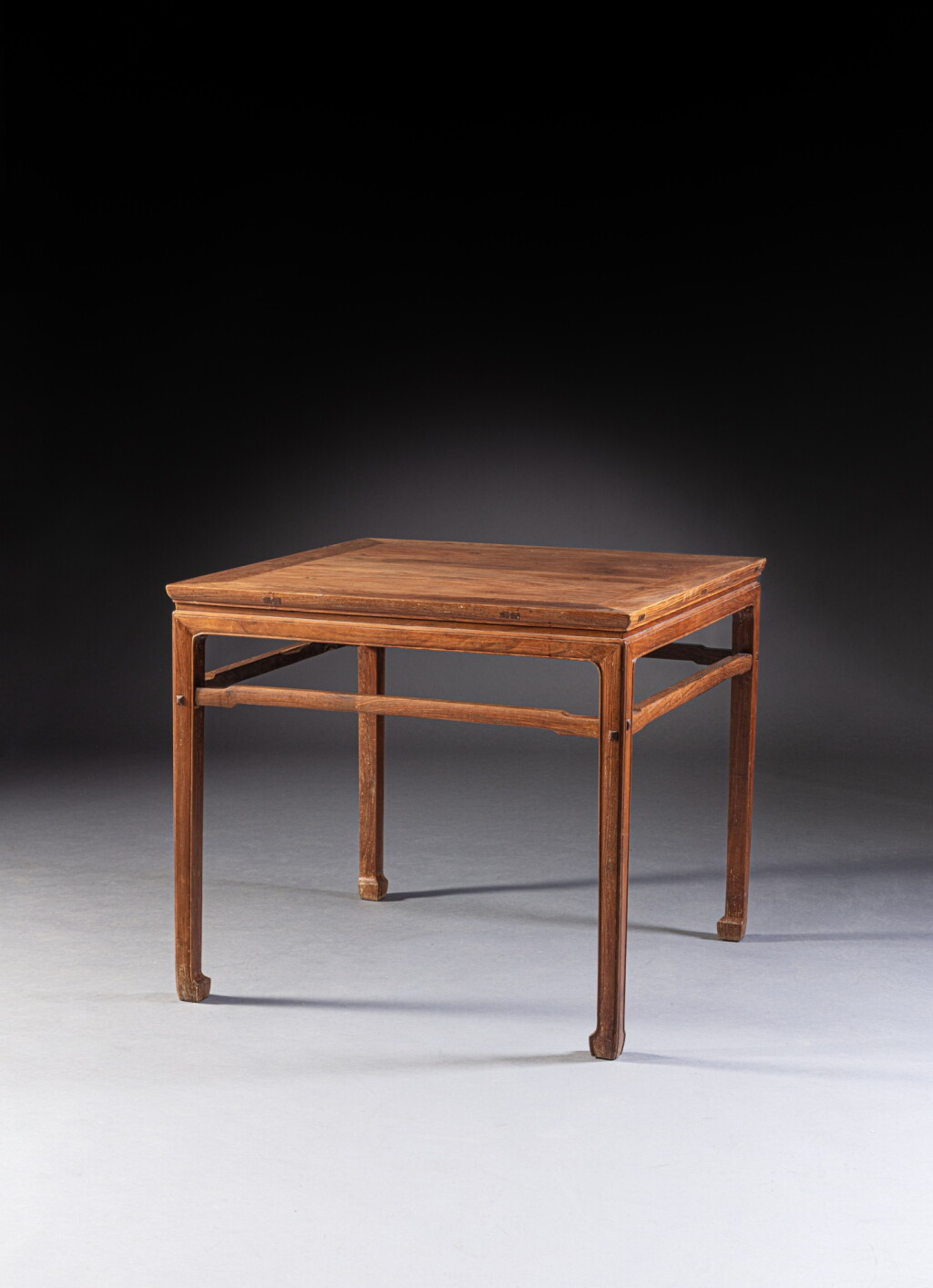
A 'huanghuali' square table (Fangzhuo), late Ming / early Qing dynasty
Auction Closed
June 11, 03:42 PM GMT
Estimate
40,000 - 80,000 EUR
Lot Details
Description
86.5 x 97 x 97 cm, 34 by 38¼ by 38¼ in.
Please note that this lot may contain restricted materials. Sotheby's is not able to assist buyers with the shipment of any lots containing restricted materials into the U.S.A. Buyer's inability to export or import these lots cannot justify a delay in payment or a sale's cancellation.
Ming Furniture Ltd., New York, 2nd August 2000.
The present table is striking for its clarity of form, its decoration confined to the horse-hoof feet and hump-back stretcher with its exposed tenons. This pared-back design turns one's focus immediately to the quality of the huanghuali wood and its outstanding translucent golden honey colour.
For centuries, the square table or 'Eight Immortals table' (Baxianzhuo) has been the form of choice for dining, writing, appreciating antiques, or playing games. The humpback stretcher is well placed to provide strength to the structure while lightening the appearance and allowing ample room to sit comfortably. Compare a related 16th or 17th century huanghuali square table, with decorative struts inset between the apron and stretcher, illustrated by Grace Wu Bruce in The Dr. S.Y. Yip Collection of Classic Chinese Furniture, Hong Kong, 1991, pp 80-1, cat. no. 27; and a huanghuali game table of the same clean design offered in our London rooms, 11th May 2016, lot 80. Also compare a banzhuo (half table) of closely related hoof-foot and hump-back stretcher design, similarly rare in its use of exposed tenons, in Grace Wu Bruce, Two Decades of Ming Furniture, Beijing, 2010, p. 33.
Huanghuali is among the most valued hardwoods in China, appreciated for its vibrant colour, impressive grain pattern and light sweet fragrance. During the Ming and Qing dynasties, it was used for making high quality furniture and craftsmen took full advantage of its distinct qualities to create smooth and plain surfaces that retained much of the material’s natural beauty. Hu Desheng in The Palace Museum Collection. A Treasury of Ming and Qing Dynasty Palace Furniture, vol. 2, Beijing, 2008, p. 578, describes huanghuali furniture as that which typically combines artistry, technical rationale and functional utility and the embodiment of China’s rich cultural heritage.