PROPERTY FROM AN IMPORTANT EUROPEAN PRIVATE COLLECTION
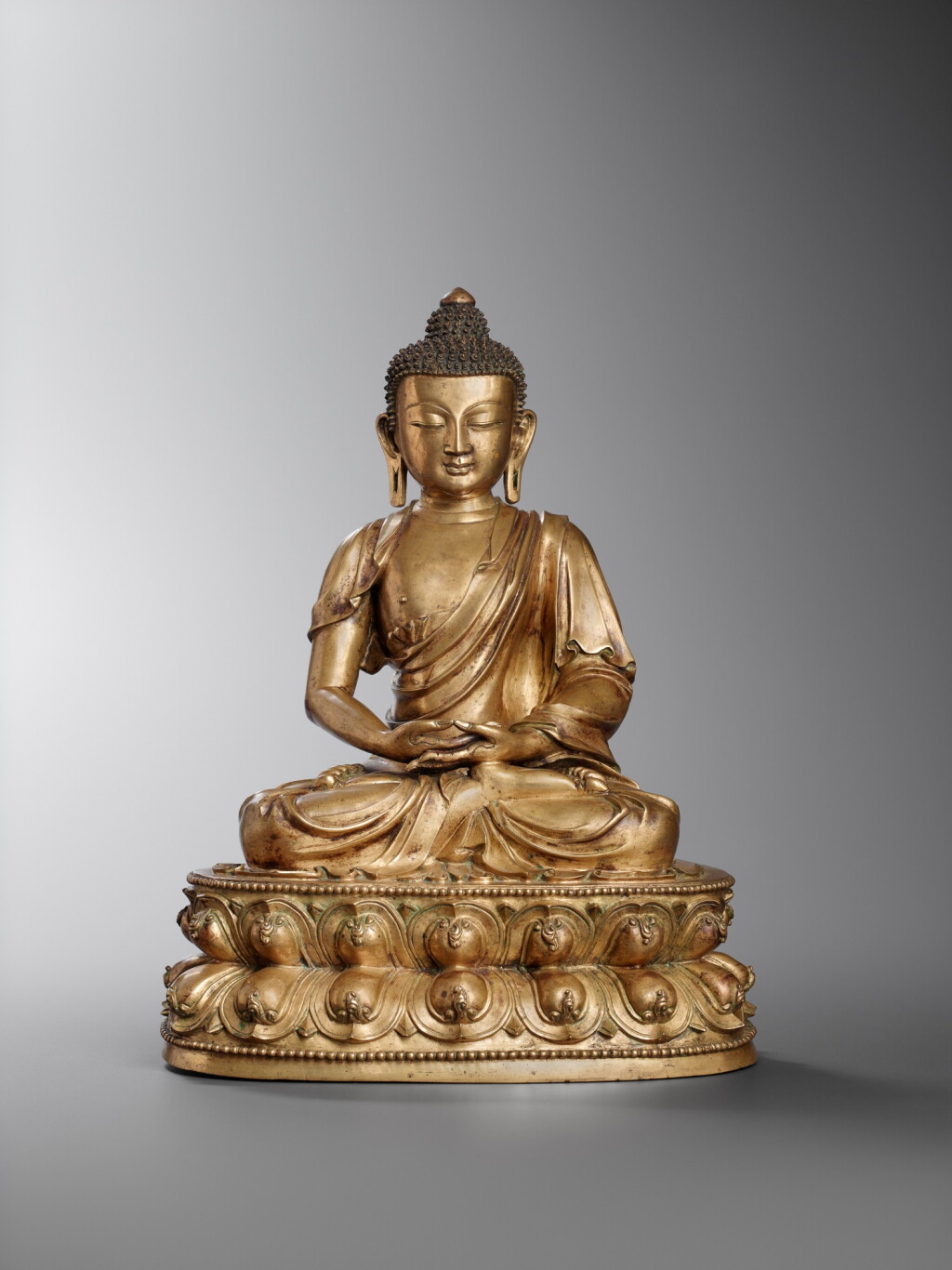
A copper-alloy figure of Amitabha Buddha, Ming dynasty, 15th century
Auction Closed
June 11, 03:42 PM GMT
Estimate
80,000 - 120,000 EUR
Lot Details
Description
Height 31 cm, 12¼ in.
Sotheby's New York, 18th - 19th October 1990, lot 203.
The finely cast figure of the Nirmanakaya aspect of Buddha Amitabha (Immeasurable Light), with hands in meditative repose (dhyana mudra), is seated in the yogic diamond posture (vajraparyankasana) on a lotus pedestal. The narrowed, downcast eyes and the arrangement of the voluminous robe with deep folds across the body and legs, and the idiosyncratic fall of the cloth over the left shoulder and upper arm, is reminiscent of early Ming period Buddhist sculpture: compare the robe style, including the length of cloth covering the right shoulder, with a Yongle period Bhaishajyaguru in the Potala, see Ulrich von Schroeder, Buddhist Sculptures in Tibet, vol. II, Hong Kong, 2001, p. 1253, fig. 344E. The full lotus petals of the base, with an elaborate flourish on the tips, are redolent of the larger scale early Ming bronzes such as the Yongle Buddha formerly in the Speelman Collection, see Sotheby’s Hong Kong, 7th October 2006, lot 808.
The Yongle Emperor (r. 1402-1424) and his grandson the Xuande Emperor (r. 1425-1435) were notable supporters of Tibetan Buddhism and fundamental in the religion's widespread introduction into Chinese society, sponsoring the arrival of monks from Tibet, the construction of monasteries and the printing of sutras. Closely related seated figures, commissioned and inscribed in the emperors' names survive in the world's leading collections, each typified by the same naturalism and exceptional quality as the present.
You May Also Like