
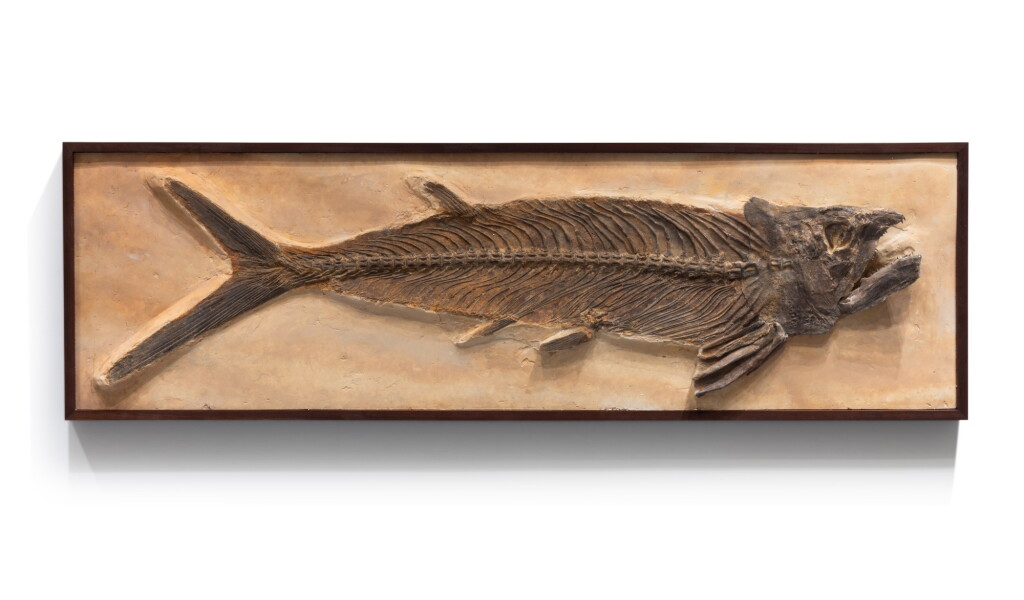
Large Fossil Ichthyodectid Fish
Late Cretaceous Period (approx. 87-82 million years ago), Niobrara Formation, Kansas
Auction Closed
July 16, 06:46 PM GMT
Estimate
60,000 - 90,000 USD
Lot Details
Description
Large Fossil Ichthyodectid Fish
Ichthyodectidae – species unidentified
Late Cretaceous Period (approx. 87-82 million years ago)
Niobrara Formation, Kansas
72½ x 22⅜ x 6⅞ inches (184.2 x 56.8 x 17.5 cm), skeleton measures 64 x 18 x 3.5 inches (162.6 x 45.7 x 8.9 cm) in relief. 121 pounds (54.9 kg).
Possibly a vintage preparation of a virtually complete large fish skeleton with right side exposed and articulated in matrix, remounted and framed in good condition. The articulated skull is particularly well preserved, although the fins may be incomplete or moderately distorted. Framed and rigged for wall hanging.
A VIRTUALLY COMPLETE FOSSIL FISH SKELETON FROM THE CRETACEOUS PERIOD
Ichthyodectid fish were a successful group of predatory fish that reached their peak during the Late Cretaceous Period. They could grow to lengths of 20 feet or more and dominated the Western Interior Seaway that covered much of what is now North America approximately 85 million years ago.
The best known ichthyodectid is Xiphactinus, and the example seen here represents a closely related but exceedingly more rare species possibly Ichthyodectes or Gillicus. This specimen shows remarkable preservation of the right side of the body, skull, and jaw. Like other ichthyodectids, this specimen shows the characteristic elongate body, powerful tail, and powerfully built bulldog-like jaws, qualities that made these fish extremely efficient hunters during their nearly 100 million years here on Earth.
Ichthyodectids experienced a marked decline at the end of the Cretaceous Period, alongside mosasaurs and other marine reptiles who had also dominated the seas during that time. Their decline is often considered a primary factor in allowing sharks to become the apex ocean predator beginning in the Early Paleogene Period, about 60 to 65 million years ago.
You May Also Like


