
Property from a Private Collection, Spain
Prabhakar Barwe
Midnight Myth
Auction Closed
March 17, 05:35 PM GMT
Estimate
100,000 - 200,000 USD
Lot Details
Description
Property from a Private Collection, Spain
Prabhakar Barwe
1936 - 1995
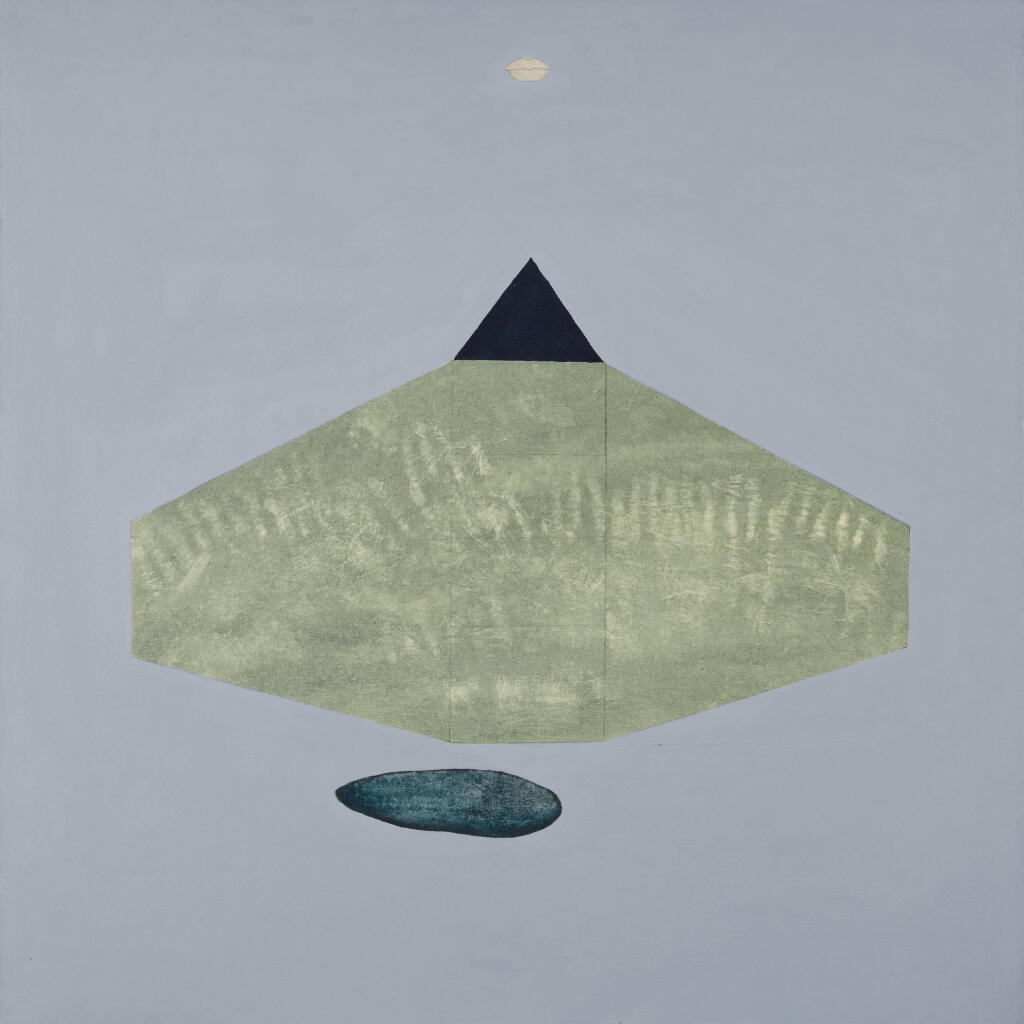
Midnight Myth
Oil on canvas
Signed and dated in Devanagari and further signed, dated, titled and inscribed ‘PRABHAKAR BARWE 1977. / 'MIDNIGHT MYTH'36'' x 36''’ on reverse
36 ⅛ x 36 ⅛ in. (91.8 x 91.8 cm.)
Painted in 1977
Acquired directly from the artist, Delhi, circa late 1970s
“I like to believe that our subconscious holds not only forms that exist in the space outside but also free, surreal, mysterious forms that we have never seen, experienced or imagined.” (P. Barwe, The Blank Canvas, Bodhana, Mumbai, 2013, p. 48)
Born into a family of artists in rural Maharashtra, Prabhakar Barwe honed his skills at the Sir J.J. School of Art, Mumbai, in the 1950s. Barwe aligned himself with the ethos of the Progressive Artists' Group, delving into Expressionism and drawing inspiration from the Surrealist movement, notably Paul Klee’s works.
At the core of Barwe’s artistic journey lies a lifelong exploration of symbolism. He believed that a painting’s ontological complexity is essential to its meaning. This conviction prompted his shift from figurative styles to focusing on the interplay between material and abstract elements. While he aimed for external forms to be immediately accessible, Barwe sought to imbue his works with an abstract significance that would reveal itself gradually to the viewer. This transformative approach began in the 1960s when Barwe worked at the Weavers' Service Centre in Varanasi alongside traditional craftsmen. There, he encountered Tantric art and embraced its conceptual imagery, while his interest in Taoism and Zen informed his muted color palette.
Midnight Myth captures a transitional phase in Barwe’s artistic practice, bridging the bold expressionism of the 1970s with his serene minimalistic compositions of the 1980s and 1990s. This shift reflects a deliberate reduction in symbolic and textural intensity. On his creative process, Barwe writes, “Initially form gets itself transformed into object, after which the object gets itself settled in the painting space as an abstract-sign. And colour moving towards colourlessness… merges with the colour atmosphere of the painting in its entirety.” (P. Barwe quoted in P. Sheth, Dictionary of Indian Art & Artists, Mapin Publishing, India, 2006, p. 53)
In the present lot, Barwe achieves a harmonious synthesis of expressionist and surrealist elements. The composition centers on a prominent geometric form suspended above a dark blue, cloud-like oblong. The central shape, painted in a thin green layer disrupted by large handprint-like smudges, unfurls its wings across the canvas. Its core is divided into four rectangular sections crowned by a black triangle, which points upwards to a pair of floating lips with an ethereal glow. Their bright white hue against a soft grey background evokes “the quietness of cool moonlight,” (P. Barwe, The Blank Canvas, Bodhana, Mumbai, 2013, p. 55) while the composition’s verticality highlights the mystic symbolism of the lips. This work’s carefully deployed abstraction culminates in its title, poetically coined Midnight Myth, as Barwe invites viewers to ponder its enigmatic significance.
Barwe’s unique contribution to the visual arts is reflected by numerous prizes, including the Academy of Fine Arts award in Kolkata (1963), the Bombay Art Society awards (1964 and 1968), the Maharashtra State Award (1971), and the prestigious Lalit Kala Akademi award (1976). In 1990, he published The Blank Canvas, a book in Marathi that reflects on his meditative creative process.