Property from a Distinguished Collection, Europe
Emil Nolde
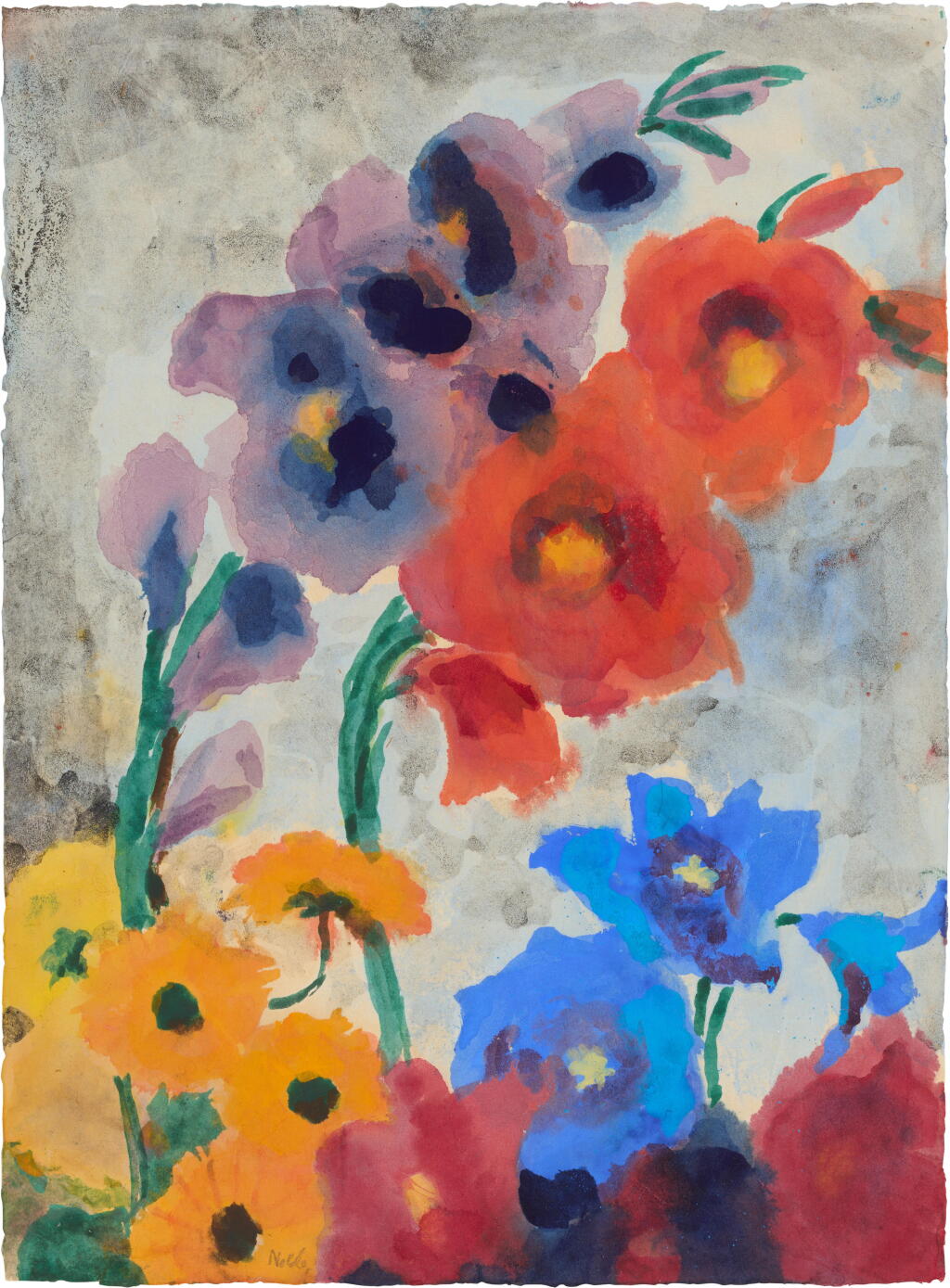
Blumenzauber (Gladiolen, Gerbera) (Flower magic (gladioli, gerbera))
Lot Closed
June 5, 12:44 PM GMT
Estimate
40,000 - 60,000 EUR
We may charge or debit your saved payment method subject to the terms set out in our Conditions of Business for Buyers.
Read more.Lot Details
Description
Property from a Distinguished Collection, Europe
Emil Nolde
1867 - 1956
Blumenzauber (Gladiolen, Gerbera) (Flower magic (gladioli, gerbera))
signed (lower left)
watercolour and gouache on paper
47 by 34.7 cm.
18½ by 13⅝ in.
Executed circa 1950.
The Scholarly Advisory Board of Stiftung Seebüll Ada und Emil Nolde has confirmed the inclusion of the work in a future catalog raisonné of the watercolours and drawings by Emil Nolde (1867–1956), (Reg.-Nr. 973).
Studio of the artist
Galerie Otto Ralfs (acquired in 1954 from the above)
Galerie Thomas, Munich
Collection Johenning, Dusseldorf (acquired in 1996 from the above)
Galerie Thomas, Munich (acquired in 2018 from the above)
Acquired in 2024 by the present owner
- Nolde’s iconic flower watercolours reflect his profound devotion to nature
- His depictions of gladioli and gerbera served as a way to reconnect with colour after the trauma of World War II
- Blumenzauber exemplifies Nolde’s mastery of watercolour and gouache, featuring vivid primary colours and fluid brushwork
A pioneer of German Expressionism, Emil Nolde is celebrated for his intuitive use of colour and affinity with nature. In the years following the Second World War, Nolde lived in Seebüll, where he cultivated a lush garden that became a major inspiration for a remarkable series of floral watercolours. Throughout his career, flowers served as a recurring motif and a beacon of hope.
Under the Nazi regime, Nolde was dismissed from his teaching post and his work was branded as "degenerate art." In the aftermath of the war, once free to paint again, Nolde turned to the subject of flowers to reconnect with colour and rediscover artistic expression. As the artist himself stated, his aim was “grasping what lies at the very heart of things” and “transforming nature by infusing it with one’s own mind and spirit” (Wolf-Dieter Dube, The Expressionists, London, 1977, p. 79).
Many of his floral motifs were created en plein air, reflecting his deep emotional connection to the natural world. Yet, they are far more than botanical studies. In their unmatched beauty, Nolde’s flower works transcend the literal and become painted poetry.
Executed around 1950, Blumenzauber (Gladiolen, Gerbera) exemplifies Nolde’s mastery of watercolour and gouache. Using a vivid palette of red, yellow, and blue, he layers and diffuses colour with fluid brushwork to animate the composition. These primary hues reflect Nolde’s conviction that colour alone could express the soul of nature. The work’s energetic balance of form and pigment is emblematic of his late style: emotive and spontaneous.
Today, Nolde’s floral watercolours are highly sought after by international collectors. They remain enduring icons of Modern German art and testaments to the resilience of the human spirit through creativity.
You May Also Like