Mastering Materials: The Collection of Joel M. Goldfrank
Attributed to Joseph Deutschmann, Austrian, 18th century
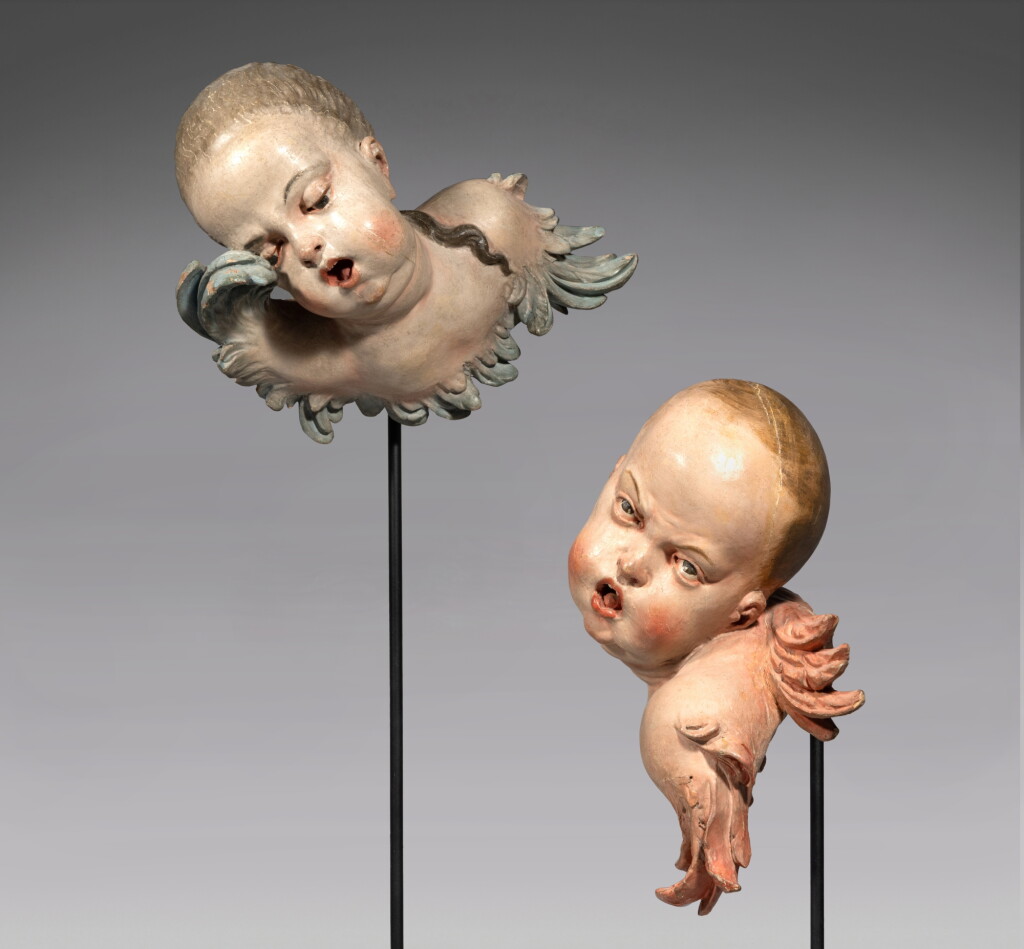
Pair of Crying Putti
Auction Closed
May 22, 04:37 PM GMT
Estimate
10,000 - 15,000 USD
Lot Details
Description
Mastering Materials: The Collection of Joel M. Goldfrank
Attributed to Joseph Deutschmann (Imst 1717 - 1787 St. Nikola)
Austrian, 18th century
Pair of Crying Putti
polychrome lindenwood on later metal stand
heights: 12 ⅜ in. and 9 in.; 31.5 cm and 23 cm
With Julius Bohler, Starnberg, 2011;
From whom acquired by the late collector.
Cherubim with dramatic facial expressions were a popular subject in German Rococo sculpture. They were often shown crying or sweetly smiling, capturing the innocence of youth and the playfulness of the Rococo aesthetic.
The current pair of putti has been attributed to the Austrian sculptor Joseph Deutschmann, renowned for his lively and ornate works that adorned churches throughout Bavaria and Austria. Deutschmann's creations often featured polychrome cherubim and putti, such as the present pair, which would gracefully perch atop elaborately decorated cornices.
The portrayal of the faces in the present figures is reminiscent of another putto by Deutschmann, housed in the Oberhausmuseum, Passau. Both the putto at the Oberhausmuseum and the current pair feature elongated heads, prominent cheeks, sharply defined chins and chubby necks. Additionally, the female putto seen here is similarly depicted looking down, much like the cherub in the Oberhausmuseum.
Deutschmann may be most well remembered for his elaborately tooled ivory hilts, which feature finely executed details such as putti, foliate scrolls, and animals. Notable examples of these objects are housed the collections of the Metropolitan Museum of Art, New York and the Bayerisches Nationalmuseum, Munich.
RELATED LITERATURE
H. Vogl, Joseph Deutschmann: Der Bildhauer des Rokoko. Weißenhorn 1989;
Mit Leib und Seele: Münchner Rokoko von Asam bis Günther, R. Diederen and C. Kürzeder (eds.) Munich 2014, p. 362.
You May Also Like