
Audemars Piguet
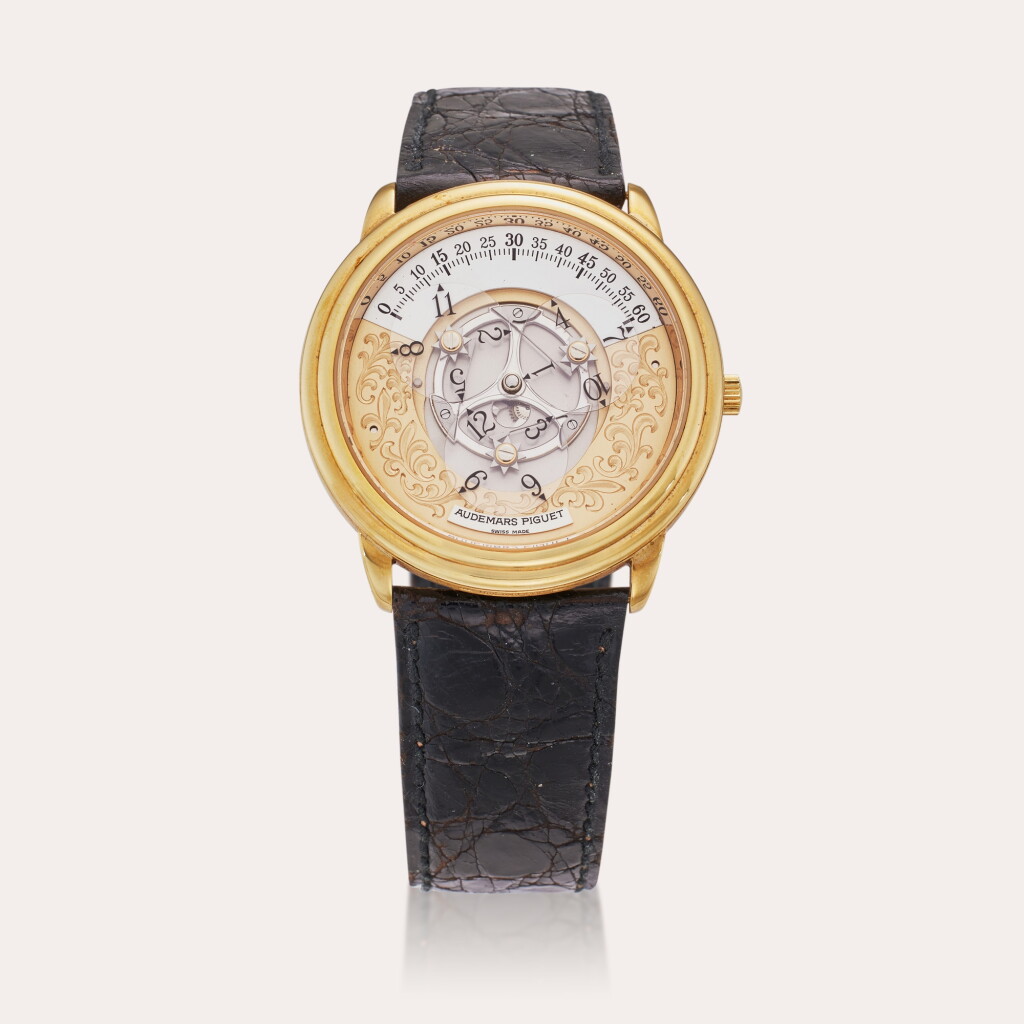
Reference 25720BA Star Wheel | A yellow gold automatic semi-skeletonized wristwatch with rotating discs display, Circa 1995
Auction Closed
December 8, 10:03 PM GMT
Estimate
16,000 - 32,000 USD
Lot Details
Description
Dial: semi-skeletonized
Caliber: cal. 2124 automatic, 33 jewels
Movement number: 368'520
Case: 18k yellow gold, snap on sapphire crystal display back
Case number: D8'060
Closure: 18k yellow gold Audemars Piguet buckle
Size: 36 mm diameter
Signed: case, dial and movement
Box: yes
Papers: no
Accessories: Audemars Piguet presentation watch roll, Operating Instructions booklets, and booklet
While the brand is more closely associated with models such as the Royal Oak today, the neo-vintage catalog of Audemars Piguet has recently captivated collectors. The expressiveness and creativity of the brand in the 1980s and 1990s is almost entirely encapsulated in one watch: the Star Wheel.
The wander hours concept was born in 17th-century Rome, when Pope Alexander VII found himself suffering from insomnia, exacerbated by the ticking of a clock. A Roman clockmaker, the Campani Brothers, soon delivered to the Pope a "wandering hours" clock, on which the time was read on a semi-circular aperture.
In 1991, Audemars Piguet rediscovered, reengineered, and reintroduced the wandering hours mechanism using 19th-century pocket watches as reference. The Star Wheel was first offered in a round, stepped, 36mm case with various case metals and dial finishes, followed by the cushion-shaped John Shaffer. AP discontinued the use of the Star Wheel mechanism around 1996, brought it back as a limited edition in the Millenary case in 2000 to celebrate the brand’s 125th anniversary, and, finally, rebirthed the Star Wheel in a Code 11.59 case in 2023.
Three sapphire discs with printed hours rotate on a central wheel, indicating the time via a pointed arrow traveling along the retrograde-style minutes on the dial's upper half. The reference 25720BA was offered with two finish options in the dial’s lower half: a classical guilloché or a more expressive floral hand-engraving. The latter of which is featured in the present watch, distinguishing the example from the more common guilloché dials.