Property from a Private Collection, Toronto
A Flemish, Late Gothic, Possibly Tournai, Biblical Tapestry, early 16th century
拍品已結束競投
October 17, 02:05 PM GMT
估價
12,000 - 18,000 USD
我們會按買家業務規則所列條款,透過您選擇的付款方式收取或扣除款項。
展開文字拍品資料
描述
silk and wool
10 ft. 2 in. by 6 ft. 8 in.; 3 by 2 m.
With E. Cittone & C., Milan, 4 April 1970;
From whom acquired.
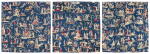
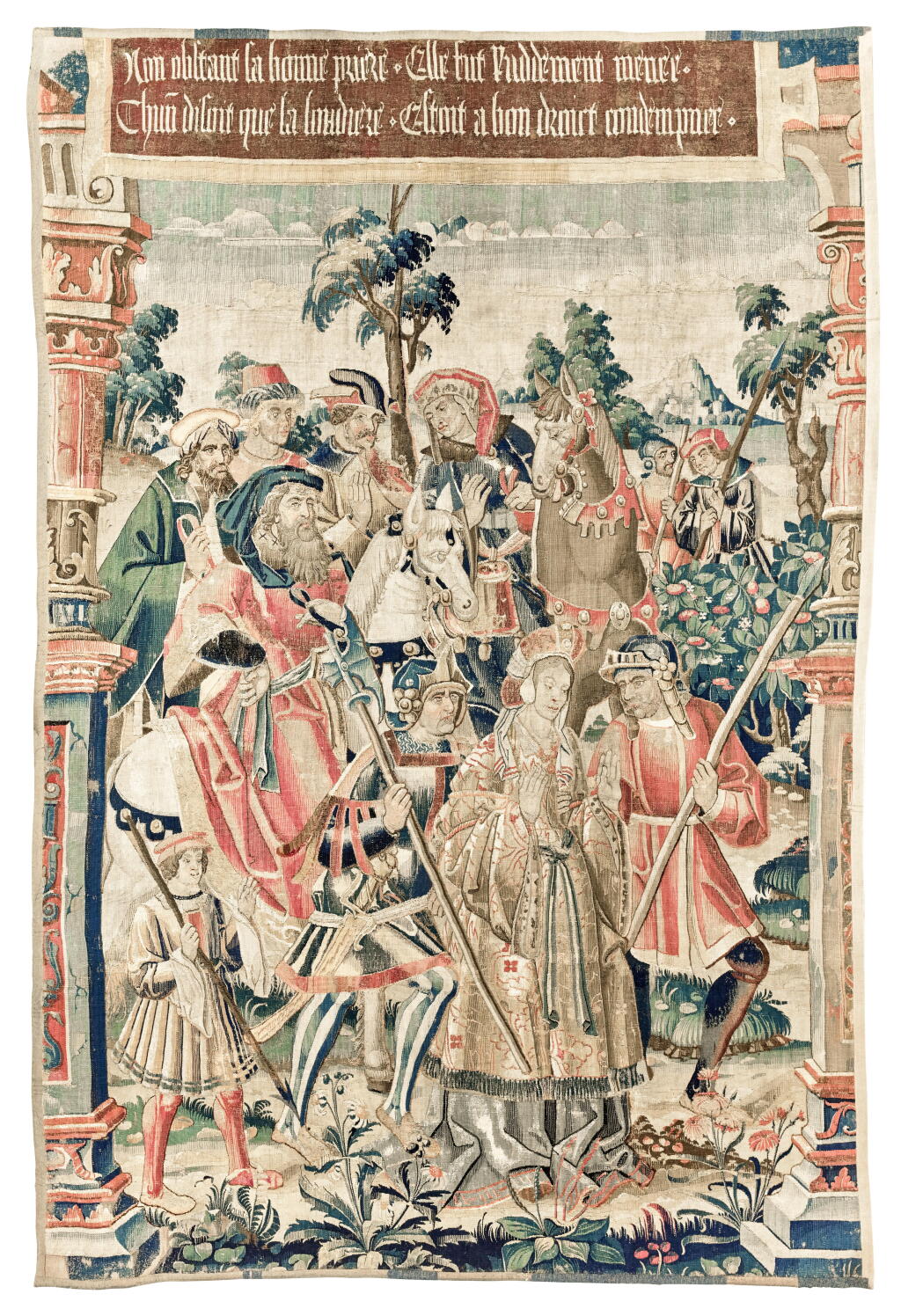
Courtly figures and soldiers are shown in the midst of a procession - a well-dressed woman is being escorted by two soldiers bearing polearms, while a group of men on horseback follows. Above the scene is a banner that appears to read: Non obstant [sic] la bonne prière · Elle fut ruddement [sic] · Chacun disoit que la loudière · Estoit [sic] à [sic] bon droict condempnée [sic] (Notwithstanding the good prayer, she was harshly taken away.
Everyone said that the whore was rightly condemned.)
Panels such as the present work were often part of a larger, complex narrative series that depicted historical, mythological or religious tales. the meaning of many such tableaus has now been lost,1 this tapestry belongs to a series of six panels illustrating the biblical story of Susanna, a noblewoman falsely accused of adultery by a group of lascivious men. The present weaving depicts the moment in which Susanna is unjustly condemned of this crime. Together, the series was displayed in the parish church of Saint-Alpin at Châlons-en-Champagne in northern France.2
Tournai, located in modern-day Belgium, was a well-known weaving center and is known to have produced several major narrative sets, including the History of Judith, the History of the Prophet Daniel, and the History of Hercules.3
1 Guy Delmarcel, Flemish Tapestry, New York 1999, p. 68.
2 Les objets d'art qui ornaient, en 1764, les édifices religieux de la ville de Châlons-sur-Marne, in "Revue de Champagne et de Brie“ 1879, 76 ff.)
3 Ibid, pp. 164 - 166.
相關推薦