
PROPERTY FROM A EUROPEAN PRIVATE COLLECTION | 歐洲私人收藏
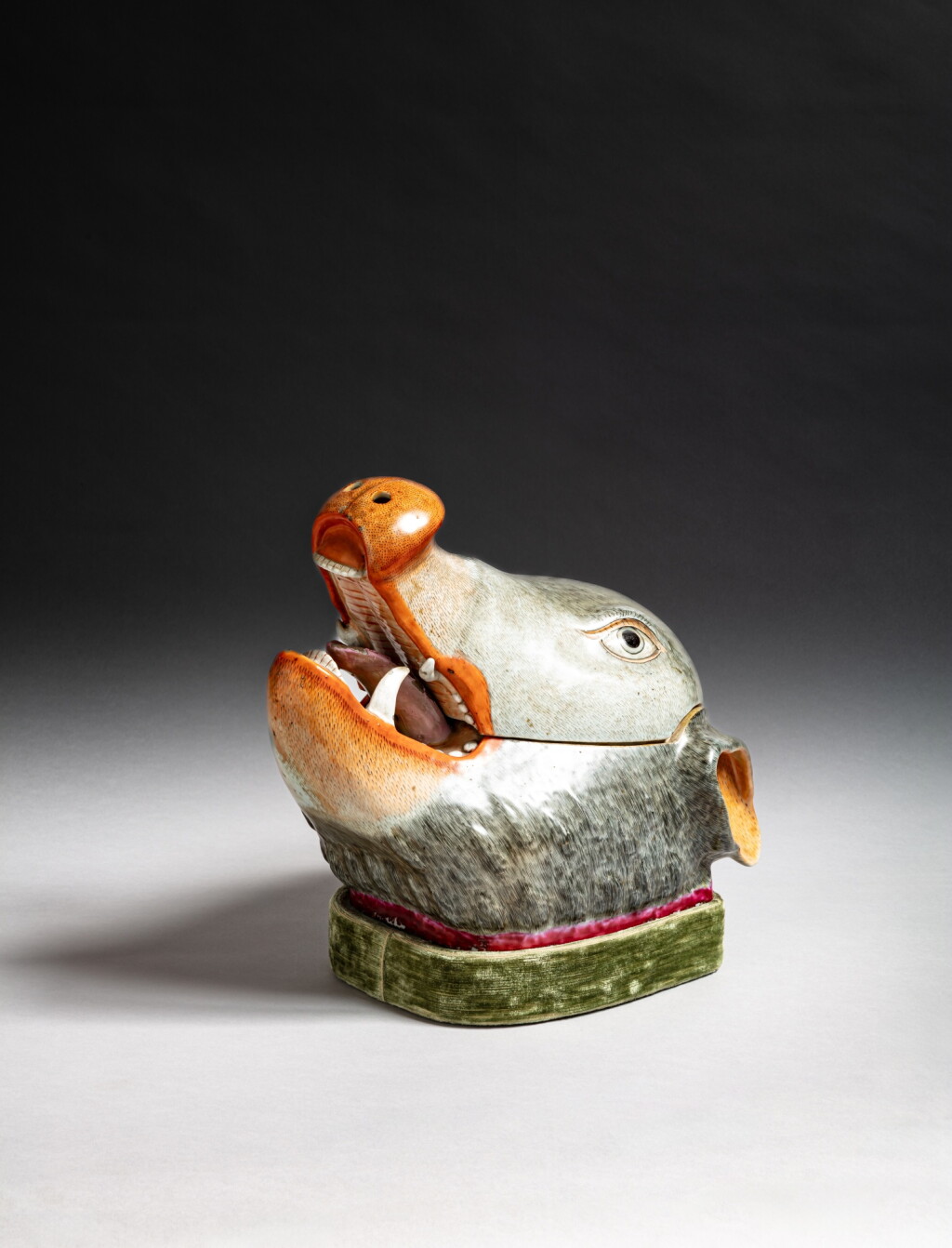
A rare famille-rose 'boar' tureen and cover, Qing dynasty, Qianlong period | 清乾隆 粉彩豕首蓋盆
Auction Closed
June 12, 04:08 PM GMT
Estimate
15,000 - 25,000 EUR
Lot Details
Description
Property from a European private collection
A rare famille-rose 'boar' tureen and cover
Qing dynasty, Qianlong period
Length 36 cm, 14⅛ in.
__________________________________________________________________________
Collection particulière européenne
Terrine couverte en porcelaine de la famille rose en forme de tête de sanglier, dynastie Qing, époque Qianlong
__________________________________________________________________________
歐洲私人收藏
清乾隆 粉彩豕首蓋盆
Acquired from Accorsi, Turin, circa 1980.
__________________________________________________________________________
得自Accorsi, 杜林,約1980年
Naturalistically modeled in the form of a boar's head, this exceptional tureen exemplifies the refined craftsmanship and artistic ingenuity of the Qianlong period. The finely detailed features, from the expressive snout to the carefully incised bristles, are heightened by the delicate enamel decoration, evoking both realism and charm. Such tureens, inspired by European faience and commissioned for the export market, were highly prized for their whimsical yet sophisticated appeal. Whether Chinese porcelain or European faience, boar's head tureens were highly sought-after statement pieces, bringing theatricality and sophistication to 18th-century banquet tables of aristocratic households. When filled with steaming hot soup or stew, the effect was further dramatized by the mist rising from the nostrils, creating the illusion of a living beast and adding a whimsical touch to the dining presentation.
The fascination with animal-form tureens flourished in Europe during the mid-18th century, with soft-paste porcelain and faience models produced at renowned manufactories such as Strasbourg, Palissy, Chelsea, and Höchst. The Chelsea factory auction catalogue of March 18, 1755, listed "a very curious tureen in the form of a boar's head". These European precedents likely influenced the Chinese export market, where artisans responded to Western demand with exquisite porcelain interpretations.
According to W.R. Sargent, records of the Dutch East India Company document an order of 25 boar's head tureens in 1763. In 1764, nineteen were shipped to Holland, but further orders were abandoned as the supercargoes deemed them "too risky". This highlights both the rarity and the commercial challenges surrounding these intricate export wares. The impressive scale and lifelike detailing of such pieces made them prized possessions among European collectors and connoisseurs.
Compare a closely related example preserved in the Philadelphia Museum of Art, Philadelphia (acc. по 1956-107-9a,b); a pair in the collection of the architect Philip Trammell Shutze, housed in the Atlanta History Center, Atlanta (acc. no. 1982.325.M163); and a similar example from the collection of Mrs. Lammot du Pont Copeland. preserved in the Peabody Essex Museum and illustrated in W. R. Sargent, The Copeland Collection: Chinese and Japanese Ceramic Figures, 1998, p. 203. Another closely related example is reproduced in Michel Beurdeley. Porcelaine de la Compagnie des Indes, 1962, p. 175, cat. no. 99.
You May Also Like


