Property from a Texas Private Collection
Colima Head Vessel of the Deity Ehecatl
Protoclassic, circa 100 BC - AD 250
Lot Closed
October 28, 04:15 PM GMT
Estimate
20,000 - 30,000 USD
We may charge or debit your saved payment method subject to the terms set out in our Conditions of Business for Buyers.
Read more.Lot Details
Description
Property from a Texas Private Collection
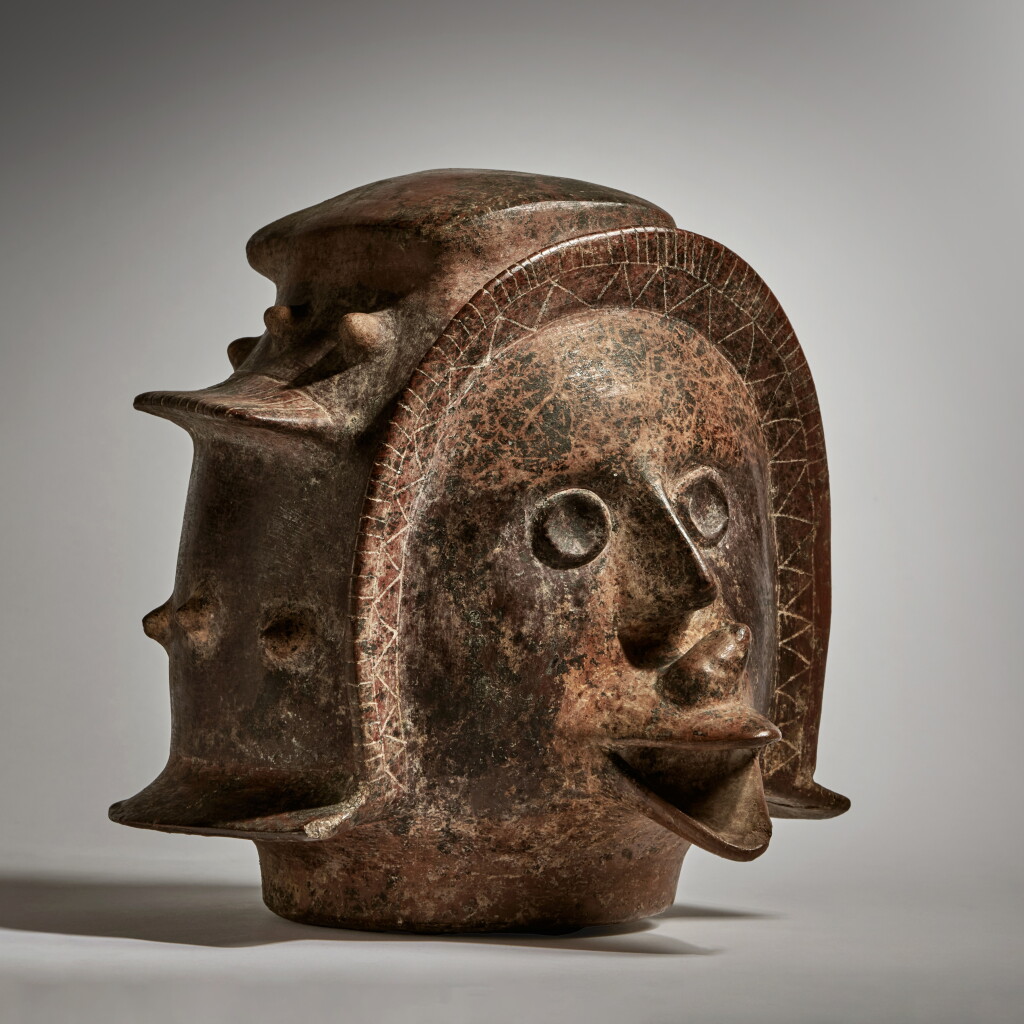
Colima Head Vessel of the Deity Ehecatl
Protoclassic, circa 100 BC - AD 250
Height: 9 ½ in (24.1 cm)
Charles Laughton and Elsa Lancaster, Hollywood
Parke-Bernet Galleries, New York, October 25, 1966, lot 42, consigned by the above
European Private Collection, acquired at the above auction
Sotheby's, New York, November 27 and 28, 1984, lot 288, consigned by the above
Sotheby's, New York, May 2, 1990, lot 176, reconsigned by the above
Private Collection, New York, acquired at the above auction
Sotheby's, New York, May 15, 2015, lot 60, consigned by the above
Acquired at the above auction by the present owners
Hasso von Winning, Pre-Columbian Art of Mexico and Central America, New York, 1968, p. 71 and p. 94, fig. 83
The wind god Ehecatl was an important deity beginning in the Preclassic era and became known as Ehecatl-Quetzalcoatl in the Postclassic. Ehecatl created the path for rain and lightning and bringing forth the heavens and earth. The essence of wind was believed to come from the underground ‘breathing caves’. It is suggested that the circular temple-pyramids of the mountainous regions of Colima and Jalisco were the cult centers of this deity.
The bird beak mask was the insignia worn by priests and shamans representing Ehecatl. The ridged cap with short fringed flanges and projections, and the saucer eyes are typical features of the masks, as seen on the ritual dancer figures of the Late Preclassic.
Cf. See the solid Colima figurines in Richard Townsend, ed., Ancient West Mexico: Art and Archaeology of the Unknown Past, Chicago, 1998, p. 22, figs. 11 and 12, and p. 188, fig. 30.
You May Also Like