Property from the De An Tang Collection | 德安堂藏玉
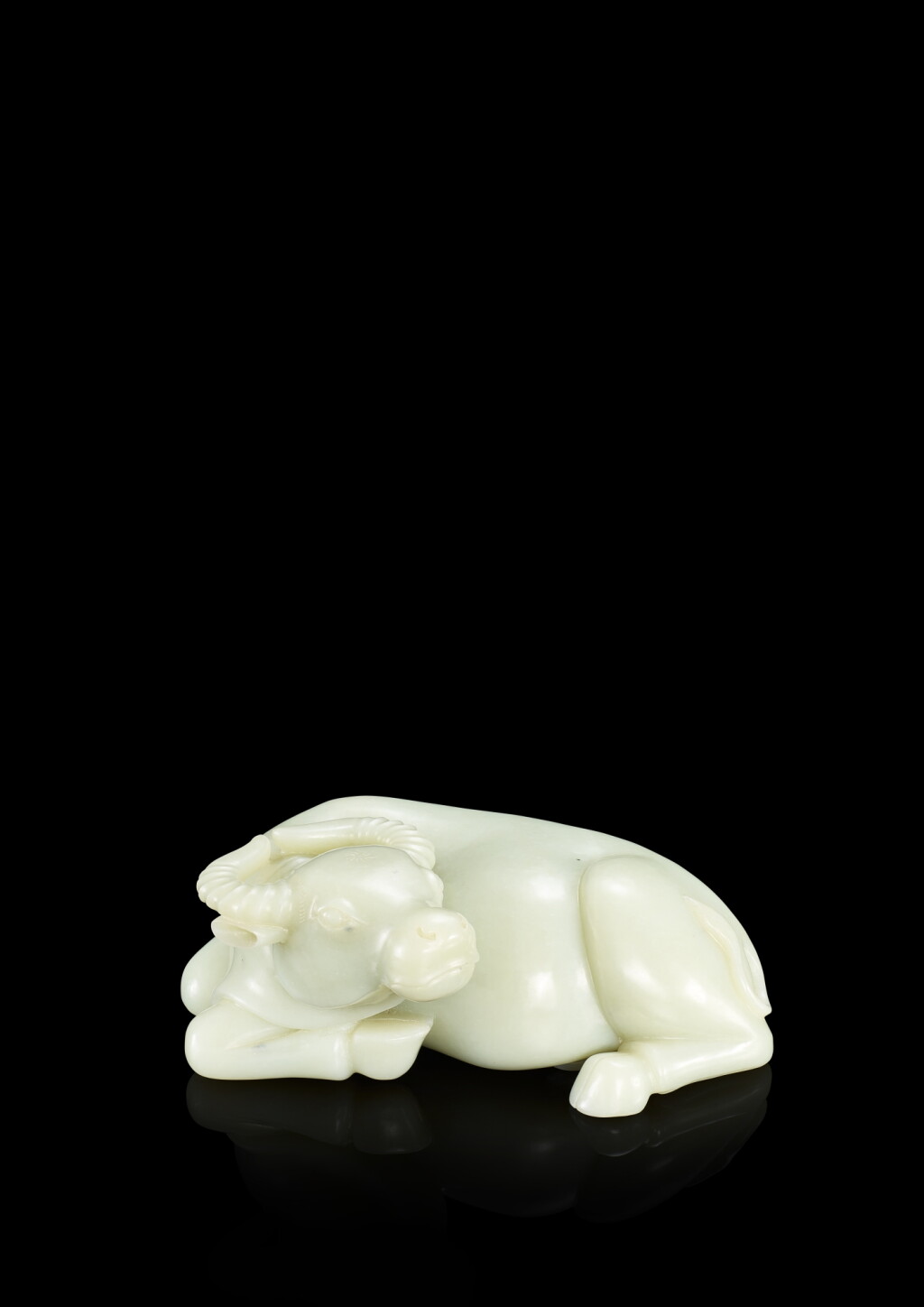
A rare and large white jade figure of a buffalo, Qing dynasty, 18th century | 清十八世紀 白玉臥牛
Auction Closed
April 9, 12:02 PM GMT
Estimate
700,000 - 900,000 HKD
Lot Details
Description
Property from the De An Tang Collection
A rare and large white jade figure of a buffalo,
Qing dynasty, 18th century
德安堂藏玉
清十八世紀 白玉臥牛
22.9 cm
Christie's Hong Kong, 30th October 2000, lot 692.
香港佳士得2000年10月30日,編號692
A Romance with Jade: From the De An Tang Collection, Yongshougong, Palace Museum, Beijing, 2004, cat. no. 72.
《玉緣:德安堂藏玉》,永壽宮,故宮博物院,北京,2004年,編號72
Reclining buffalo, a symbol of strength and tranquillity, is often associated with spring and agriculture because of its role in pulling ploughs. Since the Ming dynasty, buffaloes were often depicted at rest with their heads turned backwards, as seen in the present carving, to indicate that the world was at peace. When depicted with a young boy riding on its back, this motif represents obedience and serenity as well as spring and agriculture because of its role in pulling ploughs. Even a small child can ride an animal of this size and strength without fear.
宋代以後,童子牧牛主題成為遠離世俗煩囂、禮儀及公務,追求簡樸生活之象徵。自明代以來,見玉雕水牛頭以九十度轉向一邊,象徵天下太平,而牛背上騎一童子,則有潮氣勤懇、扭轉乾坤之意。
You May Also Like