
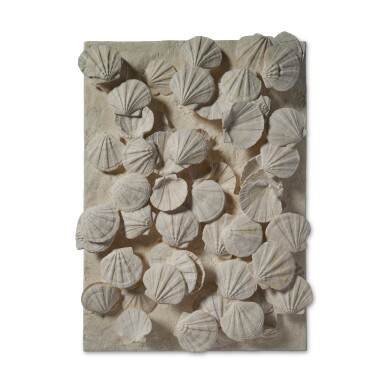
Large Mural of Fossilized Saint-Jacques Shells
Early Miocene, Burdigalian (approx. 20-16 million years ago), Lacoste Quarry, Vaucluse, France
Auction Closed
July 17, 03:28 PM GMT
Estimate
6,000 - 9,000 USD
Lot Details
Description
Large Mural of Fossilized Saint-Jacques Shells
Gigantopecten restitutensis
Early Miocene, Burdigalian (approx. 20-16 million years ago)
Lacoste Quarry, Vaucluse, France
45⅜ x 32¾ x 6½ inches (115.3 x 83.2 x 16.5 cm). 332 pounds (150.6 kg).
The shells in this decorative display are intact and well preserved, many with both halves articulated. The top left shell shows minor repair and restoration. The shells are exposed on a rectangular trimmed slab.
Gigantopecten restitutensis — also known as Saint-Jacques shells — were a species of giant scallop that thrived all over the world during the Early Miocene, from approximately 20 million to 16 million years ago.
Like today's extant scallops, Gigantopecten restitutensis was a saltwater mollusk that lived on the sea floor, filtering and eating plankton. These bivalves had relatively large shells, growing to lengths of over five inches (13 cm) and widths topping six inches (15 cm). Because of the considerable size and fragility of Gigantopecten fossils, their removal from the surrounding rock matrix represents excavation and preparatory work of the highest caliber.