Property from a Private Collection
Jiří Kolář
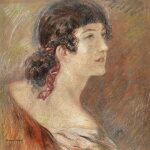
Madonna and Child; Cezanne; Velasquez and Monkey
Lot Closed
November 13, 02:38 PM GMT
Estimate
5,000 - 7,000 EUR
Lot Details
Description
Property from a Private Collection
Jiří Kolář
1914 - 2002
i) Madonna and Child, after van Eyck
ii) Cezanne
iii) Velasquez and Monkey
i) signed and dated JK 71 (lower right); signed, dated and titled POLEKANA MADONA (on the reverse)
ii & iii) both signed with initials JK (lower right)
each rollage
various sizes; i) 26 by 44cm., 10¼ by 17¼in.; ii) 24 by 36cm., 9½ by 14¼in.; iii) 24 by 38cm., 9½ by 15in.
(3)
Please note that the description of the “VAT reduced rate” symbol (double dagger) applicable to this lot should read as follows: “Germany - The Hammer Price and the Buyer’s Premium will be subject to import VAT at the reduced rate, currently 7%. This tax will be charged to the Buyer who may be able to claim a refund of this additional expense if the property is exported outside the European Union.”
i) Grosvenor Gallery, London
ii & iii) Adam Baumgold, New York
Acquired 2002 from the above by the present owner
“The poem, the painting, the musical score, the statue and the collage have had to experience, bear and withstand everything man has had to bear and experience: Being whipped, beaten, dismembered, flayed, burned, trampled over and soiled with everything, from saliva to excrement. They have had to feel the effect of frost and fire, poison and corrosives, withstand blows of all kinds, taste blood. They have experienced what electric current can do to them, they have learned to move, walk and fly, speak without breathing, sing under water; they have gone beyond their own limits, they have broken barriers between themselves at the points of friction, they have accepted fertilisation and have fertilised in turn, they have forged their own laws, they have become even more consistent means of enslavement, they have desecrate the sacrosanct and have monopolised the kitsch and advertising, they have become accustomed to business and speculation, have corrupted dreams, have made a laughing stock of prophecies, have scattered barricades and made themselves at home in drawing rooms, they stand in the way and fill money safes, they have transformed togetherness into bread and freedom into water, they have accepted love and indifference, have turned myths o their heads, ascribed wings to primitivism, learned to make use of the elements, they faithfully imitate bacilli and infections, they have decorated with honours the kitsch and the sensational, they have turned even their own destruction into a masterpiece.”
Jiří Kolář in Literárni noviny, no. 36, September 1965
Jiří Kolář was an extremely experimental Czech avant-garde poet, writer, painter and collagist, whose artistic output hovered on the threshold between literature and visual art. His visual art works were a natural continuation of his written poetry, with the works centred on deconstructing and recombining printed images and words in literal and visual ways. His first tentative exhibition in 1937 focused on collages. Kolář then began making collages in earnest in the 1940s while he was writing Prometheus’ Liver, a collection of poetry that led – upon its discovery by the authorities in 1953 – to his spending nine months in prison. In the 1960s Kolář first combined painting and poetry, and from then on gradually turned completely to experiments in visual art. He subsequently became one of the main proponents of modern collage art.
The shift to a visual medium of expression coincided with a loss of faith in the moral viability of literary discourse due to the politics of the day. Czechoslovakia had been one of the most “Western” of the Eastern European countries that fell under the domination of Soviet totalitarianism in the period since the second world war, and the cultural devastation imposed by Stalin and his successors were perhaps more acutely felt than in other satellite nations. For Kolář words and their meanings became tainted.
Over the course of his career Kolář contributed to the invention of several new collage techniques. Yet many of his collages fit several of his own technique categories, or defy categorization all together in favour of visual impact. His chiasmage works, in which text is disintegrated and reassembled, represent the creation of a new visual poetry reflecting the fractured modern world. With his crumplages, he would take a picture from a magazine, wet the paper, and then press down on it, to crumple it, deforming the structure of time and space, and thereby producing an allegory, a symbol of how fate can press down on you, crush you, and transform you into something else. In this way his collages came to represent a symbolic language about man’s experience and his fate in modern civilisation. In reassembling and constructing images in collage, he created often absurd commentaries on modern life and the turmoil he faced as a political dissident in Communist Czechoslovakia.
Kolář was a signatory to the human rights document Charta 77 and while on a scholarship to West Berlin, the government forced him to emigrate; from 1980 onwards he lived in Paris, only resuming visits to his homeland around the time of the Velvet Revolution in November 1989.
His participation in documenta 4 in Kassel 1968 brought about Kolář’s international breakthrough. In 1975 the Solomon R. Guggenheim Museum in New York presented a major retrospective of his works. Three hundred of Kolář's collages and assemblages were presented at the exhibition, which ran concurrently with a retrospective of works by František Kupka. This exhibition 48 years ago, shortly before his 61st birthday, was Kolář's largest museum exhibition to date. The meeting between Kupka and Kolář was not accidental, as both exhibitions had been dreamed up and organised by the then director of the Guggenheim museum, Thomas Messer, who was born in Bratislava and studied in Prague before the war. At the same time as the exhibition at the Guggenheim Museum, Kolář had three other exhibitions in New York galleries (Champlain Ravagnan, Harriet Griffin and Willard). The Guggenheim held a second exhibition of Kolars works in 1978, Jiří Kolář at the Guggenheim, which cemented his fame. Numerous exhibitions in the USA, Canada, France, Germany, Austria, Italy and Great Britain would follow.
The current group of works is a comprehensive selection of a variety of collage types: collages, rollages, crumblages, chiasmages, of which many were included in the seminal 1975 Guggenheim exhibition, as well as other important exhibitions in Passau, Graz and London.
You May Also Like