Amoako Boafo
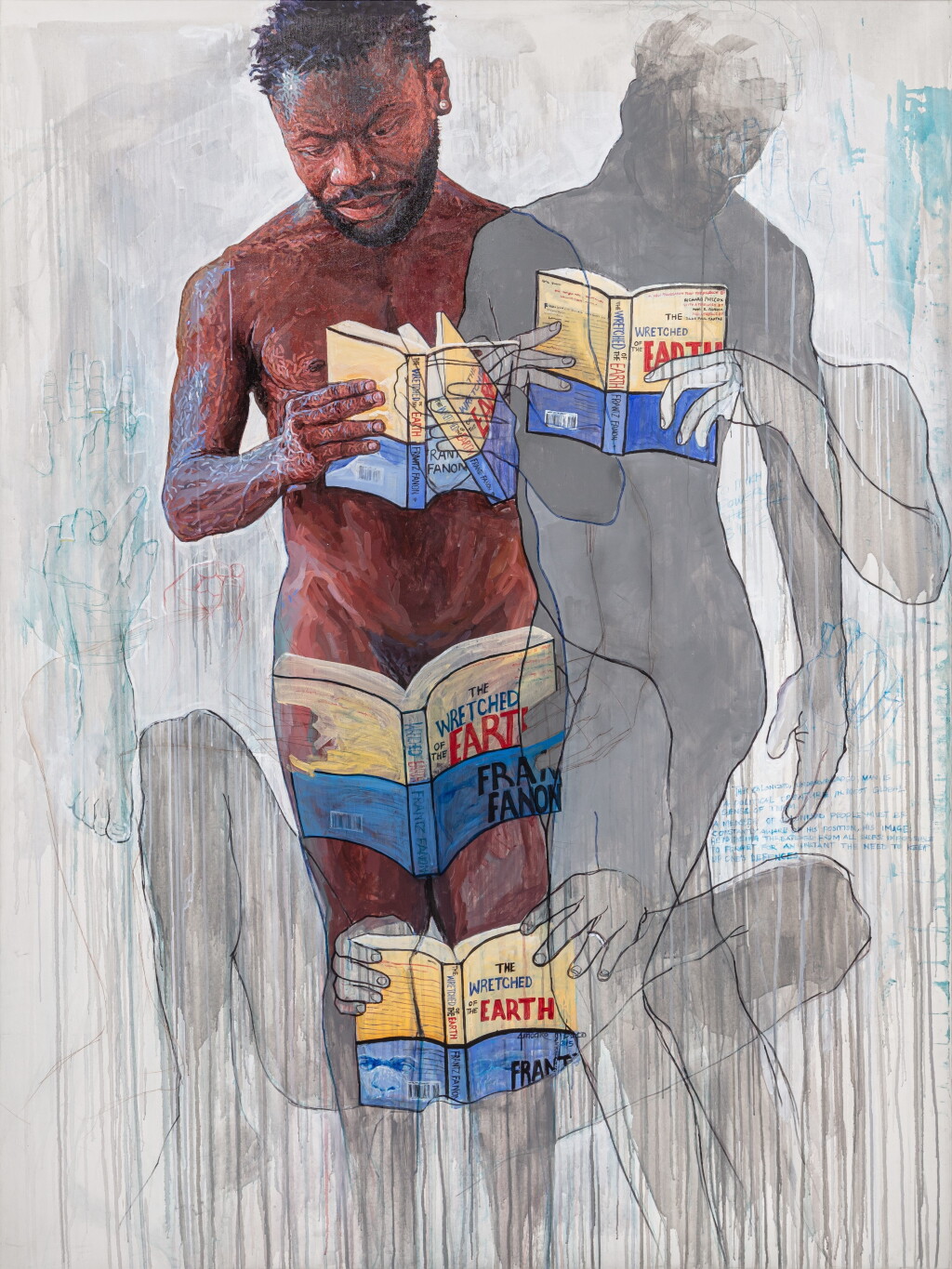
Untitled (Standing Nude)
Auction Closed
March 21, 03:48 PM GMT
Estimate
100,000 - 150,000 GBP
Lot Details
Description
Amoako Boafo
Ghanaian
b.1984
Untitled (Standing Nude)
signed and dated 2015 (lower centre)
acrylic and coloured pencil on canvas
200 by 150cm., 78¾ by 59in.
framed: 212 by 162cm., 83½ by 63¾in.
Miettnen Collection, Berlin (acquired directly from the artist in 2016)
Christie's, London, 2 March 2022, lot 208
Acquired from the above sale by the present owner
Amoako Boafo has emerged in recent years as an indelible force in contemporary African art. Hailing from Ghana, Boafo's distinctive style is inherently naturalistic, yet is punctuated by a bold, gestural and painterly style. His works are a visual treatise on the construction of blackness, asserting the subjective identity and dignity of his sitters, who in turn reflect a sense of intimacy and tenderness. Boafo’s expansion of the depiction of blackness in art history has earned the artist an enviable reputation as a leading contemporary artist. In 2020, the artist collaborated with Kim Jones, Dior Men’s creative director, for Dior’s Spring/Summer 2021 Men’s Collection. In 2021, Boafo was selected by the Uplift Art Program to create the inaugural “Suborbital Triptych” on the exterior panels of a Blue Origin New Shepard rocket, to launch August 2021. Extensively collected by prestigious private and public institutions, Amoako Boafo’s paintings have recently joined the collection of The Hirshhorn Museum and Sculpture Garden, Washington D.C.; High Museum of Art, Atlanta, Georgia; and the Solomon R. Guggenheim Museum New York, NY among others.
Executed in 2015, the present lot is a nude portrait of the artist depicted reading Franz Fanon’s seminal text The Wretched of the Earth. Amoako repeatedly emblazons the cover of the book throughout the composition, including additional excerpts from the book in the foreground and background of his work. This gesture is an unequivocal conflation of the artist’s lived experience with Fanon’s compelling reflection on psychological and sociopolitical effects of colonialism on colonized peoples. Here Boafo places himself at the centre of Fanon’s narrative, and in doing implicitly endorses the imperative to enact revolutionary action to reclaim the dignity and autonomy of oppressed peoples. In his careful portrayal of his perfectly poised figure, Boafo emphasises the nobility of the colonised, even in the face of the directive to revolt against prevailing racial, social or class-based hierarchies.
You May Also Like