
Patek Philippe
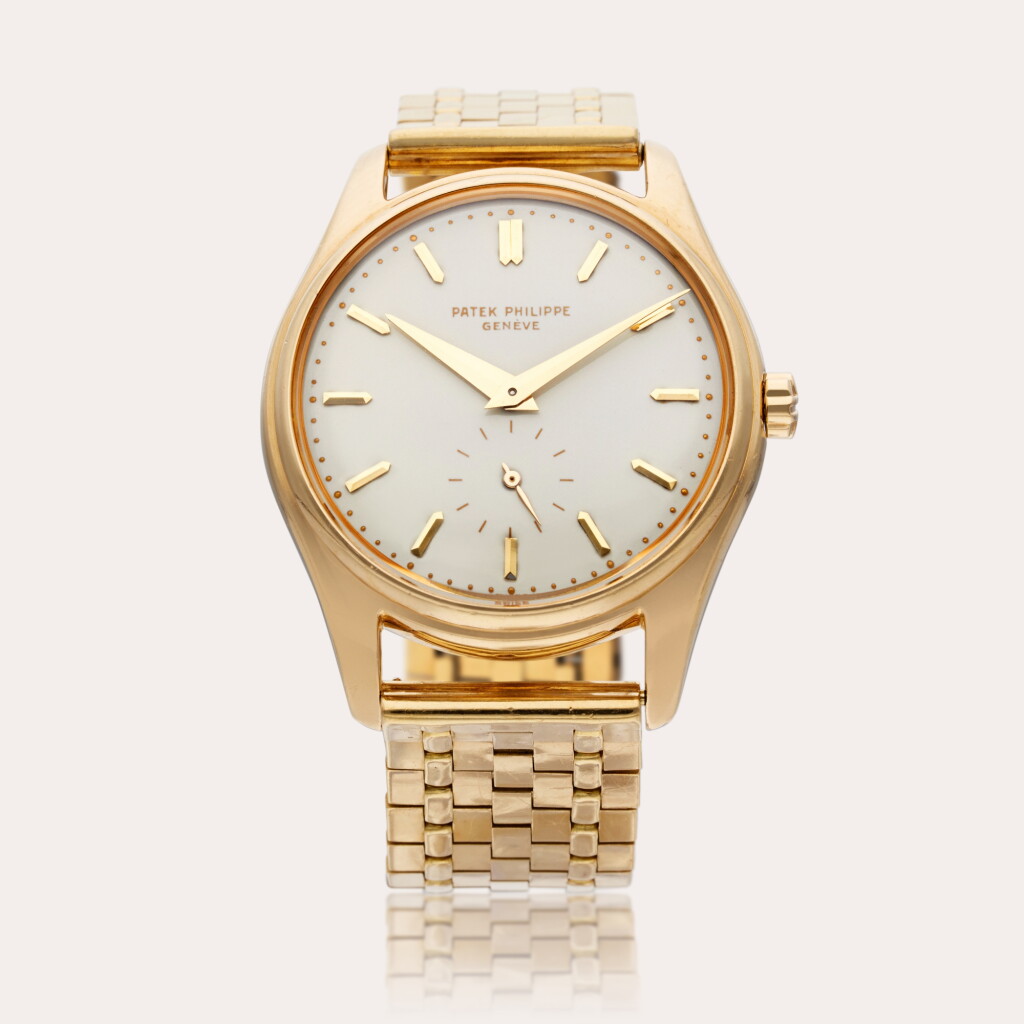
Reference 2526J 'First Series' | A yellow gold automatic wristwatch with first series enamel dial, Made in 1956
Lot Closed
December 13, 05:26 PM GMT
Estimate
25,000 - 50,000 USD
We may charge or debit your saved payment method subject to the terms set out in our Conditions of Business for Buyers.
Read more.Lot Details
Description
Dial: white enamel
Caliber: cal. 12-600 automatic, 30 jewels
Movement number: 762’942
Case: 18k yellow gold, screw down case back
Case number: 691’214
Closure: 18k yellow gold bracelet with folding clasp
Size: 36 mm diameter
Signed: case, dial and movement
Box: no
Papers: no
Accessories: Patek Philippe Extract from the Archives confirming the Date of Manufacture in 1956 and the Date of Sale on October 9th, 1956, service box, travel pouch, and Service Invoice dated May 28th, 2024
In 1953, Patek Philippe unveiled their first automatic wristwatch, the legendary reference 2526. This iconic timepiece set a new standard for timeless and refined case design. Crafted in yellow, pink, and white gold, as well as platinum, the 36 mm diameter case, meticulously fabricated by Baumgartner, boasted an oversized profile for its era. Housing the celebrated caliber 12-600 AT, it was widely lauded as one of the most exquisitely crafted self-winding mechanisms in the industry. The 12-600 AT remains, even today, a pinnacle achievement in automatic movement engineering. This distinction arises from Patek Philippe's deliberate approach - while unable, like its peers, to craft an automatic movement with a full 360-degree rotor until the expiration of Rolex's patent, the brand opted to invest over two decades in refining the cal. 12-600, patiently awaiting the patent's lapse. This dedication resulted in a movement revered for its exceptional precision and reliability. In essence, the reference 2526 stands as a watershed moment in horological history, representing Patek Philippe's inaugural venture into automatic wristwatches.
The dial on the present lot is known as a first series dial, which is distinguishable by the small dimples in the enamel surface that can be seen underneath the top and bottom of each baton hour marker. These early dials have these dimples since the hour markers are actually set into the dial themselves using pins while all later dials have hour markers glued to the solid enamel surface. We are pleased to offer this fresh-to-market watch and consigned directly from the family of the original owner.