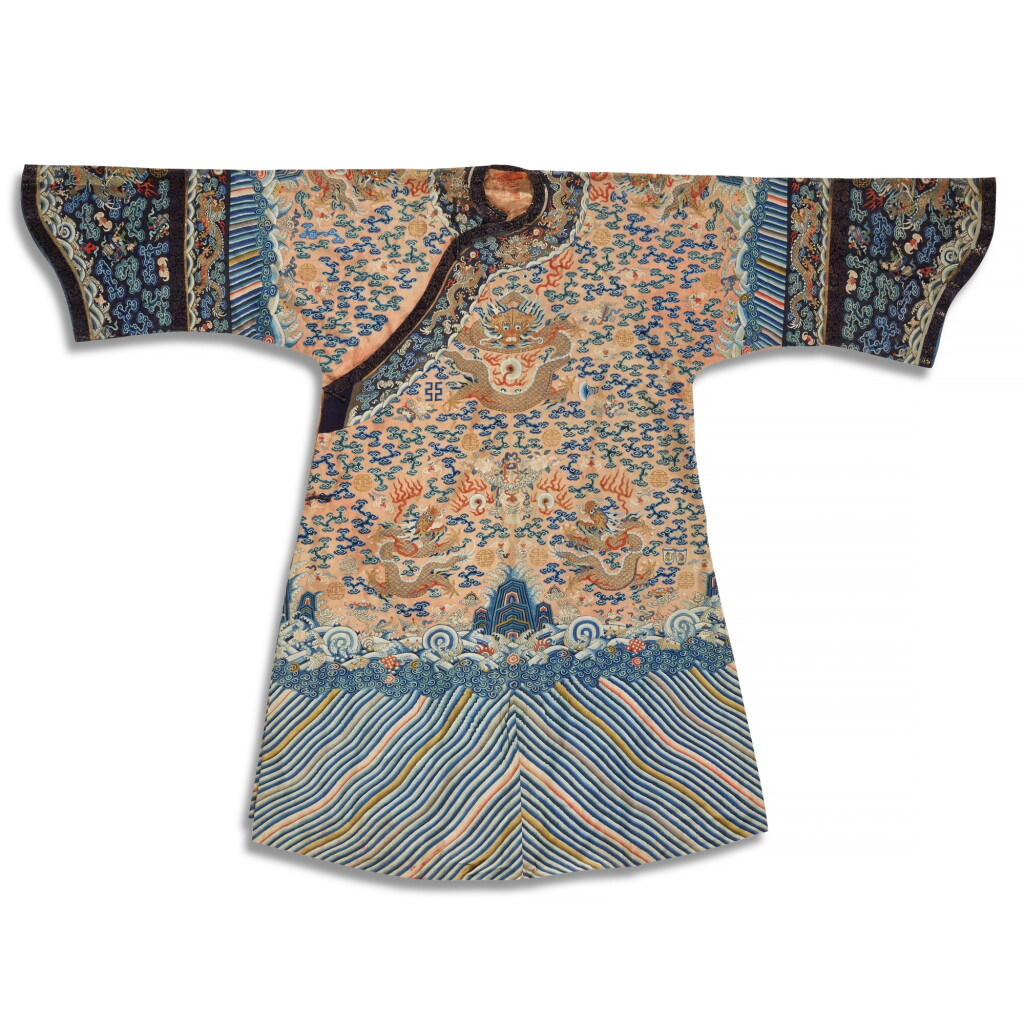
An apricot-ground kesi twelve-symbol 'dragon' robe, Qing dynasty, 19th century
Auction Closed
November 6, 03:25 PM GMT
Estimate
10,000 - 20,000 GBP
Lot Details
Description
147.6 by 204.5 cm, 58⅛ by 80½ in.
The Twelve Symbols of Imperial Authority that are embroidered on the shoulders, the upper parts and skirts of sides of this kesi silk robe, only appeared on the emperor‘s clothing after 1759. Such design was meant to demonstrate the emperor‘s legitimacy to the throne, visually associating him or her with the celestial and terrestrial powers. The four principal symbols included the sun and the moon, the constellation and rock prominently positioned on the shoulders, chest and back of the robe. Eight additional symbols aligned the wearer with astronomy and seasons and firmly positioned him or her at the centre of the world. These symbols comprise the ax head and the fu character to the front and a pheasant and paired dragons in corresponding positions to the back. Along the skirt on the front and back of the robe appear the pair of libation cups, aquatic grass, grains of millet and flames.
Compare a robe in the collection of the Palace Museum, Beijing, exhibited in Heaven's Embroidered Cloths. One Thousand Years of Chinese Textiles. Hong Kong Museum of Art, Hong Kong, 1995, cat. no. 7; another sold at Christie‘s New York, 26th March 2003, lot 71; and a pale-yellow ground robe, sold in our New York rooms, 24th June 2020, lot 915.
You May Also Like