
PROPERTY FROM A FRENCH PRIVATE COLLECTION | 法國私人收藏
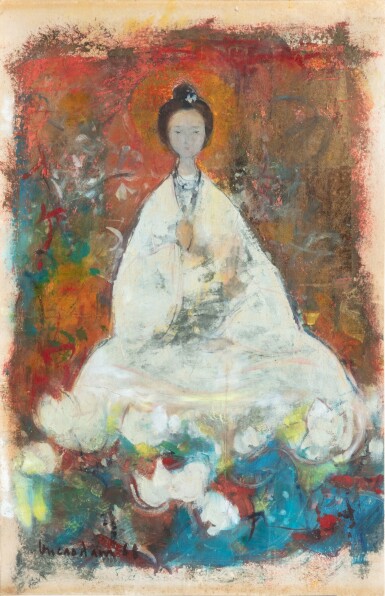
Vu Cao Dam (1908-2000) Deity | 武高談(1908-2000) 天仙
Lot Closed
December 12, 12:24 PM GMT
Estimate
12,000 - 20,000 EUR
We may charge or debit your saved payment method subject to the terms set out in our Conditions of Business for Buyers.
Read more.Lot Details
Description
Property from a French Private Collection
Vũ Cao Đàm
1908-2000
Deity
signed Vu Cao Dam (lower left)
gouache and colours on paper
Executed in 1968.
47 x 30 cm, 18½ by 5⅛ in.
We thank Marie-Claire Yannick Vu, daughter of the artist, for her kind expertise and insights about the present lot.
__________________________________________________________________________
Collection particulière française
Vũ Cao Đàm
1908-2000
Divinité
signé Vu Cao Dam et daté (en bas à gauche)
gouache et couleur sur papier
Peinte en 1968.
Nous remercions Marie-Claire Yannick Vu, fille de l'artiste, pour son aimable expertise et ses idées sur le lot présent.
__________________________________________________________________________
法國私人收藏
武高談
1908-2000年
天仙
款識
藝術家簽名(左下)
水粉紙本
一九六八年作
我們衷心感謝藝術家的女兒Marie Claire Yannick Vu提供此作的專業知識和見解。
Gift from artist to his niece during her visit in France, and thence by descent.
__________________________________________________________________________
藝術家贈於其姪女,此後家傳承
This work depicts a celestial being dressed in white, sat serenely on a lotus with an air of dignity and tranquility. Exuding an atmosphere of sanctity and grace, the piece stands in conversation with classical Vietnamese portrayals of the Bodhisattva Avalokiteshvara (Quan Âm). With a subtle golden halo harmonizing with the warm hues of red in the background, the composition embodies a sense of solemnity, mystery and poetic beauty.
Throughout his career, Vũ Cao Đàm frequently returned to the motif of celestial beings, most of which were rendered in oil on canvas. This piece, however, is almost unique in its use of gouache on paper. The composition is marked by delicate yet free-flowing brushstrokes. The figure’s depiction is simple yet evocative, with her white robe rendered through soft, blended shading that conveys a sense of lightness and ethereal grace. The lotus blossoms are sketched with minimal and fluid strokes, their gentle contours reinforcing the impression of the figure floating above the pond– the ancient symbol of purity and spiritual transcendence in a chaotic world. The background meanwhile stands in contrast to the cool blues and greens, blending seamlessly in a dynamic interplay of depth and motion. This nuanced treatment of colour aptly illustrates Vũ Cao Đàm's mastery of the medium: blending expressive brushwork and Eastern aesthetics with the vivid palette of Western modernism.
The celestial figure in the painting may come to symbolize the protection of family ancestors or express the artist’s aspirations for the future of Vietnam. That this piece was initially given by Vũ Cao Đàm to his niece further reinforces this familial association. Deeply influenced by Vietnamese cultural traditions, Vũ Cao Đàm often used his art to convey themes of familial devotion, cultural heritage, and spiritual reflection. Celestial Being is not only a masterpiece of transnational artistic synthesis but a symbol too of familial bonds and cultural continuity; an enduring symbol of the artist’s dedication to family legacy and his national identity.
__________________________________________________________________________
本作描繪一名身著白衣的天仙,靜坐於蓮花之上,姿態端莊且充滿靜謐之美。蘊含慈悲與神聖的象徵意涵,可能與越南信仰中的觀音菩薩意象密切相關。女性頭頂輕微的金色光環與周圍紅、金色調的暖色背景相互輝映,營造出莊嚴而神秘的氛圍,讓畫面充滿靈性與詩意。
武高談一生中曾多次以《天仙》為創作主題,然而絕大多數為油畫畫布形式,本作則採用水粉紙本的媒材,格外珍稀。畫面筆觸細膩卻充滿自由流動的韻律感,女性形象簡潔而傳神,白色衣袍以柔和的暈染技法表現出輕盈飄逸之美,蓮花則以簡約的筆觸勾勒,輪廓柔和流暢,人物彷彿浮坐於蓮花池中,展現東方傳統文化對純潔與精神超脫的象徵意涵。背景色彩則運用紅、金暖色與藍、綠冷色的對比交融,形成豐富的色彩層次與流動感,反映出武高談在東方寫意風格與西方現代色彩運用之間的深刻融合。
武高談親自將此作贈與姪女,賦予畫作特殊的家族傳承價值,具有深厚的情感寄託與文化意義。畫中天仙形象或許象徵家族祖先的庇佑,表達了藝術家對後代的祝福與精神寄託。武高談的創作深受越南文化傳統影響,常通過藝術作品傳遞對家庭、文化與精神的深層關懷。《天仙》既是東西方藝術交融的傑作,也成為家族情感聯繫與文化延續的象徵,展現了藝術家對家族與民族精神的深切思索與表達。
You May Also Like


