PROPERTY FROM AN IMPORTANT EUROPEAN PRIVATE COLLECTION | 歐洲私人收藏
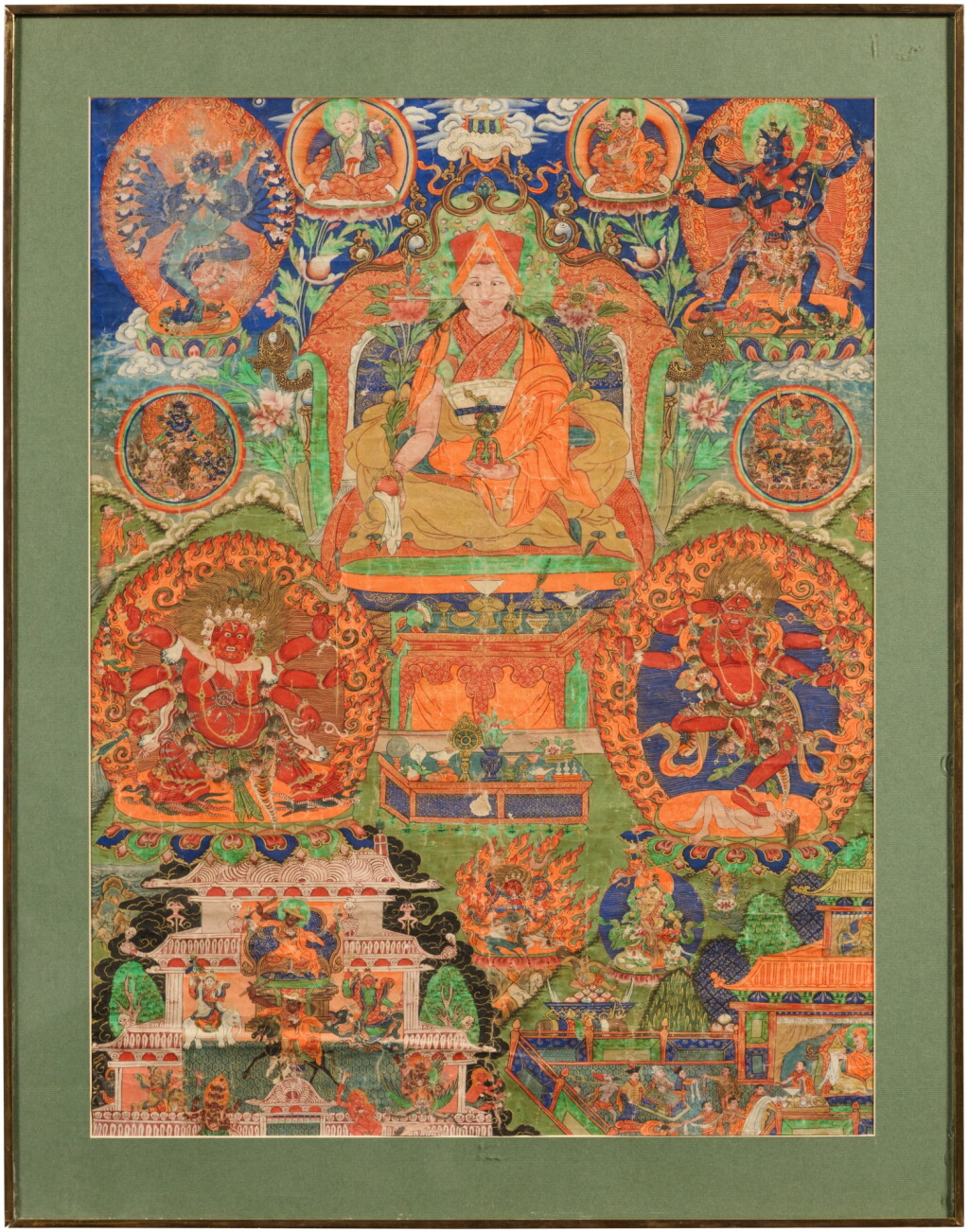
A thangka depicting a Sakya lama, Tibet, Ngor monastery, 19th century | 俄爾寺 十九世紀 藏傳薩迦派喇嘛唐卡 設色布本
Lot Closed
December 12, 10:35 AM GMT
Estimate
4,000 - 6,000 EUR
We may charge or debit your saved payment method subject to the terms set out in our Conditions of Business for Buyers.
Read more.Lot Details
Description
Property from an Important European Private Collection
A thangka depicting a Sakya lama
Tibet, Ngor monastery, 19th century
distemper on cloth
Himalayan Art Resources, item no. 15632.
70 x 52.5 cm, 27½ by 20⅝ in.
__________________________________________________________________________
Collection particulière européenne
Tangka représentant un Sakya lama, détrempe sur toile, Tibet, monastère Ngor, XIXe siècle
__________________________________________________________________________
歐洲私人收藏
俄爾寺 十九世紀 藏傳薩迦派喇嘛唐卡 設色布本
HAR編號15632
The painting depicts a youthful lama wearing the red Sakya order cap with lappets folded up and crossed at the front, holding a vase (kalasha) and the stem of a lotus bearing the wheel of the law (dharmachakra) in his left hand, a flaming jewel (ratna) in his right with the stem a lotus bearing the sword (khadga) and book (pustaka) A ritual dagger (purba) is worn in the belt of his monastic robes, and he is seated with cushions and fine textiles draped over a dragon throne, with an altar table and low stand beneath bearing ritual implements and offerings. Hevajra appears in the upper left, the donkey-faced Karamukha Chakrasamvara upper right, Hayagriva and Kurukulla left and right below, with roundels either side of the throne depicting the entourages of Panjaranatha Mahakala on the left and Legden on the right. Sachen Kunga Nyingpo and a Sakya hierarch appear to the left and right above and Begtse and Vairochana below, with a ceremony in an Ushnishavijaya temple lower right. The palace of the Sakya worldly protector Dorje Shugden in the lower left is fashioned from human bones, skulls, skeletons and entrails. The dark skinned Dorje Shugden holds a club (danda) in his raised right hand and a white skull (kapala) in his left, wearing boots, monastic robes and a tulku’s gold lacquer outdoor hat, with his entourage below riding a black horse, a white elephant, and a dragon, and a kyung bird and yellow horse beneath. Snake-bodied Rahula and a fierce Dakini holding a severed arm and kapala guard the temple gates below.
This rare thangka is likely to have been painted during the relatively short time in the nineteenth century that Dorje Shugden was the protector deity of Khangsar Labrang, one of four abbatial houses of Ngor monastery, before the deity fell out of favour among Sakya masters in the early twentieth century.
You May Also Like