The Property of a Gentleman
A Ko-Ichimonji tachi | Kamakura period, 13th century
Lot Closed
May 10, 02:09 PM GMT
Estimate
50,000 - 70,000 GBP
Lot Details
Description
The Property of a Gentleman
A Ko-Ichimonji tachi
Kamakura period, 13th century
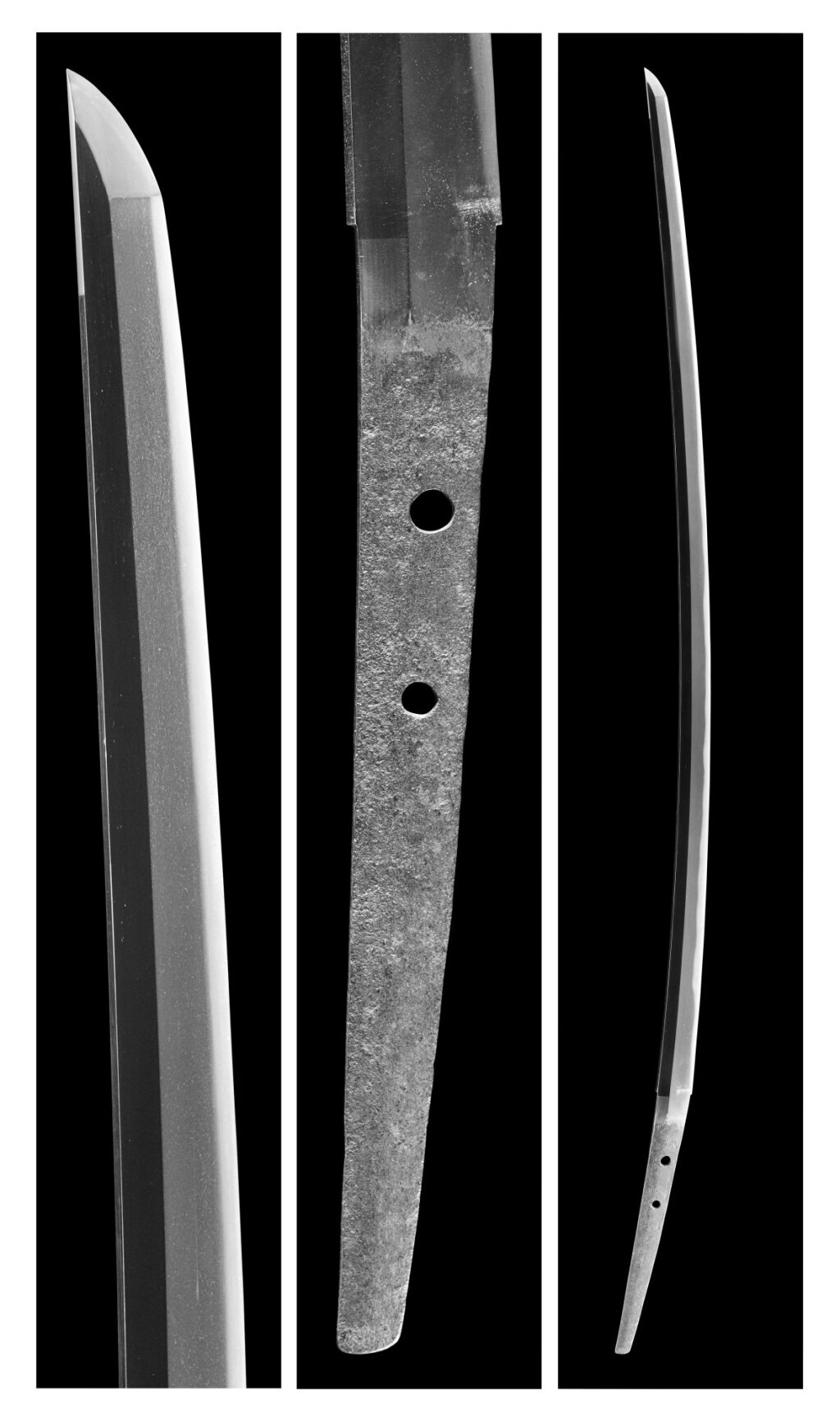
Sugata [configuration]: The slender tachi in shinogi-zukuri, iori-mune, deep koshi-zori, ko-kissaki
Kitae [forging pattern]: Ko-mokume, becoming itame hada in places, with ji-nie and midare utsuri
Hamon [tempering pattern]: Ko-choji and kogu no me, mixed with ko-midare, tobiyaki and with kinsuji, almost suguha towards the kissaki
Boshi [tip]: Sharp ko-maru
Nakago [tang]: Ubu, two mekugi-ana, mumei, yasurime file marks
Koshirae [mount]: The black lacquer saya in handachi style mounts, decorated in irregular sprinkled gold design
In shirasaya [plain wood scabbard] with sayagaki
Nagasa [length from kissaki to machi]: 72.6 cm., 28⅝ in.
Saki-haba [width at the yokote]: 1.4 cm., ⅝ in.
Moto-haba [width at the machi]: 2.3 cm., 1 in.
Accompanied by a certificate of registration as Juyo Token [Important Sword], no. 71995041 issued by the Nihon Bijutsu Token Hozon Kyokai [Society for the Preservation of the Japanese Art Sword], dated Heisei 7 (1995).
The Ichimonji School of swordsmiths was founded in Bizen Province, once of Japan’s most productive centres of sword manufacture, around the beginning of the Kamakura period (1185-1333) and lasted through the Nambokucho period (1336-1392) and into the Muromachi period (1392-1568). Ichimonji blades were produced by five major schools of swordsmiths and the name derives from the use of the Japanese single stroke character for one - inscribed on the nakago which comprising a single stroke for one - ichi 一 . Ko-Ichimonji (‘early’ Ichimonji’) blades generally date from the early to middle Kamakura period and are distinguished by their deep elegant curvature.