Tiffany Studios
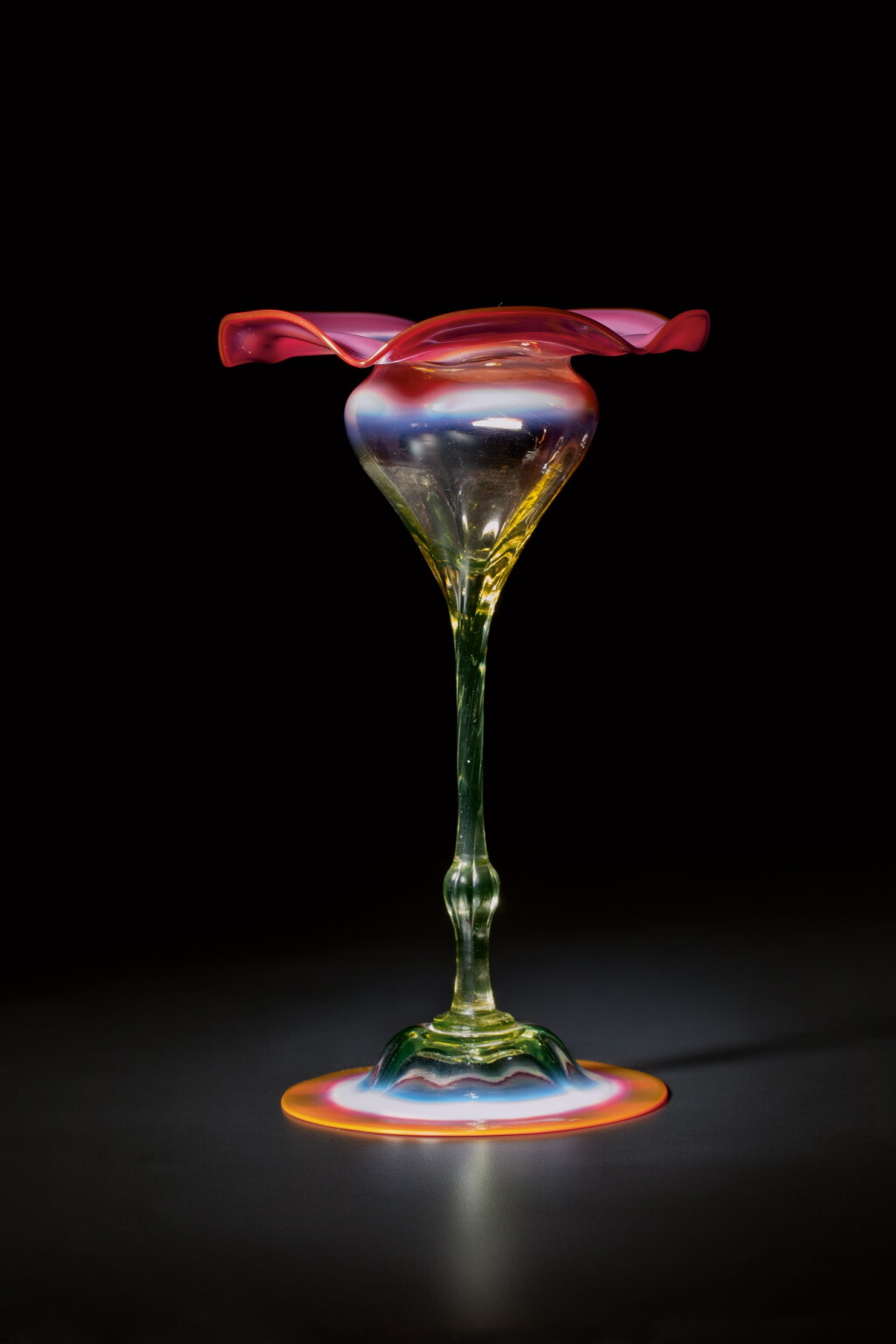
"Tulip" Vase
Auction Closed
December 6, 11:14 PM GMT
Estimate
25,000 - 35,000 USD
Lot Details
Description
Tiffany Studios
"Tulip" Vase
circa 1896-1897
Favrile glass
engraved o4325
8⅛ in. (20.6 cm) high
Heritage Auctions, Dallas, November 23, 2015, lot 60011
Andrew Shine Collection
Sotheby’s New York, December 12, 2018, lot 332
Acquired from the above by the present owner
Robert Koch, Louis C. Tiffany: The Collected Works of Robert Koch, Atglen, Pennsylvania, 2001, p. 133 (for a related example)
Alastair Duncan, Louis C. Tiffany: The Garden Museum Collection, Woodbridge, Suffolk, 2004, p. 224 (for a related example)
Paul E. Doros, The Art Glass of Louis Comfort Tiffany, New York, 2013, p. 73 (for a related example)
The flower form was perhaps the first recognizable nature-based blown glass object produced by Louis Tiffany’s Stourbridge Glass Company. Appearing less than a year after the glasshouse began operations in 1893, the company’s flower forms were praised numerous times by a wide variety of art critics. One review in 1894 rhapsodized: “Many of the vases are based upon the tulip motive, set upon a long, slim stem and possessing a natural grace of line which could hardly be improved. In all the shapes there is sufficient individuality to indicate a refined idea of form, embroidered with a touch of delicate fancy, but not exceeding the limits of purity and simplicity which are the distinguishing marks of good design.”
The example offered here superbly warrants such praise. While of a recognizable form, it still displays the experimentation that was so prevalent during the initial years of the glasshouse’s production. The vase was produced prior to Tiffany’s perfection of an artificial iridescence. Hence, it does not have the typical heavy gold or orange-gold iridescence that will eventually become the norm. The transparent yellow foot and undulating bowl instead received a highly unusual additional layer of cerise-colored glass. Furthermore, the yellow glass was reactive, causing the foot and upper section of the bowl to turn an opalescent white when those sections were reintroduced to the heat of the glory hole. This created a translucency that both delineates and enhances the red sections. It is a flower form that beautifully illustrates the fusion of artistry and science that Louis Tiffany desired in so many of his company’s creations.
- Paul Doros
The example offered here superbly warrants such praise. While of a recognizable form, it still displays the experimentation that was so prevalent during the initial years of the glasshouse’s production. The vase was produced prior to Tiffany’s perfection of an artificial iridescence. Hence, it does not have the typical heavy gold or orange-gold iridescence that will eventually become the norm. The transparent yellow foot and undulating bowl instead received a highly unusual additional layer of cerise-colored glass. Furthermore, the yellow glass was reactive, causing the foot and upper section of the bowl to turn an opalescent white when those sections were reintroduced to the heat of the glory hole. This created a translucency that both delineates and enhances the red sections. It is a flower form that beautifully illustrates the fusion of artistry and science that Louis Tiffany desired in so many of his company’s creations.
- Paul Doros
You May Also Like