
Property from a Private Collection
Sir William Beechey, R.A.
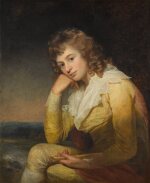
Portrait of Mrs Dorothy Jordan (1761–1816) as Rosalind in Shakespeare's ‘As You Like It’
Auction Closed
July 6, 10:53 AM GMT
Estimate
20,000 - 30,000 GBP
Lot Details
Description
Property from a Private Collection
Sir William Beechey, R.A.
Burford, Oxon 1753–1839 London
Portrait of Mrs Dorothy Jordan (1761–1816) as Rosalind in Shakespeare's ‘As You Like It’
oil on canvas
unframed: 77.5 x 63.5 cm.; 30½ x 25 in.
framed: 97.5 x 84.5 cm.; 38⅜ x 33¼ in.
Bruce Ismay (1862–1937) and his wife Julia Ismay (1867–1963);
Given to the current owner on Julia Ismay’s death.
London, Kenwood House, Mrs Jordan:The Duchess of Drury Lane, 7 September – 3 December 1995, no. 11;
London, National Portrait Gallery, The First Actresses: Nell Gwyn to Sarah Siddons, 20 October 2011 – 8 January 2012, no. 75.
C. Tomalin, Mrs Jordan's Profession, The Story of a Great Actress and a Future King, London 1994, pp. 78, 340 n. 10, reproduced in colour on front cover;
M. Jamieson, 'As you like it - performance and reception', in E. Tomarken (ed.), As You Like It, Critical Essays, Abingdon-on-Thames 1997, p. 627;
J. Bryant, Kenwood: Catalogue of Paintings in the Iveagh Bequest, Newhaven and London 2003, p. 242;
G. Perry, 'Ambiguity and Desire: Metaphors of Sexuality in Late Eighteenth-Century Representations of the Actress', in R. Asleson (ed.), Notorious Muse, The Actress in British Art and Culture 1776–1812, New Haven and London 2003, pp. 74–75, reproduced in colour plate X;
G. Perry, 'Staging Gender and 'Hairy Signs': Representing Dorothy Jordans's Curls', in Eighteenth-Century Studies, vol. 38, no. 1, 2004, p. 152, reproduced p. 153;
G. Perry, Spectacular Flirtations, Viewing the Actress in British Art and Theatre, 1768–1820, Newhaven and London 2007, pp. 89, 98–99, reproduced in colour p. 90;
S. West, 'Beauty, Ageing and the Body Politic', in G. Perry et al. (eds.), The First Actresses: Nell Gwyn to Sarah Siddons, exh. cat., National Portrait Gallery, London, 2011–12, pp. 110–11, 154, no. 75, reproduced in colour;
A. Thirlwell, Rosalind, a Biography of Shakespeare's Immortal Heroine, London 2016, pp. 17–18;
‘"She was beautifully formed", Lord M [Melbourne] said, "her legs and feet were beautifully formed, as this statue is: and she used to be fond of acting in men's clothes: she used to act... Rosalind in As You Like It": "A lovely play", said Lord M, "the prettiest play in the world; and her acting in that was quite beautiful". "She had a beautiful enunciation", he added. She was an Irish girl.’1 (Her Majesty Queen Victoria's Royal Diary, recounting Lord Melbourne's memories of Mrs Dorothy Jordan)
‘The neatness of her figure in the male attire was for years remarkable; but the attraction, after all, is purely feminine, and the display of female, not male perfections.’2 (James Boaden (1762–1839), Mrs Jordan's first biographer)
This important painting depicts Mrs Dorothy Jordan, actress and the long-time mistress of Prince William (1765–1837), Duke of Clarence and later King William IV. She was the mother of ten illegitimate children by him, all of whom took the surname FitzClarence. Its significance was recognised by her bibiographer Claire Tomalin (b. 1933), who used the painting on the front cover of her definitive publication on Mrs Jordan in 1994 (see Literature). This painting by Sir William Beechey, R.A. has more recently been celebrated by scholars as a particularly notable surviving example of a Georgian female actress playing a 'breeches role', or in other words, cross-dressing on stage.
Born the daughter of Irish and Welsh emigres in London, Dorothy Phillips (her unmarried name) started off her professional life on the stage in Dublin, working in a theatre and company owned by her lover Richard Daly (1758–1813). Dorothy and her mother, sister and brother eventually fled back to the North of England to escape their debts. It was here where her talents were discovered and swiftly recommended to Richard Sheridan (1751–1816) of the Theatre Royal, Drury Lane. With the help of Sheridan and others her career was launched upon the metropolitan stage, with increasing opportunities to tour and give performances across the country. Her abilities were phenomenally wide ranging, suiting all genres and particularly excelling in plays with 'reversed' casts and transvestite roles. Returning to her personal life, in London she quickly found a protector in a share-holder of the Theatre Royal, Richard Ford (1758–1806), who made her his mistress by whom she bore three children. In 1790 she attracted the eye of the young Prince William Henry, Duke of Clarence and later William IV, who gave her an annuity of £1,200 and enough provisions for her accompanying family. She was subsequently given the use of Bushy House, a residence of the Duke in Bushy Park, where she became mother of his ten offspring. Rising debts and the search for a society marriage prompted William to call-off the affair, and Jordan was to receive £4,400 in a settlement drawn up shortly after their parting in 1811. Their eldest son George Augustus Frederick FitzClarence, 1st Earl of Munster (1794–1842), who but for his illegitimacy, would have been King rather than Queen Victoria.
It was on her return to London in the 1780s in which she began to sit for many of the great portrait painters of the age. This included John Hoppner, R.A (1758–1810) and George Romney (1734–1802), who produced significant canvases of Dorothy playing her various theatrical roles that helped to promote her fame and celebrity across Georgian London.3 This painting by William Beechey captures Jordan playing the role of Rosalind from William Shakespeare's (1564–1616) As You Like It, one of her best-known 'breeches roles' which she undertook in April 1787. In Shakespeare's play Rosalind, the daughter of Duke Frederick, is forced to seek exile in the Forest of Arden dressed as a male shepherd called Ganymede. In this portrait the artist has shown her dressed in distinctively male pseudo 'Van-Dyke' costume, with a flamboyant white collar and yellow doublet and breeches. One of the unique features of this painted portrait is the appearance of Jordan's legs, a feature which sometimes appear in popular prints but rarely if ever in society portraiture of this caliber.4 In an age where women's dresses often hid all details and definition of female limbs, their suggested appearance here would have been striking to the contemporary viewer of this painting. Professor Gillian Perry's recent publications, which have broadly focused on the sexual politics of actresses and portraiture in late-eighteenth-century Britain, have consistently drawn attention to the distinctive features of this work (see Literature).
1 Quoted in Perry 1997.
2 J. Boaden, Life of Mrs Jordan, London 1831, vol. 1, p. 46.
3 Oil on canvas, 74 x 62 cm.; https://www.npg.org.uk/collections/search/portrait/mw03530/Dorothy-Jordan?LinkID=mp02465&role=sit&rNo=0 ; Oil on canvas, 90 x 69 cm.; https://artuk.org/discover/artworks/mrs-jordan-as-viola-in-twelfth-night-191728 ; Oil on canvas, 150 x 118 cm.; Sold in these rooms, 16 November 1988, lot 68 for £60,500.
4 For an anonymous popular print showing Mrs Jordan's legs in breeches see https://www.npg.org.uk/collections/search/portrait/mw86945/Dorothy-Jordan-as-Viola-in-Twelfth-Night?LinkID=mp02465&role=sit&rNo=1
You May Also Like


