Jean Honoré Fragonard
A child in the guise of cupid
Auction Closed
January 25, 04:44 PM GMT
Estimate
60,000 - 80,000 USD
Lot Details
Description
Jean Honoré Fragonard
Grasse 1732 - 1806 Paris
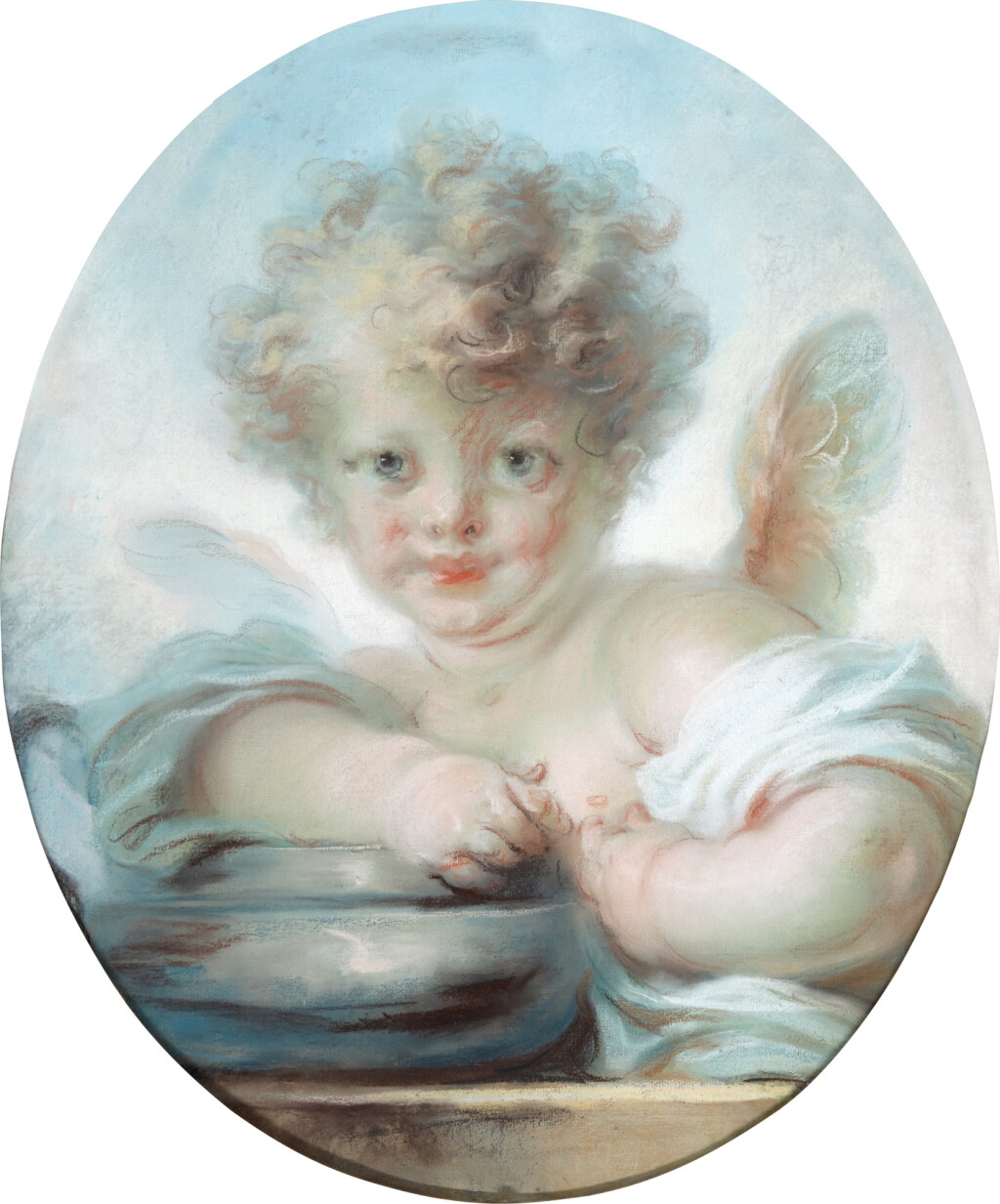
A child in the guise of cupid
Pastel
550 by 450 mm; 21⅞ by 17⅞ in. (oval)
Property of Monsieur and Madame Francois,
their sale and others, London, Christie's, 5 July 2011, lot 80,
where acquired by the present owner
M.-A. Dupuy-Vachey, 'Fragonard et le Pastel', Revue de l'art, 205, 2019/3, pp. 61-74, fig. 2;
N. Jeffares, Dictionary of pastellists before 1800, online edition, no. J.323.124
This grand and imposing image of a child in the guise of Cupid is a rare example of a work in pastel by Jean Honoré Fragonard. Very few pastels by the artist survive, but those that do, including the present work, demonstrate his remarkable technique in this medium.
Neil Jeffares, when discussing the pastel of Fragonard’s maid, Sophie, now in the Musée des Beaux-Arts et d'Archéologie, Besançon, writes: ‘the extraordinary brilliance of the portrait of his maid Sophie (Besançon), makes it regrettable that Fragonard seems rarely to have worked in pastel.’1
In Marie-Anne Dupuy-Vachey's 2019 article for Revue de L'art, she interestingly opens up and expands the discussion of Fragonard as a pastellist by including and reviewing his works in a combination of pastel and chalk on paper, of which there are a number. Dupuy-Vachey is, however, quick to stress in her opening paragraphs that if one were to isolate Fragonard's works solely executed in pastel on paper and stretched onto canvas, then the only two surviving examples for discussion are the present work and the aforementioned portrait of Sophie.2
Fragonard has succeeded in achieving soft malleable textures, especially in the child’s dimpling skin. Throughout the hair and wings, on the other hand, his sharper, firmer strokes cleverly mimic movement. Fragonard has treated this pastel as though it were an oil sketch, the blend of colors and the sheen and liquidity of the eyes defying the more powdered nature of the medium. Not dissimilar to Rosalba Carriera’s approach, in her employment of the sfumato technique, Fragonard has successfully created bold and unique textures in his own individual, specific handling of pastel. Dupuy-Vachey discusses Fragonard and Rosalba in her article and publishes a counterproof in black chalk, by Fragonard, where he copies Rosalba's pastel of L'Hiver.3
In his 1987 monograph on Fragonard, Cuzin dates both of the artist's surviving pastels to circa 1785.
1. N. Jeffares, Dictionary of Pastellists before 1800, London 2006, p. 182
2. Dupuy-Vachey, op.cit., p. 61
3. Ibid., p. 64, fig. 4
You May Also Like