
Property from the Speelman Collection | 史博曼收藏
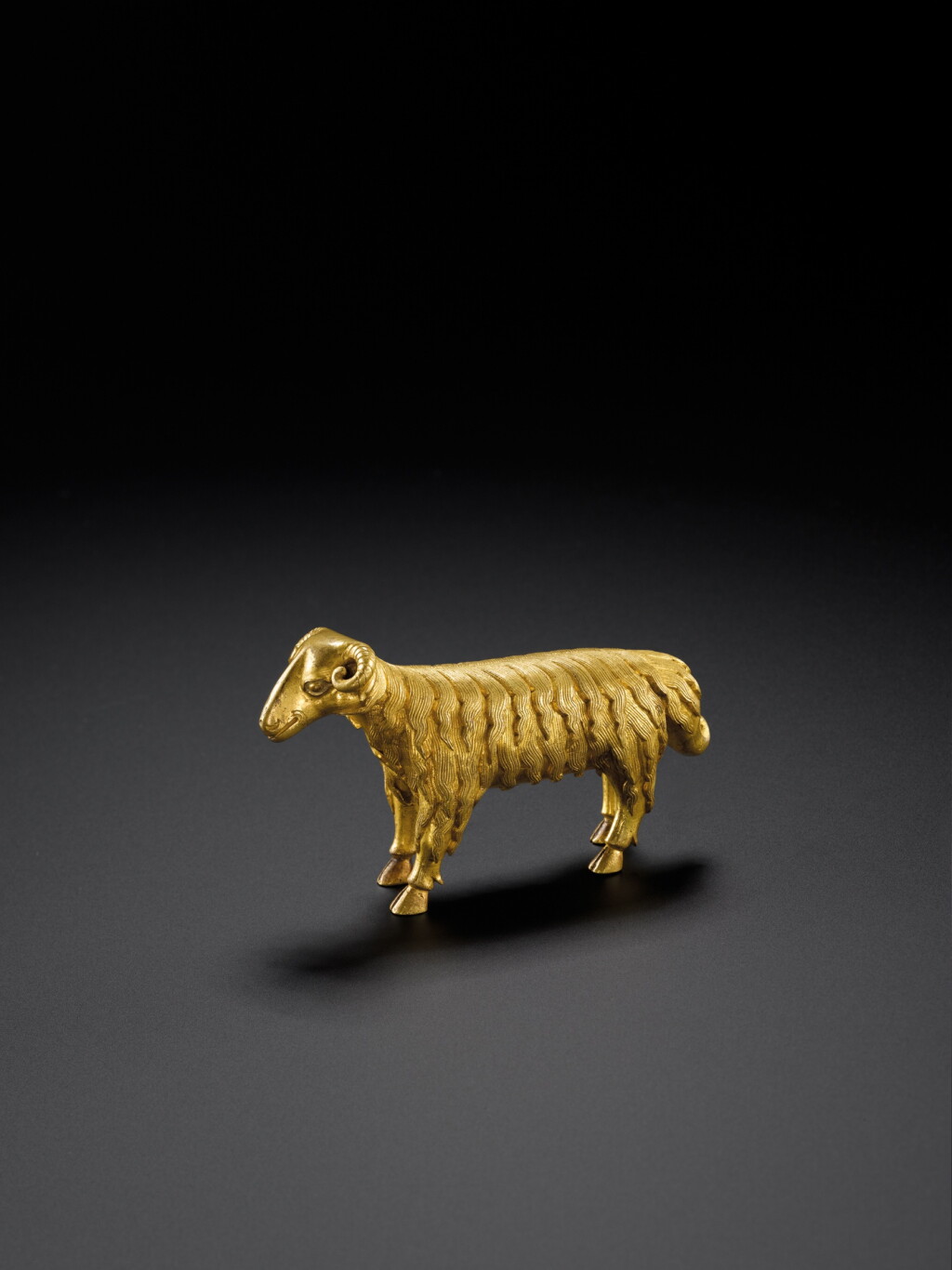
A gilt-bronze figure of a ram, Ming dynasty, 15th century | 明十五世紀 鎏金銅立羊
Auction Closed
November 1, 04:48 PM GMT
Estimate
30,000 - 50,000 GBP
Lot Details
Description
Property from the Speelman Collection
史博曼收藏
A gilt-bronze figure of a ram
Ming dynasty, 15th century
wood stand
明十五世紀 鎏金銅立羊
Length 12.5 cm, 5 in.
Superbly cast using the lost-wax method perfected by bronze artisans working for the imperial court in the early Ming dynasty, this exceptional gilt-bronze ram is unparalleled in quality and naturalistic detail for a miniature sculpture. The intricacy of the articulation of its naturalistic detail ranks it amongst the greatest non-Buddhist gilt-bronzes emanating from the imperial workshops in the early Ming dynasty, almost as fine quality as the much larger Xuande reign-marked gilt-bronze ‘duck’ incense burner and cover, also from the Speelman collection, sold in our Hong Kong rooms, 8th April 2014, lot 85. Certainly, there are close similarities in the style of workmanship on both of these extraordinary sculptures. The manner in which the curly wool on the ram’s body is intricately cast in varying layers of relief, boldly intertwining yet consistently producing a three-dimensional effect, closely matches the outstanding layering of the feathers on the duck. The distinct and elegant curling of the ram’s tail is reminiscent of the curling of the duck’s plumes. Both are also notable for the opulence and brilliance of the gilding, comparable to the finest quality Buddhist gilt-bronze figures produced in the Yongle and Xuande periods. Clearly, no expense was spared in their production.
The concept and modelling of the ram sculpture may have been influenced by Han dynasty examples, but it is clearly a work of art in its own right, not just archaistic in spirit. What is clear though is that like the Han dynasty sculpture, which is much less frequently found than its ritual counterparts, the ‘ram’ sculpture and the ‘duck’ incense burner are far rarer than gilt-bronze Buddhist sculptures produced at the Yongle and Xuande court. In Buddhist Sculptures in Tibet, Hong Kong, 2001, p.1243, Ulrich von Schroder’s research has recorded fifty-four Yongle and three Xuande reign-marked bronzes in Tibet alone, with innumerably more preserved in museum and private collections in the outside world. However, sculptures of the quality of this ram are extremely rare, demonstrating that they were undoubtedly produced in much smaller numbers, probably for the personal enjoyment of high-ranking officials in the early Ming imperial court.