
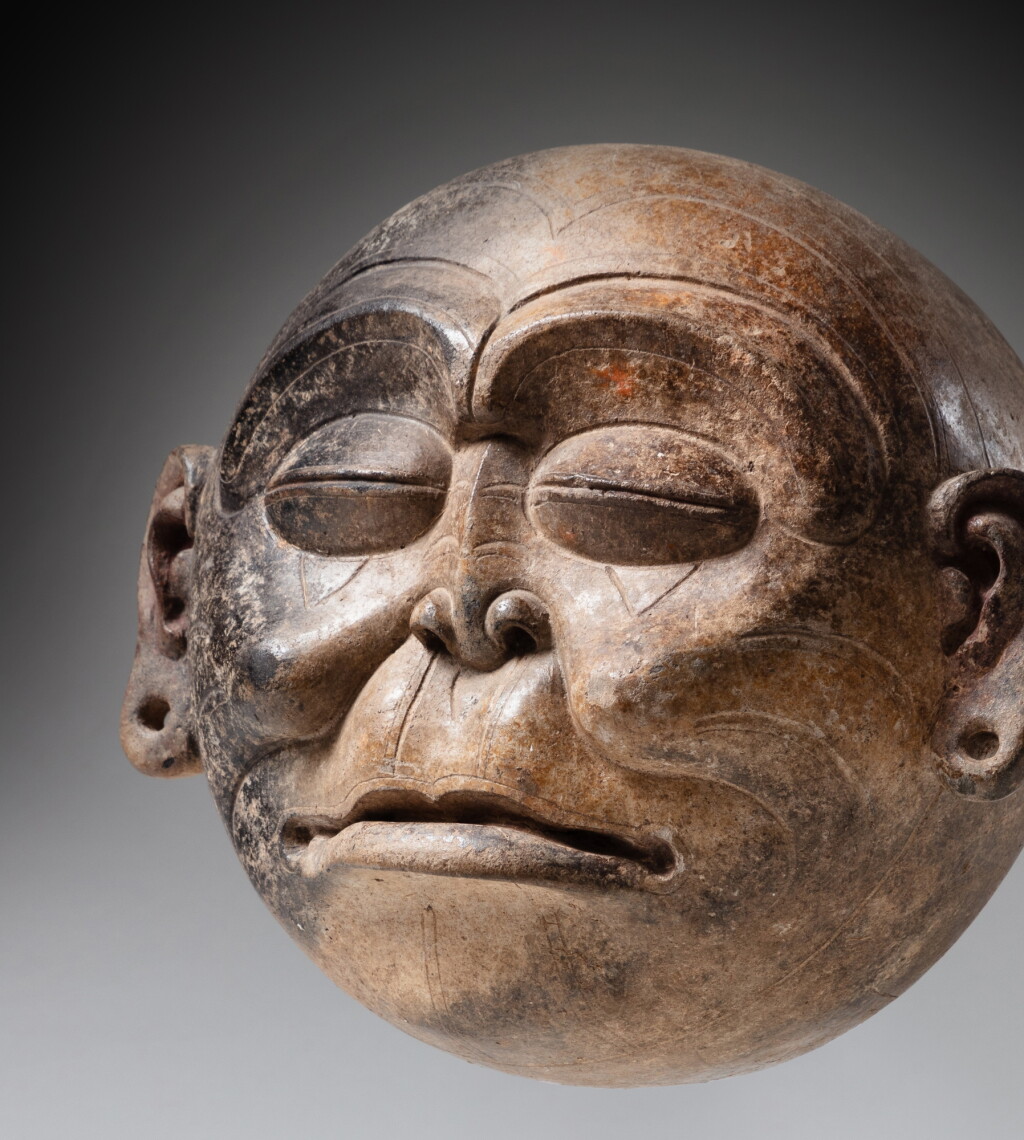
Provenant d'une collection privée américaine
Bol, Maya, Classique récent, ca. 300 - 600 | Mayan Effigy Bowl, Early Classic, ca. AD 300 - 600
Auction Closed
November 28, 03:48 PM GMT
Estimate
25,000 - 35,000 EUR
Lot Details
Description
Bol, Maya, Classique récent, ca. 300 - 600
Haut. 17 cm, Larg. 20,5 cm
________________________________________
Mayan Effigy Bowl, Early Classic, ca. AD 300-600
Height 6 ⅝, Lenght 8 ⅛ in
Fine Arts of Ancient Lands, New York
Peter G. Wray, Scottsdale (#7019-W), acquis au précédent avant 1981
Constance Kamens, New York
Wally and Brenda Zollman, Indianapolis, collectionneurs actifs dans les années 1980
Ancient Art of the New World, New York
Collection privée américaine, acquis au précédent
New York, Andre Emmerich Gallery and Pearls Galleries, Masterpieces of Pre-Columbian Art from the Collection of Mr. and Mrs. Peter G. Wray, 11 avril- 12 mai, 1984
Indianapolis, Indianapolis Museum of Art,The Face of Ancient America: The Wally and Brenda Zollman Collection of Precolumbian Art, 1988
Masterpieces of Pre-Columbian Art from the Collection of Mr. and Mrs. Peter G. Wray, New York, Andre Emmerich Gallery and Pearls Galleries, 1984, fig. 20
Mannheimer Steve, "Pre-Columbian art faces world before inquisition", in Indianapolis Star, Sunday, 11 décembre 1988, ill. au regard de l'article
Parsons Lee, Carlson John B. et Joralemon Peter David, The Face of Ancient America: The Wally and Brenda Zollman Collection of Precolumbian Art, Indianapolis Museum of Art, Indianapolis, 1988, n° 56
Bol de la période du Classique Récent sur lequel est représenté le visage du Dieu Homme-Singe, patron des scribes et des artistes, avec les traits caractéristiques d'un singe hurleur aux narines largement ouvertes et aux arcades sourcilières proéminentes tout en conservant une apparence anthropomorphe avec des oreilles de formes humaines et percées pour y suspendre des boucles d'oreilles.
Chez les Mayas de la Période Classique, le Dieu Singe hurleur était une divinité importante dans le domaine des arts, musique incluse, et le patron des artisans et des sculpteurs. Les singes patrons, ils sont souvent deux, ont été représentés sur des vases peints de la Période Classique en train d'écrire des livres ou de sculpter têtes humaines et ces deux actions conjointes peuvent être considérées comme une métaphore de la création humaine.
________________________________________
Depicting the face of the Monkey Man God, patron of scribes and artists, is the inspiration for this Early Classic bowl. With simian features of a Howler monkey with side opening nostrils and prominent brow ridge, the face is nonetheless anthropomorphic, with human ears pierced to hold earrings.
Among the Classic Maya, the howler monkey god was a major deity of the arts—including music—and a patron of the artisans and sculptors. The monkey patrons—there are often two of them—have been depicted on classical painted vases in the act of writing books and carving human heads. Together, these two activities may have constituted a metaphor for the creation of mankind.