
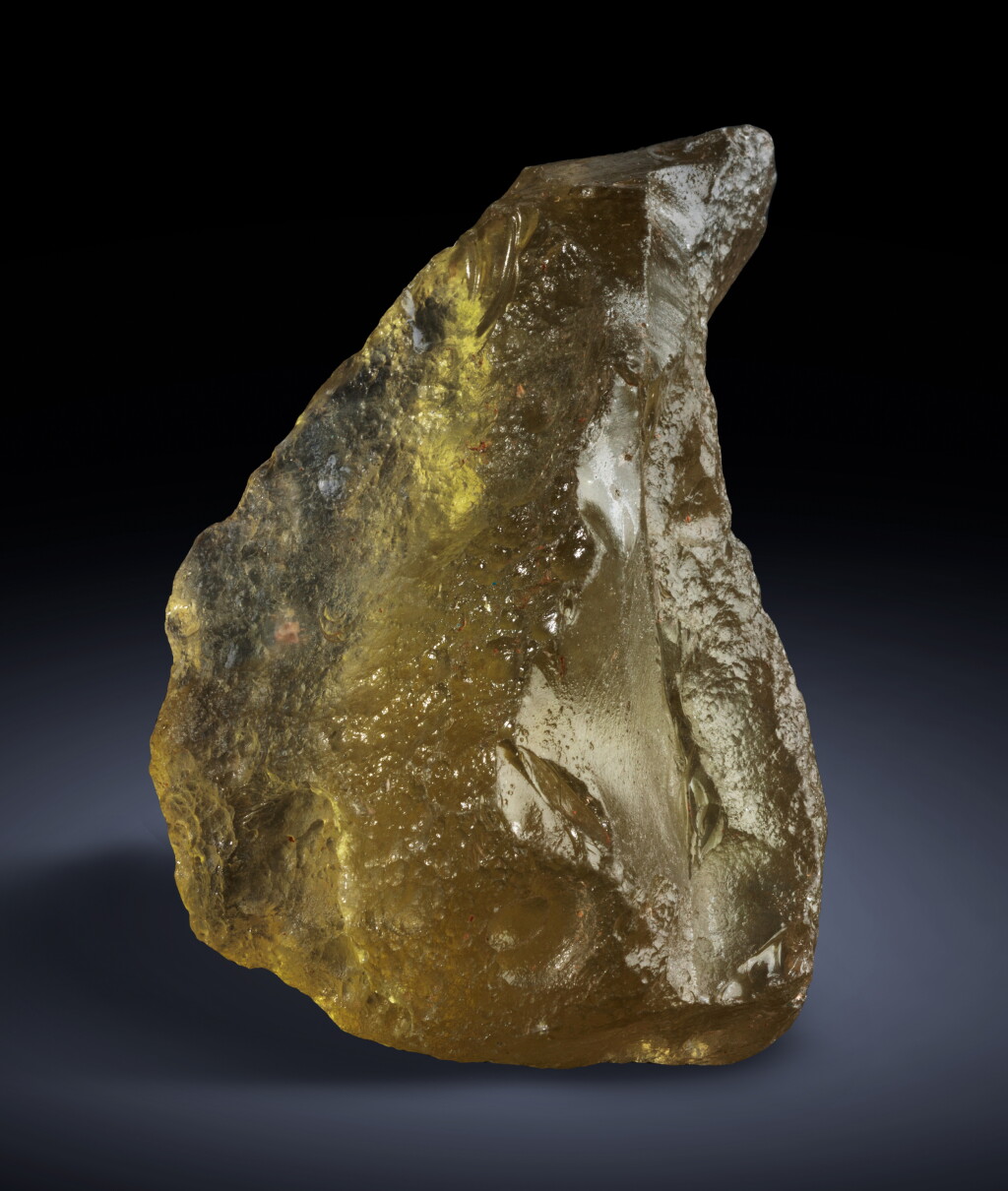
Libyan Desert Glass — When An Asteroid Collides With Earth
不设底价
拍品已结束竞投
July 27, 02:20 PM GMT
估价
700 - 1,000 USD
拍品信息
描述
Libyan Desert Glass — When an Asteroid Collides with Earth
Impactite
The Great Sand Sea, Sahara Desert, Egypt/Libya border region
93 x 72 x 51 mm (3⅔ x 2¾ x 2 in). 189.9 g (0.4 lb).
Libyan Desert Glass is a tektite, (i.e., a silicated glass formation whose name comes from the Greek tektos, meaning “melted”). Tektites are named for the locality in which they are found, hence: Australites, Indochinites, Philippinites, Libyan Desert Glass, etc. They are the result of asteroid impacts slamming into and melting the Earth’s surface; the extraordinary heat and pressure liquefies terrestrial rocks, which are splashed into the upper atmosphere before returning to Earth as solidified glass. Tektites are terrestrial in origin and the impact event responsible for Libyan Desert Glass is known to have occurred approximately 28.5 million years ago in the southwestern corner of the Great Sand Sea near the Egyptian/Libyan border.
The higher the silica content of the material melted, the lighter the color. Libyan Desert Glass is 98% silica (molten sand) and is yellow-hued whereas other tektites range from green (moldavites) to charcoal (indochinites). Now offered is a translucent sample of a golden tektite from North Africa. Signature scalloping is seen on a surface naturally sandblasted by Saharan winds for millions of years. The upper left margin of this specimen attenuates into a fan-like wing. Libyan Desert Glass was used as a gemstone in Pharaonic Egypt; an especially coveted specimen was discovered in King Tut’s tomb. Now offered is a superior example of an asteroid impact having melted Saharan sands into glass.


