Lot Closed
September 22, 01:38 PM GMT
Estimate
26,000 - 35,000 EUR
Lot Details
Description
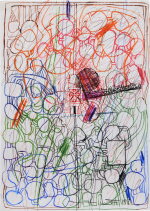
Dado
1933 - 2010
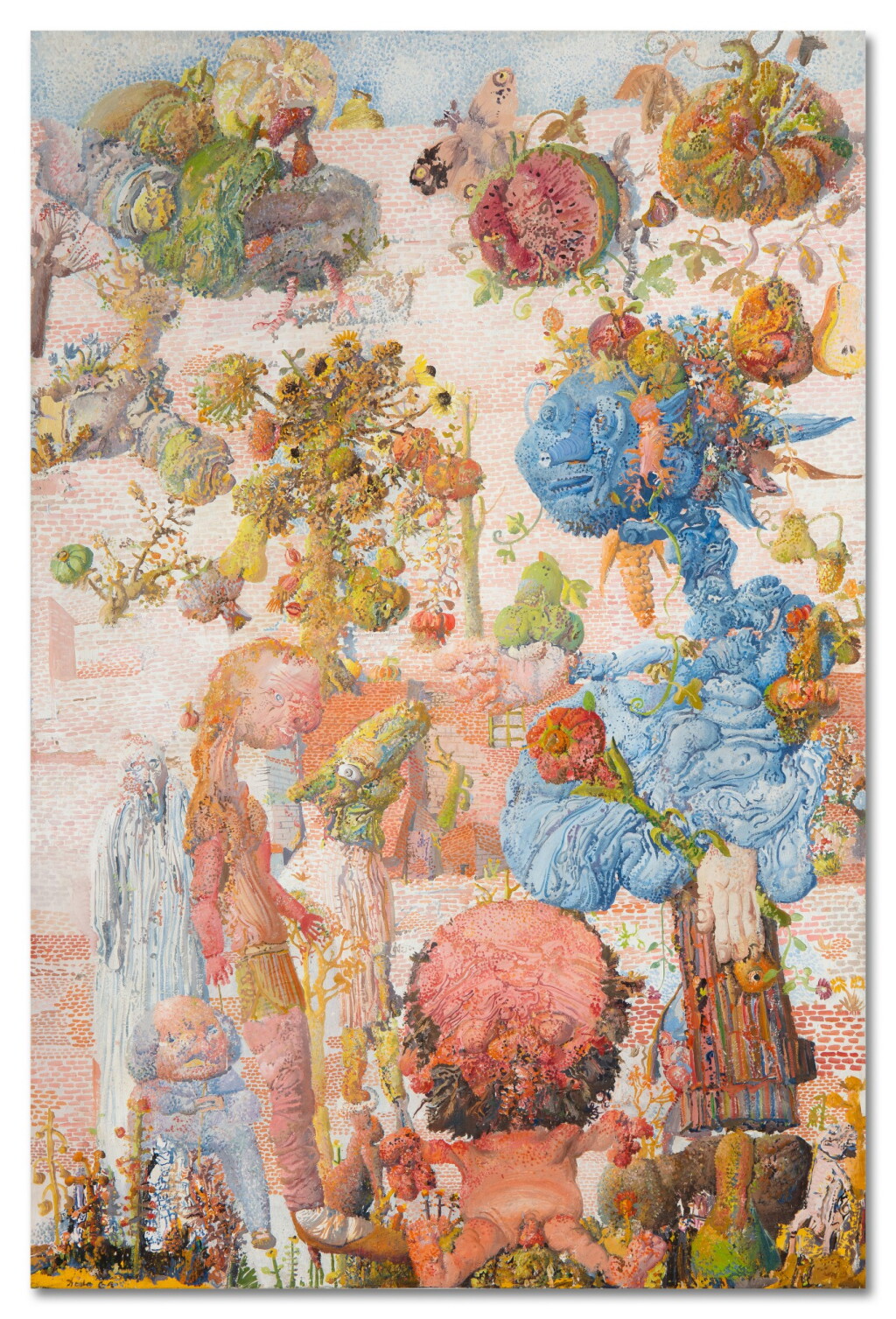
Job
signed and dated 61 ; titled on the reverse
oil on canvas
195 x 130 cm ; 76 3/4 x 51 3/16 in.
Executed in 1961.
_____________________________________________________________
Dado
1933 - 2010
Job
signé et daté 61 ; titré au dos
huile sur toile
195 x 130 cm ; 76 3/4 x 51 3/16 in.
Exécuté en 1961.
Daniel Cordier Collection, Paris
Galerie Jan Krugier, Geneva
Private Collection, Geneva (acquired from the above in 1977)
Private Collection, Lichtenstein (acquired from the above in 2006)
Dado drew some of his artistic inspiration from literature and religious texts. He discovered literature shortly before his arrival in France, in the years 1954-1956, while still living in Belgrade. In this communist country where the most widely read authors were Tolstoy and Dostoyevsky, Dado confided his shock at the Bible and his very late discovery of the Book of Job, during an interview with Christian Derouet in 1981: "I understood what literature was when I read that book, I think. It's something that goes to infinity, that is very deep. Reading the Book of Job for me was like witnessing an extraordinary natural phenomenon, like the flood, the appearance of a comet, or things of that order. I was moved by the reading of the Book of Job, by the language, by Job's complaints. And obviously, the subject touched me a lot. You can see that it was the Book of Job that fascinated me the most when you see my work. That's all I do in the end. (Interview conducted during the preparation of the exhibition ‘L'exaspération du trait’ in 1981 at the Centre Pompidou).
When he arrived in Paris in 1956, Dado met Jean Dubuffet who introduced him to Daniel Cordier. Cordier became his main dealer and helped establish his international reputation. The artist's interest in Job continued and he created the present work in 1961. For this Job, which comes from Daniel Cordier's collection, Dado uses a large vertical format in which he explores both the biblical text and his vision of the Parisian world: "In Paris, what struck me most was the rue de Seine, the vision in the early hours of the morning of three or four tramps, in August 1956. They were the Jobs. They were there, on a sort of lawn, at the feet of a statue of Voltaire, which was quite ridiculous by the way. I remember those guys, with their bruises... He's everywhere Job, he's always there. I think there's nothing remote about it, it's this permanent side of things that fascinates me, and I find these twisted faces, these beaten faces, very beautiful, I find them extraordinary. This fascination that he expresses in his interview with Christian Derouet is revealed in this work.
Job then appears as a leitmotif in his artistic practice over the decades. Following the creation of this work in 1961, this theme was taken up again in the 1970s in some fifteen engravings intended to illustrate the Book of Job, which were then used in collages.
___________________________________________________________________________________________________________________________________________________________
Dado a puisé une partie de son inspiration artistique dans la littérature et les textes religieux. Il découvre la littérature peu avant son arrivée en France, dans les années 1954-1956, alors qu'il vivait encore à Belgrade. Dans ce pays communiste où les auteurs les plus lus étaient Tolstoï et Dostoïevski, Dado confie son choc face à la Bible et à sa découverte très tardive du Livre de Job, lors d’un entretien avec Christian Derouet en 1981 : « J’ai compris ce que c’était la littérature en lisant ce livre-là je crois. C’est quelque chose qui va à l’infini, qui est très profond. La lecture du Livre du Job pour moi, c’était comme si j’assistais à un phénomène naturel extraordinaire, comme le déluge, l’apparition d’une comète, ou des choses de cet ordre-là. J’étais soulevé par la lecture du Livre de Job, par la langue, par les plaintes de Job. Et évidemment, le sujet me touchait beaucoup. On comprend que c’est le Livre de Job qui me passionnait le plus quand on voit mon travail. Je ne fais que ça finalement. » (Entretien mené dans le cadre de la préparation de l’exposition « L’exaspération du trait » en 1981 au Centre Pompidou).
Lors de son arrivée à Paris en 1956, Dado rencontre Jean Dubuffet qui lui présente Daniel Cordier. Ce dernier devient alors son principal marchand et il participera à la mise en place de sa renommée internationale. L’intérêt de l’artiste pour Job continue et il créée la présente œuvre en 1961. Pour ce Job, qui provient de la collection de Daniel Cordier, Dado utilise un grand format vertical où il explore à la fois le texte biblique et sa vision du monde parisien : « À Paris, ce qui m’a frappé le plus, c’était rue de Seine, la vision au petit matin de trois ou quatre clochards, en août 1956. C’étaient les Job. Ils étaient là, sur une espèce de pelouse, aux pieds d’une statue de Voltaire, assez ridicule d’ailleurs. Je me rappelle de ces types-là, avec leurs hématomes... Il est partout Job, il est toujours là. Je pense que ça n’a rien de lointain, c’est ce côté permanent des choses qui me fascine, et je trouve très beaux ces visages tordus, ces visages tabassés, je trouve ça extraordinaire. » Cette fascination qu’il exprime dans son entretien avec Christian Derouet se révèle ainsi dans cette œuvre.
Job apparaît alors comme un leitmotiv dans sa pratique artistique au fil des décennies. Suite à la réalisation de cette œuvre de 1961, ce thème est repris dans les années 1970 dans une quinzaine de gravures destinées à l’illustration du Livre de Job, qui seront ensuite reprises dans des collages.
You May Also Like