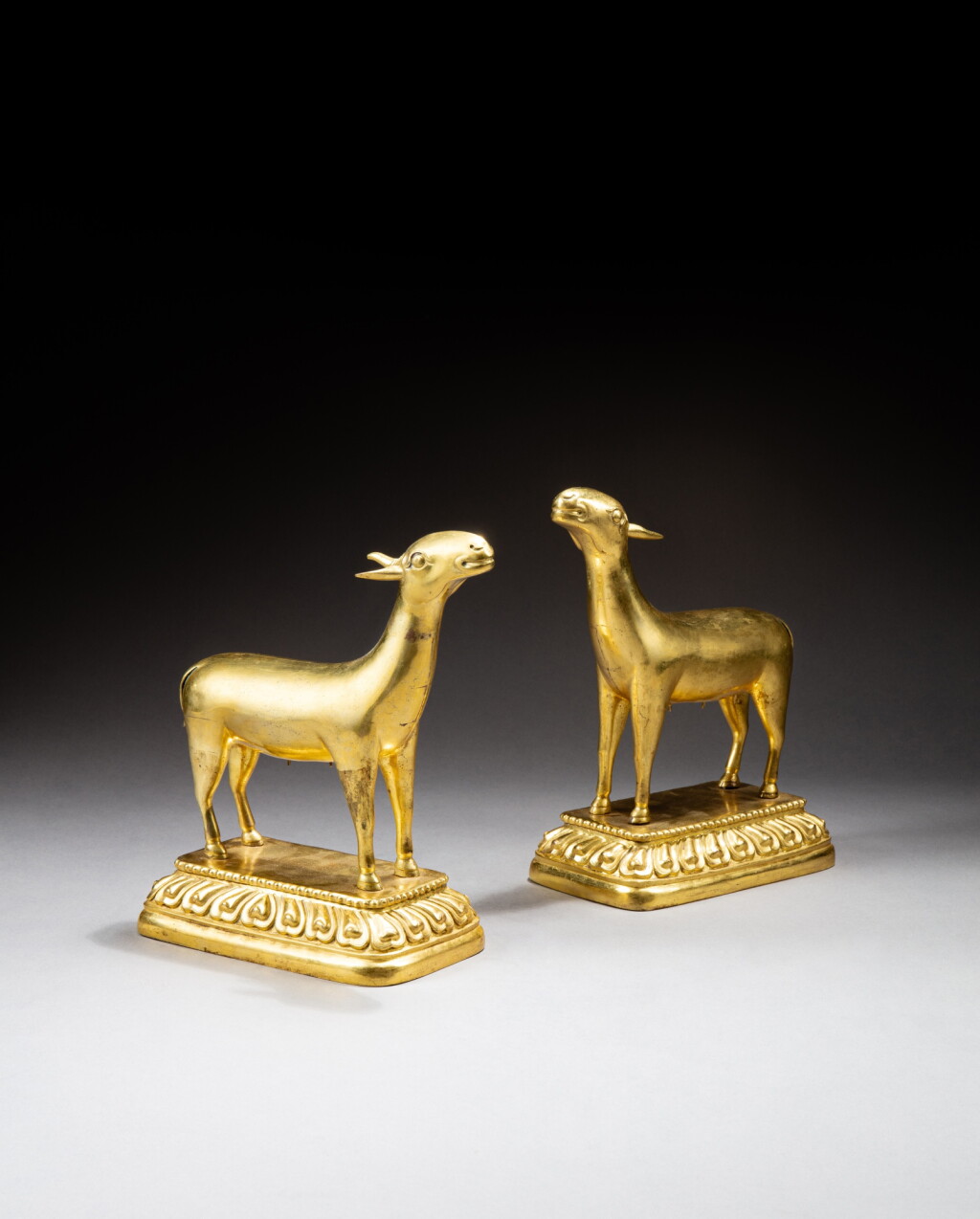
A pair of gilt-copper deer figures, Qing dynasty, 18th century | 清十八世紀 銅鎏金鹿像一對
Lot Closed
December 15, 11:37 AM GMT
Estimate
8,000 - 12,000 EUR
Lot Details
Description
A pair of gilt-copper deer figures,
Qing dynasty, 18th century
a male and female deer with heads inclined gently upwards and standing upright on lotus pedestals, the male deer distinguished by a single horn emerging from his forehead
(2)
H. 24.2 cm, 9 1/2 in. (the highest)
__________________________________________________________________________
Paire de daims en cuivre doré, dynastie Qing, XVIIIe siècle
__________________________________________________________________________
清十八世紀 銅鎏金鹿像一對
The repoussé construction of this pair of deer suggests the workshops of Dolonnor in Inner Mongolia where gilded statues were commissioned for patrons throughout the Buddhist world of the Qing dynasty, cf. the technique on a pair of recumbent examples in the Musée departmental des Arts asiatiques, Nice (Inv : 99.3.1 et 2 3039292), see Robert A. F. Thurman and David Weldon, Sacred Symbols: The Ritual Art of Tibet, exh. cat., New York, 1999, cat. no. 1.
You May Also Like