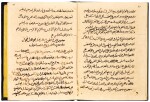

SA‘D IBN MANSUR IBN KAMMUNA BAGHDADI AL-ISRA’ILI (1215-84), KITAB TALKHIS LUBAB AL-MANTIQ WA KHULASAT AL-HIKMAH (A TREATISE ON LOGIC), NEAR EAST, DATED 675 AH/1276 AD
Auction Closed
October 27, 04:55 PM GMT
Estimate
40,000 - 60,000 GBP
Lot Details
Description
SA‘D IBN MANSUR IBN KAMMUNA BAGHDADI AL-ISRA’ILI (1215-84), KITAB TALKHIS LUBAB AL-MANTIQ WA KHULASAT AL-HIKMAH (A TREATISE ON LOGIC), NEAR EAST, DATED 675 AH/1276 AD
Arabic manuscript on paper, 10 leaves plus 2 fly-leaves, 15-18 lines to the page written in dark brown ink on cropped polished paper, replacement later red morocco binding with central stamped cartouche with chinoiserie cloud bands
17.4 by 13cm.
Saʿd ibn Mansur ibn Saʿd ibn al-Hasan ibn Hibat Allah ibn Kammuna al-Baghdadi was a celebrated Jewish philosopher, physician and chemist who was born and lived in Abbasid Baghdad, although he may have travelled to Aleppo. He is widely regarded as the one of the most important Jewish philosophers after the Andalusian philosopher Moses ibn Maimon (Maimonides, 1135-1204 AD), and is known to have corresponded with his illustrious polymath contemporary Nasir al-Din Tusi (1201-74 AD).
Ibn Kammuna wrote extensively on theology, philosophy, logic and psychology. Ibn Kammuna’s most significant contribution to the history of philosophy is his detailed commentary to Suhrawardi’s al-Talwihat. In his studies on Islamic thought patterns (in the tradition of Ibn Sina, al-Suhrawardi, and Fakhr al-Din a-Razi) and in his use of the philosophical works of Judah Halevi and Maimonides, Ibn Kammuna's sympathies lay with the science-oriented rationalist trend of Hellenistic origin. This is indicated in the Tanqih al-abhath lil-milal al-thalath ('Critical Inquiry into Three Faiths'). His other famous work al-Jadid fi‘l-hikma ('The New Wisdom') is a discussion of thirteenth century philosophy and science. His commentary on Ibn Sina's al-Isharat wa'l-Tanbihat is also among his famous works.
For more on Ibn Kamunna see R. Pourjavady and S. Schmidtke, A Jewish Philosopher of Baghdad. ‘Izz al-Dawla Ibn Kammuna (d.683/1284) and His Writings, Leiden and Boston, 2006.
The manuscript to hand is a summary (talkhis) by Ibn Kammuna on the Lubab al-mantiq wa khulasat al-hikmah by Najmeddin Ahmed ibn Abi Bakir Muhammad al-Nakhjwani (known as Al-Naqshwani, d.1253 AD, see Aqa Barzak Tahrani, Za'il (annex) Kashf al-Zunun, Iran, 1390 (2011), p.84). Al-Naqshawni was a philosopher who lived and died in Aleppo and who wrote several important works including his commentary on Ibn Sina’s al-Isharat wa al-tanbihat. In Lubab al-mantiq, Al-Naqshwani objected to several opinions of Ibn Sina’s that were provided in the al-Isharat.
This manuscript is particularly interesting because it appears that this copy is written in the hand of the author himself, which can be deduced from various parts of the text, including on the title page where it is written Kitab talkhes al-mantiq wa khulasat al-hikmah li-muwalifahu katibahu ghafar allahu anhu ('by its author, its writer may Allah forgive him'). The scribe (presumably Ibn Kammuna) also states in the text that he did not write the original text but only his own comments and opinions. The copyist has also clearly undertaken several modifications and additions to the texts, for instance on ff.4b, 5b, 8b and 10b.