
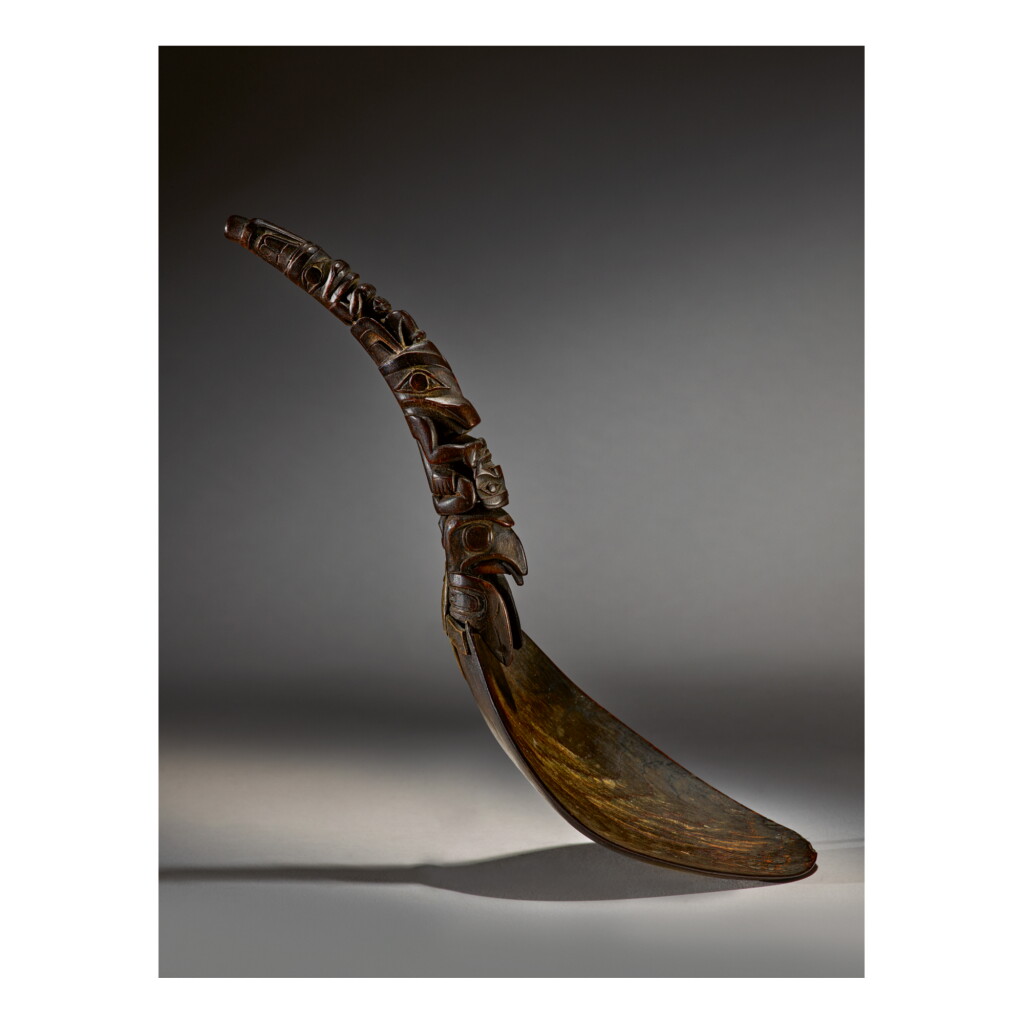
HAIDA SPOON
Auction Closed
November 19, 09:20 PM GMT
Estimate
10,000 - 15,000 USD
Lot Details
Description
HAIDA SPOON
Circa 1840-1860
Length: 10 in (25.4 cm)
Mountain goat horn (Oreamnos americanus), brass
George Terasaki, New York
Steven C. Brown, Transfigurations: North Pacific Coast Art. George Terasaki, Collector, Seattle, 2006, n.p., pl. 74
This type of spoon is traditionally made from a pair of mountain goat horns. One horn is shaped, boiled, and opened out to form the bowl, the other is carved in the form of a small totem pole without altering its original curve or diameter. The major and minor figures of this spoon handle are sculpted with sure-handed, deep relief and an exceptional amount of piercing through to the hollow center of the horn between carved elements. The juncture of the bowl and handle is cleverly fitted so that the eagle’s wings at the lower end of the handle extend well into the upper end of the bowl.
A large bear kneels atop the eagle's head, its front paws clutching the shoulders of a human figure that is bent over backward. The horn is pierced through beneath the bear's head, the human's torso, and the bear’s knees, accentuating the sculpture of the figures. The human's hands wrap over the bear's thighs, and its feet are carved below the bear's feet on the back of the eagle's head. The expression of the human face is one of surprising calm, considering the precarious, flexed position of the image, a paradoxical theme common in Northwest Coast art.
Above this figure is a humanoid bear holding a small face on its knees. Careful piercing between its limbs also enhances the deep relief of this figure. Tall, refined U- forms extend up from this bearlike head, wrapping around the horn from front to back. More than naturalistic ears, these appear to communicate the status of a headdress, and suggest a supernatural or mythic quality to the image. Coupled with the frog or spirit figure emerging from its torso, these features may indicate a shamanic transfiguration related to the bear-human image below. The tip of the horn was shaped into a short, peglike finial reminiscent of woven hat rings, which also denote historical status.
All the northern tribal groups made goat horn spoons, though the majority of these tiny tapering totem poles appear to be of Haida manufacture. A smaller number of carved spoons are identifiable as Tlingit, Tsimshian or other northern styles.
Steven C. Brown