
Property of a private collector
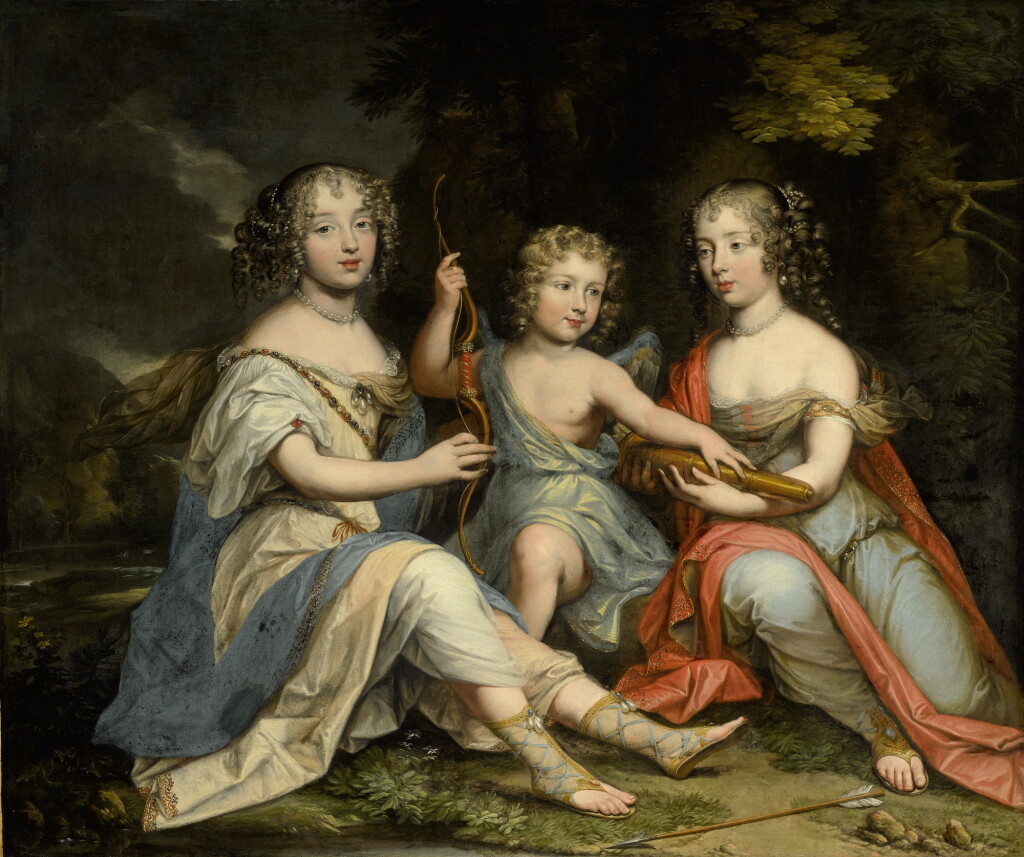
LOUIS FERDINAND ELLE | PORTRAIT OF THREE CHILDREN IN A LANDSCAPE, THE BOY AS CUPID
Auction Closed
January 30, 06:45 PM GMT
Estimate
100,000 - 200,000 USD
Lot Details
Description
Property of a Private Collector
LOUIS FERDINAND ELLE
Paris 1612 - 1689
PORTRAIT OF THREE CHILDREN IN A LANDSCAPE, THE BOY AS CUPID
oil on canvas
54¼by 65 in.; 137.8 by 165.1 cm.
Marquis de Biron (according to a label on the reverse);
Mr. Roche, Paris;
Acquired by the present collector in 1990.
One of the twelve founding members of the Académie de peinture et de sculpture in 1648, Louis Ferdinand Elle is a rare but influential artist. He first trained under his Flemish father, Ferdinand Elle (1570-1637), under whom Nicolas Poussin also apprenticed. Though Elle worked in Paris for the entirety of his career, the influences of Flanders are evident, including the portraiture of Anthony van Dyck. Indeed, Elle engraved one of Van Dyck's portraits of Mary, Princess of Orange.1
This impressive portrait shows three children, most probably siblings, in a landscape setting. The girls are dressed in elegant clothing reminiscent of huntresses and extravagant jewelry which is painted in great detail. The young boy at center is depicted as Cupid, holding a large and beautiful bow while the girl to his left holds out the case for his arrows. He is in a simple draped outfit, with colorful wings; though his role as Cupid could be allegorical, given the similarity of facial features and coloring to the girls, it seems more than likely that he is indeed their brother. The entire group exhibits the utmost elegance in their poised demeanor, fanciful yet unfussy clothing, and timeless beauty.
When the painting was acquired many years ago, it was suggested that the two girls might have been Olympe and Marie, members of the famous Mancini family born in 1638 and 1639 respectively. Nieces of the powerful Cardinal Mazarin, they were two of the most celebrated beauties of their day and were brought to France in the 1650s to be married. Since they were so well-known, however, many portraits of this period which depict beautiful young women have in the past been identified with the sisters and it is difficult to be certain. The inclusion of the young boy here would suggest otherwise as they did not have a brother.
1. Etching, 19.7 x 14.8 cm. A print is in the Royal Collection, inv. no. RCIN 602094.